20th Issue Retrospective
In order to commemorate our 20th issue, 4strugglemag reprinted the following articles and updates:
- War in Iraq: Imperialism in the 21st Century by Jaan Laaman
- U.S. War and Occupation of Iraq by Tom Manning
- Truth and Resistance: U.S. out of Iraq by Oscar Lopez Rivera
- War in Iraq: September ‘03 by Sundiata Acoli
- The Iraq War, Occupations, Governments and U.S. Imperialism by Alvaro Luna Hernandez
- On Lynne Stewart by David Gilbert
- Statements from U.S. Political Prisoners in Support of Palestine
- A Letter from Akili by Akili Castlin
- Akili’s Letter: A Response by Mumia Abu-Jamal
- On Bro. Akili’s Suggestion by Herman Bell
- Response to Akili’s Letter by Robert Phillipe
- Response to Akili’s Letter by Lasyah M. Palmer
- Black August by Marilyn Buck
- Lawyers Guild Condemns Racist Arrests of Black Panthers by CDHR
- Comandante Filiberto Ojeda Rios – Presente! by Jaan Laaman
- Meet the New Boss(es), Same as the Old Boss(es) by Bill Dunne
- Move Update: Parole Hearing
- Leonard Peltier Remembers Geronimo Pratt
- Barack Obama and the 2008 Elections by Jaan Laaman
- Why We Jog by LA-ABCF
- Political Prisoners in America by Jaan Laaman
- The Jericho Movement 10th Anniversary by Jalil Muntaqim
- Free the Wimyn! by Comrade Spider
- Women in the Struggle by Jaan Laaman
- Statement on Richard Williams by Ray Luc Levasseur
- My Blood is a Million Stories by Nzingha Shakur Ali
- Alternatives While Waiting: Self-Reliance by Marilyn Buck
- Tributes to Marilyn Buck By Russell ‘Maroon’ Shoats and Shaka Zulu
Major theoretical selections from past 4strugglemags
In addition to the pieces we reprinted in the physical magazine, Jaan listed to some of the longer feature articles we’ve published over the years. They are listed (and linked) below.
4sm has included entire essays and/or booklets, in some issues, that are definitely worth checking out or checking out again. If you are a new or more long time activist or a conscious prisoner or anyone seeking more insight into revolutionary thinking, then these selections might really be of interest to you.
- A Basic Introduction to Dialectical and Historical Materialism by Jaan Laaman (Issue 11, p. 38-51): Don’t let the title scare you. This is a short but detailed introduction to real revolutionary analysis. It takes you, step by step, into how to examine any problem to really understand it, so you can then make your own best plan for action.
- An Updated History of the New African Prison Struggle by Sundiata Acoli (Issue 13, p. 22-41): A short but deep history of Black revolutionary struggle in the U.S.
- The Dragon and the Hydra by Russell Maroon Shoats (Issue 16, p. 33-42) Examines what type of revolutionary organizations are needed.
- Foundations of Pantherism by Shaka Zulu (Issue 17, p. 40-42): This is partly a response to the ‘Dragon and Hydra’ and also presents a modern Black Panther organization’s ideas.
- Call of the Lumpen by Michael Morin (Issue 14, p. 12-14): A look at the revolutionary potential of the lumpenproletariat in the U.S. today.
- Brown Riders Liberation Party by Meztli Yaotl(Issue 18, p. 10-11): Presents a new Latino revolutionary organization.
- Nationalism and Planetary Revolution by Bill Dunne (Issue 18, p. 37-39): Argues for a non-nationalist basis for organizing revolution.
Death
BY JAAN LAAMAN
Readers will recall that from our earliest issues, 4sm has carried words and information on the deaths of political prisoners and noted revolutionary figures. Just last issue, we had words and remembrances of Geronimo Ji-Jaga. In issue 17, we had many thoughts and words on companera Lolita Lebron and sister Marilyn Buck. Back in issue 6, we spoke of and mourned the loss of my Ohio-7 comrade Richard Williams, as well as comandante Filiberto Ojeda Rios.
4sm has also had many words on the police shootings of young people, especially in Black, Latino and Native communities, and behind prison walls. We have also spoken about the ravages and deaths that drugs bring to our communities, especially to our youth.
Death in struggle, and in life under imperialism, echoes through the pages of 4strugglemag, as it does through our lives. I have left tears as I constructed words of remembrance, love and respect for our fallen warriors, my close comrades in particular. As revolutionaries and especially as political prisoners, we understand this reality. It’s like Che said, “In revolution you win or you die.” That is, until we win and usher in a new day of social and economic justice, equality, real freedom, hope and peace, we know there will be hardships we will have to endure and overcome, and some will fall before we see Liberation.
As a Turkish comrade said long ago, ‘The point is not that you are in captivity, the point is not to surrender.’ I feel confident saying that U.S. political prisoners carry it on in this manner. Being in captivity is our front or location for continuing the freedom struggle at this time, so we do just that.
All that said, all that done, allow me comrades, friends and readers, to inform you of the most horrific, devastating news and reality of my life. Thirty-nine days ago, early on friday morning on October 21, 2011, my precious wonderful son, my heart, Rick, died. Rick Michael Emilio Curzi Laaman, od’ed by himself in his apartment kitchen in East Boston.
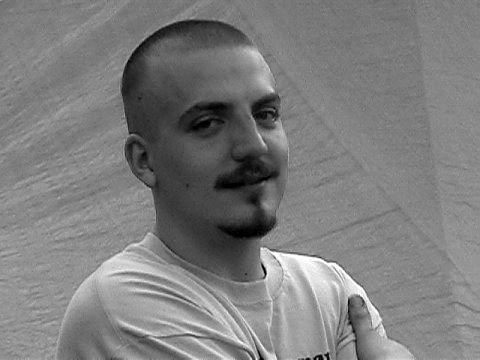 My son was 29 years old, almost 30. He was almost 3 when he was taken from my arms, a day long ago, on a November 4th. He was planning on traveling out here to Arizona to visit me, along with his fiancee Susan, this November 4th. They already had the airline tickets, and I was looking forward to really meeting Susan and to have a days long contact visit with my son. This would have been our first contact visit since 1999, when Rick visited me in Leavenworth. In 2000, I was sent to Walpole state prison in Massachusetts. For the next 9 years, even though I was in the same state as my son, all my visits were one hour long through a glass window over a telephone.
In the beginning of 2009, I was transferred back to the federal system to begin a consecutive sentence. I was sent to this prison in the Sonoran desert, near the Mexican border. For most of the 27 years of my captivity, the U.S. government has intentionally kept me locked up thousands of miles from my son and family. Many other political prisoners face this same type of exile imprisonment.
One special reason for this November 4th visit, was so Rick and Susan could tell me about their plans to marry and hopes for children and their life together. I was so happy and hopeful for them and the thought of a new little Ricky chan – boy or girl.
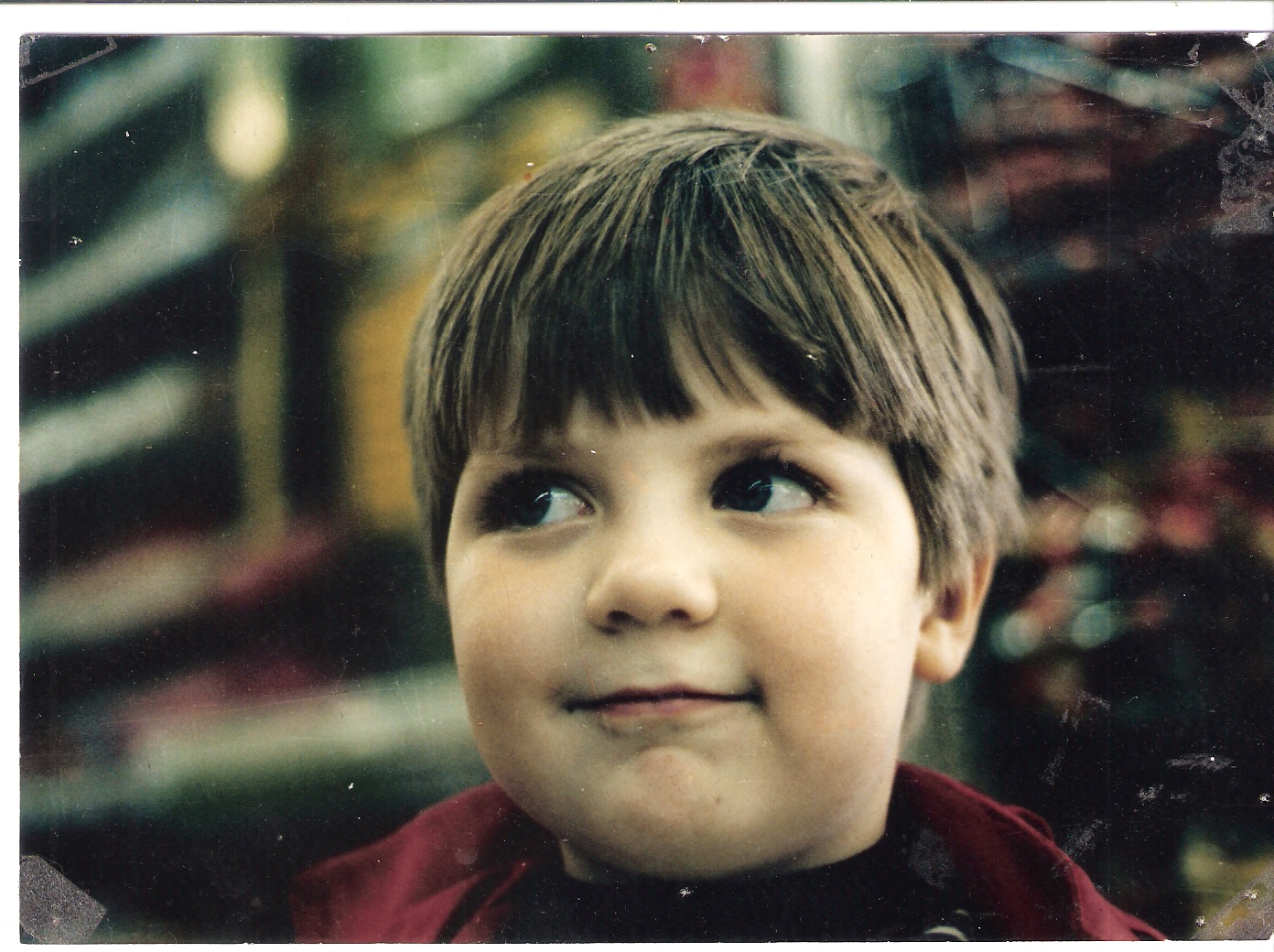
Ricky at three
Being the child of revolutionary activists, and especially in situations when parents choose or are forced into clandestine and underground work and life, will have a major life long impact on the child. When Ricky’s mother, Barbara, and I and other Ohio-7 people were located and captured in November of 1984, Ricky and the other Ohio-7 children were actually locked up themselves in juvenile detention jails for weeks, until our families and lawyers finally forced the government to release them to grandparents and other family.
Ricky lived with his maternal grandparents in Boston, until he was 10, when his mother was released from prison.
My son was not a political activist, though he was involved in many events, conferences, gatherings from the time he was a teenager. He knew and worked with leaders and activists of the Jericho political prisoners organization, the Puerto Rican Independence movement, the New African Independence movement, and in anarchist circles. He attended many of these events as the son of political prisoners and sometimes represented me and delivered statements from me, as well as his own words, including eloquent thoughts of what it was like to be a child growing up while your parents were in prison for their political efforts.
Just days before his death, Rick was at Occupy Boston and planned to write an article for this issue of 4sm, on this occupation. He had some notes, but said he wanted to wait until our visit to talk about it, before he finished the article. When people at the occupy site found out Rick was the son of a political prisoner, they invited him to lead a workshop on political prisoners there, the following week.
My son was deeply aware of the realities of U.S. imperialism and capitalism, and the struggle against it. His young and too short life was directly impacted by the racist police state realities of imperialism, and of course by the decisions I made for myself, my family and my son, in my life.
Let me be very real with you readers, from that cold November day in Cleveland in 1984, when we were captured and I saw a black suited SWAT cop grab my son, till the night before his death when I talked to him on the phone, there is no one in this world I loved or cared more about, or wanted to be actually close to, than my son.
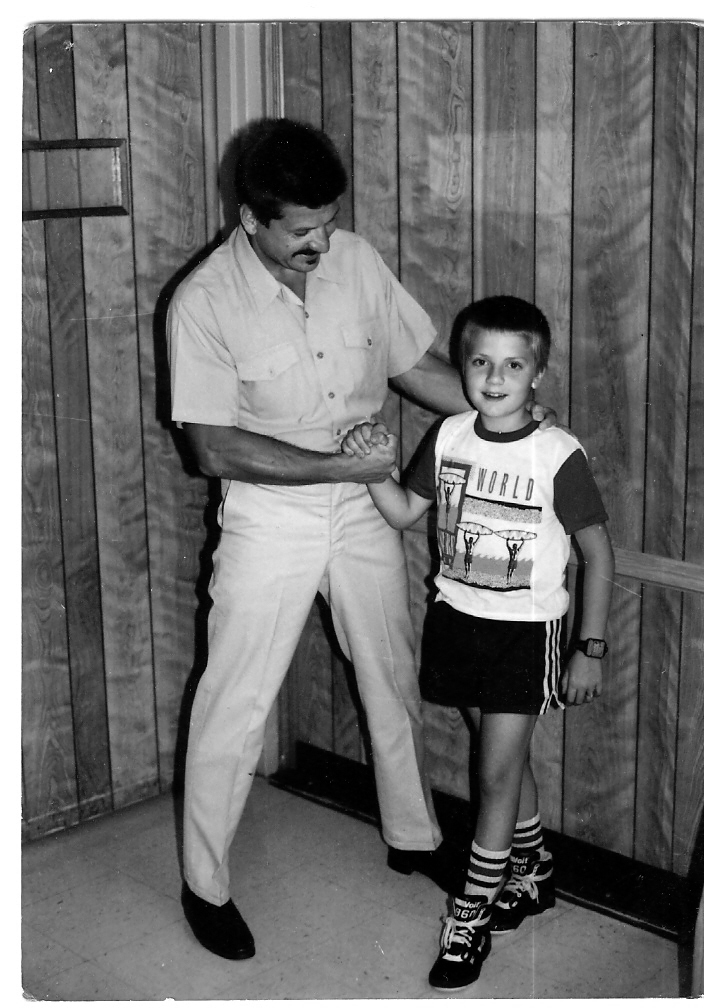
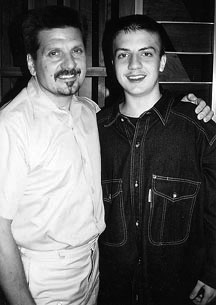
I’ve long been kind of amazed, but so very glad that Rick and I always maintained a close loving father and son relationship and bond. I kept in regular contact with him, even from seg and other lock down units, with lots of cards, letters and phone calls and the always too infrequent visits. Even over time and growing up transitions he went through, and of course the distances imposed on us, we were always genuinely close, largely honest and real with each other and we always expressed love – father to his son and son to his father.
All that said, my son needed and wanted me close in his life from the moment he was taken away from his mother and me as a tiny little boy, till the end of his life. He always expressed this, as a little boy, a teenager and as an adult, including in the past few years as he struggled with addiction issues and fears.
I believe my son was a very special, positive and true human presence here with us for just a short time. Of course you would expect me, as a father to say and feel something like this. But this was what most of the well over 200 people at his funeral were telling each other. I’m told, it was an extremely diverse group of people. Of course family from all sides and distant locations. Close friends from computer school, college, rehab, as well as young muscle bound neighborhood guys who Rick worked out with. There were prominent revolutionary figures and former political prisoners. There were also some adult children of political prisoners, like Richard Williams’ son and daughter, Netdahe and Henekis, who knew and loved Rick since they were children. There were old Italian women from the neighborhood who spoke about how charming, courteous and helpful Rick had always been with them and other neighbors. My son touched many people in many real, meaningful, profound, genuine and compassionate ways.
I’m not sure why I’m putting all these long words together. I guess I did want to speak to comrades and interested people directly. Maybe it is cathartic. So what. My son is dead. These are insane impossible words, that now frame my life.
A final thought: I’ve received many cards and words of shared sorrow and support from many friends and others. I haven’t responded much, but I have appreciated all the thoughts and concern.
Try to take care of each other and the people you love.
Occupy Wall Street
BY JAAN LAAMAN
 This Fall, we have witnessed the birth and development of a new movement in the United States. From the initial Occupy Wall Street gathering in Zuccotti Park, now known as Liberty Park, to dozens and dozens of other occupy gatherings and encampments around the country, a new movement of the people exists. A lot of words, questions and analyses, have come out of the occupations.
Recently, police/government attacks have been launched against this movement, and occupation encampments have been torn up in Atlanta, Boston, Burlington, VT, Denver, Oakland, Portland, OR, Salt Lake City, St. Louis and in New York City too. Information has come out that mayors’ offices and police chiefs in these and other cities have been coordinating their attacks and receiving instructions from Homeland Security and other federal cops on when and how to attack the occupy movement.
The U.S. government and the ruling class of billionaires and corporate wealth it primarily protects and serves, recognizes the potential of real changes that the occupy movement represents.
As occupiers are being pushed out of many parks and losing their base of operations, it is of course necessary for people to come up with new ways to gather, communicate and continue the struggle.
4strugglemag supports the occupy movement and we urge our readers to participate directly where possible, and to share your creative thoughts on tactics, strategy and how to sustain and push the struggle forward. We are printing several pieces on occupy and look forward to your responses and ideas for issue 21.
On Occupy Wall Street
BY MUMIA ABU-JAMAL
In Lower Manhattan’s Zuccotti Park (renamed “Liberty Square” by the demonstrators), the cast of thousands swell in rebellion against the betrayals by the banks, Wall Street’s relentless greed, the plague of joblessness and the craven servility of the political class—both Republicans and Democrats—to their moneyed masters.
In short, the central focus of their protest is capitalism—greed writ large, especially since the economic tumble of Fall 2008. Begun mostly by unemployed youth, it has drawn the presence and support of public workers, urban youth, students, teachers, and a considerable number of gray hairs.
That’s because social discontent is so widespread that it is spreading like wildfire: Wall Street, and then, days later, Boston, Baltimore, Philadelphia, Los Angeles, and beyond. Demonstrations springing up like mushrooms after a storm, in protest to the crony capitalism brought to us by the professional sellouts called politicians.
And (speaking of), like vampires at a blood bank, politicians are descending on Wall St., to try to suck the life out of a movement that could threaten their monopoly on power. For, the politicians’ only interest in this protest is to exploit it, to weaken it, while they continue to serve the very bosses the protestors oppose. You can count the number of politicians who truly oppose Wall St. on one hand—and still have a few fingers left.
Perhaps America’s greatest white revolutionary, abolitionist John Brown, had little regard for politicians. He told his family: “A professional politician … you never could trust; for even if he had convictions, he was always ready to sacrifice his principles for his advantage.”
Think about that. Now think about every politician you know. See? This is People’s Power, sparked, in part by the mass protests in Cairo and Wisconsin. Other sparks were the Troy Davis injustice, the assault on several demonstrators by New York cops, the repression on the poor and working class by the political class, and discontent with the long, wasted years at mindless wars abroad.
This is people’s power.
May it remain so.
On Occupy Wall Street
BY OSCAR LOPEZ RIVERA
I’ll be fasting on the 10th of December – International Human Rights Day. i’ll start it the evening of the 9th.
i’m inviting every person who loves freedom and justice and believes that a better and more just world is possible to join me. The person can fast for as long as s/he can. The fast is in solidarity with the OWS movement and the celebration of international human rights day.
If we are indignados, who believe in the power of righteous indignation, we should be supportive of the OWS movement. This movement has been able to galvanize the people’s righteous indignation and has successfully activated and mobilized a mass force that has shaken the foundation (Wall St. and Washington) of the one per cent that controls the wealth and the political power at the expense of the 99 percent that doesn’t have any wealth or any control of the political power.
The one percent is already using its muscle to try to repress the OWS movement and to disorganize it. Our solidarity is crucial. If you aren’t an indignado or occupier there is no good reason why you shouldn’t share your solidairty with OWS. If you want a better and more just world then you have to dare to struggle to make sure it becomes a reality.
At this particular juncture OWS represents the possibility of a movement for a better and more just world in the usa. Show your solidarity and use the power of your righteous indignation to struggle for a better and more just world. Join the fast or be an indignado/occupier. En resistencia y lucha, OLR.
If you intend to fast, please let us know.
WE CAN FREE OSCAR,
Coordinating Committee
National Boricua Human Rights Network
2739 W. Division Street
Chicago IL 60622
http://www.boricuahumanrights.org
Follow us on Twitter: olrcat
Comité Pro-Derechos Humanos
Are We An Occupation or Just a Gathering?
Text from a leaflet handed out by anarchists at Occupy events.
“Wall Street Protestors, Occupying Till Whenever”—recent New York Times headline
The “Occupy Wall Street” model has done what many have tried and failed — it has pushed past the apathy and created a venue for possibility.
In cities and towns across the country people are finding one another in situations into which few before dared to venture. Meetings are being held, food shared and ideas discussed. As one participant put it, “The fuzzy ultra-left ideal about forging new kinds of relationships through struggle and finding each other and such can’t just be about meeting in space and time; otherwise we could start a bowling league and be done with it.” What the gatherings themselves lack is a coherent substance, a sense of self-understanding. Towards this end, we raise the following questions.
Are We An Occupation or Just a Gathering?
In certain contemporary radical circles, the term occupation is often associated with a few things, namely the idea of disruption of or interference with the flow of goods or capital. When one asks for permission seeks a permit, the “occupations” become “camps” and the term becomes a catch phrase.
The original encampment, which has spawned many franchises in its wake, has been likened to other movements from around the globe, most notably the Tahrir Square occupations of January 2011. The major difference between the movement currently emerging in the United States and those of the square occupations throughout Northern Africa and Europe is strength. It was not merely the fact that 50,000 people took over Tahrir Square; it was the fact that they would not be forced to leave that made the difference. As a movement they were ready to physically defend the areas they had liberated and attack those trying to destroy it. To dogmatically cleave to a strategy of “non-violence,” we have cut our legs from under us. We did not hold Zuccotti Park, it was given to us under police supervision, and was taken away just as easily when the moment was deemed appropriate, that is when the police and the mayor had enough.
When Occupy Wall Street protestors took the message outside of the NYPD contained area they were attacked. Over 80 arrests occurred when the crowd marched near Union Square, 700 more when we tried to cross the Brooklyn Bridge, and hundreds more since. While the numbers swelled after those attacks, we missed a chance to sway the balance of power, even for just a moment.
That can change if the parameters of conflict are widened, if new avenues are opened to the possibility of physically holding space, not negotiating for its rental. Our individual refusals are small. However, a collective refusal is one of the last and strongest weapons we can wield together.
Are we Anti Capitalists or just Anti Corporations?
There is a difference between being an anti-capitalist and being against corporations, or “corporate greed,” as some describe it. Anti-capitalists reach for a world free of the kinds of social relationships that require domination — landlords and tenants; bosses and workers; police and prisoners. These are relationships inherent to a capitalist system and to the democracy we live under. It is not indicative of a “broken” system for unemployment rates to soar, inflation to reign and wages to continually drop. The money cannot even out, congress cannot legislate its way to equality. From where we all now sit, our personal freedoms and any wealth we can accumulate is done on the backs of someone else or at our own expense.
Though it may have taken on new forms, none of the poverty or exploitation being protested is unique to the modern age of corporate dominance. Regulating or taxing corporations will not solve these problems, because those institutions are only one part of the vast structure of social relationships called State and Capital.
The future is wretched and marked with the poverty we all feel today. This in and of itself is cause for indignation. When that rage turns towards petitioning congress for a brighter tomorrow or demanding accountability of corporations, we have already lost.
The Police are not our friends!
Capitalism, as a system, is based on a series of relationships between those who have power and those who do not. The police, whether they are a beat cop, a detective, or the Chief act as the enforcers of this economic system. They stand between us and the food we need to survive. They evict us from the homes we can no longer afford. Their job is to enforce the laws of capital, the ones created not to keep us safe but to protect capital and ensure the system works as smoothly as it can.
The police who enter our liberated zones, our occupations, are doing so as agents of the State. As individuals they may have families and problems. They may hate their jobs just like the rest of us, but that does not mean they will not do them. If we are to stand together as the proposed 99% we cannot allow the thugs and mercenaries of the 1% to enter.
What is the meaning of the California prisoner hunger strikes? A statement in support of the hunger strikers
BY KEVIN RASHID JOHNSON
“If there is no struggle, there is no progress.” – Frederick Douglass
Six thousand six hundred California prisoners participated in a 3-week-long hunger strike in July, seeking relief from unjust and inhumane conditions. In the face of California Department of Corrections (CDC) officials failing to honor settlement negotiations, the hunger strike resumed on September 26th, with nearly 12,000 prisoners participating in thirteen of that state’s prisons.
It is a truism that oppression breeds resistance. Indeed, the U.S. Declaration of Independence enshrines the right and duty of the oppressed to resist their oppression.
In this era of capitalist oppression on a global scale, the hunger strike exhibits the very same humyn spirit, courage and outrage that drove millions across North Afrika and the Middle East this year, to take to the streets in protest against oppressive governments. U.S. rulers, in the face of pretending to champion and support human rights, democracy, and the demands for basic rights by people half a world away, can’t admit they practice abuses just as vile against their own subjects – right here in Amerika.
Hosni Mubarak, the U.S. puppet and Egyptian dictator who was driven out of Egypt by mass protests this year, was notorious for torturing his own people. But so too are U.S. officials. Indeed, one of the key protest issues of the California prisoners is the acute psychological torture of sensory deprivation in the CDC’s Security Housing Units (SHUs) – Pelican Bay’s SHU in particular. This torture can’t be honestly denied.
It has long been the game of U.S. officials, especially since the 2004 Guantanamo Bay and Abu Ghraib torture scandals, to pretend that psychological torture isn’t really torture at all. However, they secretly know the exact opposite to be true. According to torture experts, psychological – or ‘clean’ torture – is the most destructive, sadistic and inhumane type of torture. Among the most proven effective methods is the very sort inflicted by design in the isolated cells of the SHUs, namely sensory deprivation.
Noted psychologist and torture expert, Dr. Albert Biderman, long ago found as to sensory deprivation, “the effect of isolation on the brain function of the prisoner is much like that which occurs if he is beaten, starved or deprived of sleep” [1]. The very same U.S. Central Intelligence Agency that employed Biderman as one of its torture researchers and experimenters, encoded these findings in its 1963 “Kubark Counterintelligence Interrogation” torture manual, confirming that:
- The deprivation of sensory stimuli induces stress;
- The stress becomes unbearable for most subjects;
- The subject has a growing need for physical and social stimuli; and
- Some subjects progressively lose touch with reality, focus inwardly, which produces delusions, hallucinations, and other pathological effects.
What’s more, over a century ago the U.S. high court found and denounced the same in U.S. prisons, in the face of In Re Medley, 134 U.S. 150 (1890) [2]. These findings have been repeated in U.S. courts today in response to the conditions of SHUs and super-maximum security prisons that have swept Amerika since the 1970s, alongside massive imprisonment of the poor and people of color. In one case concerning Pelican Bay’s SHU, the California federal courts found “many, if not most, inmates in SHU experience some degree of psychological trauma in reaction to their extreme social isolation and the severely restricted environmental stimulation in SHU.” Madrid v. Gomez, 889 F. Supp. 1146 (1995).
So it’s no wonder thousands of prisoners have been driven to starve themselves in desperate efforts for exposure and redress, and to show they are worthy of basic humyn rights and dignity.
But the typical response of officials is to discredit the resistance of those who suffer at their hands by villainizing (or “dirtying up,” as Johnnie Cochran used to called it), the victim. It was done to Civil Rights activists from the 1950s-1970s who opposed and exposed racism – U.S. officials projected them as fronts for foreign communists, and denounced as “Soviet propaganda” graphic photos of Southern lynching that appeared in world media.
Whatever happens to be the popular official enemy and bogeyman of the day, is the label used to discredit those who resist official oppression. During the Cold War, the ‘enemy’ was communists. Then it was terrorists. In the era of mass incarceration and ongoing persecution of Black and Brown youth, it’s gangs. These labels are used to provoke visceral reactions in the population at large of fear, hatred and consequent disregard for and alienation against the oppressed. And true to form, the hunger strikers have been “dirtied up’”as the work of prison gangs:
“The CDCR has continued to lie about the hunger strike – saying it was organized by gangs and attacking representatives of the strikers and others, depicting them as the ‘generals’ of the prison gangs and the ‘shot callers’ who order other prisoners to engage in gang violence.
“Dolores, whose son has been in the SHU for 10 years, said “If that is their [the prisoners’] way of thinking, then why did they just conduct a hunger strike willing to risk their own lives, to suffer on a daily basis in a nonviolent demonstration that spread across California prisons involving thousands and thousands of men crossing all racial lines? It’s because they are human beings. They do have dignity, and they want to be heard.” [3]
Not coincidentally, another of the hunger strike’s main protest issues is the CDCR’s labelling prisoners as gang members upon the flimsiest grounds, then confining them in SHUs until they “debrief” – that is, finger other prisoners as gang members to be thrown in the SHU. Thus the only way to leave SHU is as a known informant to be ostracized and targeted as such by others.
The Real Purpose of SHUs and Super-maxes
The true purpose of SHUs isn’t to control gangs and racial violence. In fact, the CDCR has long instigated and facilitated prisoner-on-prisoner violence. From the notorious ‘gladiator fights’ – where guards at CDCR’s Corcoran State Prison set up prisoner fights, gambled on the outcomes, and then shot the prisoners for fun, killing 8 and shooting 43 just between 1989 and 1994 – to massive numbers of prisoner-on-prisoner clashes instigated and manipulated by the notoriously corrupt California prison guards’ union, to generate public support for building more prisons to increase prison jobs and dues-paying membership.
In 1999, prisoners at the New Folsom Prison went on a hunger strike protesting being forced onto prison yards with rivals. CDOC Ombudsman Ken Hurdle rejected negotiations, stating “Then you’d have two groups normally aligned on the yard together. They would have only staff as their enemy” [4]. This admits officials deliberately facilitating prisoner-on-prisoner violence as a technique of prison control. This is what they fear in the unity shown by the hunger strikers. And it undermines the disunity they need to project them as animals.
Officials welcome and incite gang violence. It creates jobs, justifies their oppression, and enhances their ‘control.’ Even Crips co-founder Stanley ‘Tookie’ Williams, who was killed by the CDCR exposed this [5].
More revealing is that then-California Governor, Arnold Schwarzenegger, rejected massive international pleas to stay Tookie’s execution on grounds that Tookie dedicated his book, Life in Prison, to Black revolutionary George Jackson, who was murdered by CDOC officials in 1971. Schwarzenegger said the dedication “defies reason and is a significant indicator that Williams is not reformed.” Which brings us closer to exposing the real reasons SHUs exist.
The actual “leaders” officials fear, and who are the prime targets of SHUs and super-maxes are those who are politically conscious and prove able to unite prisoners across racial and other lines.
The proliferation of SHUs and super-maxes began with the Marion Control Unit, which opened in 1972, following the murder of George Jackson and the peaceful 1971 Attica uprising that officials ended with the coldblooded murders of 29 prisoners and 10 civilians, and systematic humiliation and torture of hundreds of prisoners, provoking international outrage. Like the brutal government responses to mass protests in Asia and Afrika this year, when the prisoners of Attica took to the yard in protest, with grievances articulated and represented by politically conscious prisoners, the official response was murder and torture, then high security torture units. In one of the few admissions on record, Ralph Arons, a former warden at Marion, testified in federal court: “The purpose of the Marion Control Unit is to control revolutionary attitudes in the prison and in society at large” [6]. Yet U.S. officials deny confining or persecuting people for political beliefs.
In fact, Pelican Bay officials recently banned my own book, Defying the Tomb, as “gang material,” a book of political writings and art, which many readers and reviewers have compared to George Jackson’s writings, whose books CDOC banned in the 1970s as well. And with the resurgence of prisoners’ political consciousness, they’ve recently begun confiscating this book as “gang material.” Like Nazi book burnings and concentration camps, the object is to censor and persecute political consciousness and revolutionary culture amongst the most oppressed peoples. And ‘gang’ labels are used to “dirty up” the people, practices, and ideas they seek to repress.
Just as I am confined in a remote Virginia super-max, under ‘special’ conditions of a SHU because of my political beliefs and having co-founded the New Afrikan Black Panther Party as a Party of the oppressed, so too you’ll find in these units across Amerika those who hold and practice revolutionary political views and affiliations that are supposed to be constitutionally protected, not persecuted. As the high court once proclaimed:
“Our form of government is built on the premise that every citizen shall have the right to engage in political expression and association. This right was enshrined in the First Amendment of the Bill of Rights. Exercise of these basic freedoms in America has traditionally been through the media of political associations. Any interference with the freedom of a party is simultaneously an interference with the freedom of its adherents. All political ideas cannot and should not be channelled into the programs of our two major parties. History has amply proved the virtue of political activity by minority, dissident groups…” [7]
But contrast these political ideals with the political reality that such parties face at the hands of officials, as admitted by Justice Hugo Black: “History should teach us…that…minority parties and groups which advocate extremely unpopular social or governmental innovations will always be typed as criminal gangs and attempts will always be made to drive them out” [8].
This is the function of the SHUs like those that California’s prisoners are protesting, and the ones used as a weapon to censor and repress political consciousness.
Resistance to the oppression of these units is the meaning of the hunger strikes. Amerika’s oppressed and disenfranchised victims of modern penal enslavement and the New Jim Crow, are struggling like those of generations past for recognition and respect as humyn beings. As a Party of the oppressed, especially the imprisoned, the NABPP-PC stands in unity with the heroic struggles of California’s entombed, and call on all freedom-loving people everywhere to take up their cause.
Dare to struggle! Dare to win!
All Power to the People!
Notes
- Albert D. Biderman and Herbert Zimmer, eds. The Manipulation of Human Behavior (New York: Wiley, 1961), 29.
- The court found under conditions of solitary confinement “A considerable number of prisoner fell, after even a short confinement, into a semi-fatuous condition, from which it was next to impossible to remove them, and others became violently insane; others still committed suicide, while those who stood the ordeal better were generally not reformed, and in most cases, did not recover sufficient mental activity to be of any subsequent service to the community.”
- “Hunger Strike to Resume September 26 – Support the Just Demands of the Pelican Bay Prisoners,” Revolution #243, September 25, 2011.
- Quoted from Sacramento Bee, December 8, 1999.
- “Yes America, as unbelievable as it may seem, ‘hood cops, with impunity, commit drive-bys and other lawless acts. It was common practice for them to abduct a Crip or Bounty Hunter and drop him off in hostile territory, and then broadcast it over a loudspeaker. The predictable outcome was that the rival was either beaten or killed on the spot, which resulted in a cycle of payback. Cops would also inform opposing gangs where to find and attack a rival gang, and then say ‘go handle your business.’ Like slaves, the gang did exactly what their master commanded. Had they not been fuelled by self-hatred, neither Crips, Bounty Hunters, nor any other Black gang, would have been duped: “The ‘hood cops were pledged to protect and serve, but for us they were not there to help, but to exploit us – and they were effective. With the cops’ Machiavellian presence, the gang epidemic escalated. When gang warfare is fed and fuelled by law enforcement, funds are generated for the so-called anti-gang units. Without gangs, those units would no longer exist.” Blue Rage, Black Redemption (2004).
- Stephen Whitman, “The Marion Penitentiary – It should be Opened-Up Not Locked-Down.” Southern Illinoisan. August 7, 1988, p. 25.
- NAACP v. Button. 371 U.S. 415, 431 (1963).
- Barenblatt v. U.S., 360 U.S. 109, 150 (1959) (J., Black, dissenting).
Conspire to Resist: Regarding our Plea Deal
November 22, 2011 — As people across Turtle Island look towards the global wave of protests against the austerity agenda, the memory of the 2010 G20 protests in Toronto looms large as both inspiration and caution. We are seventeen people accused by the state of planning to disrupt the leaders summit – the prosecutors call us the G20 Main Conspiracy Group.
This alleged conspiracy is absurd. We were never all part of any one group, we didn’t all organize together, and our political backgrounds are all different. Some of us met for the first time in jail. What we do have in common is that we, like many others, are passionate about creating communities of resistance.
Separately and together, we work with movements against colonialism, capitalism, borders, patriarchy, white supremacy, ableism, hetero/cis-normativity, and environmental destruction. These are movements for radical change, and they represent real alternatives to existing power structures. It is for this reason that we were targeted by the state.
Although these conspiracy charges have been a big part of our daily reality for the past year and a half, we have been slow in speaking out collectively. This is partly because of the restrictive bail conditions that were placed on us, including non-association with our co-accused and many of our close allies. In addition, those of us who did speak out have been subjected to a campaign of intimidation and harassment by the police and prosecutors. We are writing now because we have decided to resolve our charges to bring this spectacle to an end.
The state’s strategy after the G20 has been to cast a wide net over those who mobilized against the summit (over 1, 000 detained and over 300 charged) and then to single out those they perceived to be leaders. Being accused of conspiracy is a surreal, bureaucratic nightmare that few political organizers have experienced in this country, but unfortunately it is becoming more common. We can’t say with any certainty if what we did was in fact an illegal conspiracy. Ultimately though, whether or not our organizing fits into the hypocritical and oppressive confines of the law isn’t what’s important. This is a political prosecution. The government made a political decision to spend millions of dollars to surveil and infiltrate anarchist, Indigenous solidarity, and migrant justice organizing over several years. After that kind of investment, what sort of justice are we to expect?
We have not been powerless in this process; however any leverage we’ve had has not come from the legal system, but from making decisions collectively. This has been a priority throughout, particularly in the last several months, as the preliminary inquiry gradually took a back seat to negotiations for a deal to end it. The consensus process has been at times a heart-wrenching, thoughtful, gruelling, disappointing, and inspiring experience, and in the end, we got through it together.
Of the seventeen of us, six will be pleading and the eleven others will have their charges withdrawn. Alex Hundert, and Mandy Hiscocks are each pleading to one count of counselling mischief over $5,000 and one count of counselling to obstruct police, and Leah Henderson, Peter Hopperton, Erik Lankin, and Adam Lewis are each pleading to a single count of counselling mischief over $5,000. We are expecting sentences to range between 6 and 24 months, and all will get some credit for time already served in jail and on house arrest.
Three defendants in this case had their charges withdrawn earlier and one has already taken a plea to counselling mischief over $5,000 that involved no further jail time. This means that out of twenty-one people in the supposed G20 Main Conspiracy Group, only seven were convicted of anything, and none were convicted of conspiracy. The total of fourteen withdrawals demonstrates the tenuous nature of the charges.
This system targets many groups of people including racialized, impoverished and Indigenous communities, those with precarious immigration status, and those dealing with mental health and addiction. The kinds of violence that we have experienced, such as the pre-dawn raids, the strip-searches, the surveillance, and pre-sentence incarceration happen all the time. The seventeen of us have moved through the legal system with a lot of privilege and support. This includes greater access to “acceptable” sureties, and the financial means to support ourselves and our case. While the use of conspiracy charges against such a large group of political organizers is noteworthy, these tactics of repression are used against other targeted communities every day.
There is no victory in the courts. The legal system is and always has been a political tool used against groups deemed undesirable or who refuse to co-operate with the state. It exists to protect Canada’s colonial and capitalist social structure. It is also deeply individualistic and expensive. This system is designed to break up communities and turn friends against each other.
Within this winless situation, we decided that the best course of action was to clearly identify our goals and needs and then to explore our options. Within our group, we faced different levels of risk if convicted, and so we began with the agreement that our top priority was to avoid any deportations. Other key goals we reached were to minimize the number of convictions, to honour people’s individual needs, and to be mindful of how our decisions affect our broader movements. Although we are giving up some important things by not going to trial, this deal achieves specific goals that we weren’t willing to gamble.
Our conversations have always been advised by concern for the broader political impacts of our choices. One noteworthy outcome is that there are no conspiracy convictions emerging from this case, thus avoiding the creation of a dangerous legal precedent that would in effect criminalize routine tasks like facilitation. Taking this deal also frees up community resources that have been embroiled in this legal process.
We emerge from this united and in solidarity.
To those who took us in while on house arrest, to those who raised money for our legal and living expenses, to those who cooked food, wrote letters, offered rides and supported us politically and emotionally throughout, thank you.
To those in jail or still on charges from the anti-G20 protests, to political prisoners and prisoners in struggle, we are still with you.
To communities and neighbourhoods fighting back from Cairo to London, from Greece to Chile, in Occupied Turtle Island and beyond, see you in the streets.

from top-left: Pat Cadorette, Erik Lankin, Paul Sauder, Meghan Lankin, Bill Vandreil, Joanna Adamiak, Julia Kerr, David Prychitka, Alex Hundert, Monica Peters, Sterling Stutz, Leah Henderson, Adam Lewis, Mandy Hiscocks, Peter Hopperton, SK Hussan, Terrance Luscombe
If you would like to issue a solidarity statement, please email toronto.g20resist@gmail.com and let us know
Three Prisoners Die in Hunger Strike Related Incidents: CDCR Withholds Information from Family Members, Fails to Report Deaths
In the month since the second phase of a massive prisoner hunger strike in California ended on September 22nd, three prisoners who had been on strike have committed suicide. Johnny Owens Vick and another prisoner were both confined in the Pelican Bay Security Housing Unit. Hozel Alanzo Blanchard was confined in the Calipatria Administrative Segregation Unit (ASU).
According to reports from prisoners who were housed in surrounding cells and who witnessed the deaths, guards did not come to the assistance of one of the prisoners at Pelican Bay or to Blanchard, and in the case of the Pelican Bay prisoner (whose name is being withheld for the moment), apparently guards deliberately ignored his cries for help for several hours before finally going to his cell, at which point he was already dead. “It is completely despicable that prison officials would willfully allow someone to take their own life,” said Dorsey Nunn, Executive Director of Legal Services for Prisoners with Children, “These guys were calling for help, their fellow prisoners were calling for help, and guards literally stood by and watched it happen.”
Family members of the deceased as well as advocates are having difficult time getting information about the three men and the circumstances of their deaths. The California Department of Corrections and Rehabilitation (CDCR) is required to do an autopsy in cases of suspicious deaths and according to the Plata case, is required to do an annual report on every death in the system.
Family members have said that their loved ones, as well as many other prisoners who participated in the hunger strike, were being severely retaliated against with disciplinary actions and threats. Blanchard’s family has said that he felt that his life was threatened and had two emergency appeals pending with the California Supreme Court at the time of his death. “It is a testament to the dire conditions under which prisoners live in solitary confinement that three people would commit suicide in the last month,” said Laura Magnani, Regional Director of the American Friends Service Committee, “It also points to the severe toll that the hunger strike has taken on these men, despite some apparent victories.” Prisoners in California’s SHUs and other forms of solitary confinement have a much higher rate of suicide than those in general population.
The hunger strike, which at one time involved the participation of at least 12,000 prisoners in at least 13 state prisons was organized around five core demands relating to ending the practices of group punishment, long-term solitarily confinement, and gang validation and debriefing. The CDCR has promised changes to the gang validation as soon as early next year and were due to have a draft of the new for review this November, although it’s not known whether that process is on schedule. “If the public and legislators don’t continue to push CDCR, they could easily sweep all of this under the rug,” said Emily Harris, statewide coordinator Californians United for a Responsible Budget, “These deaths are evidence that the idea of accountability is completely lost on California’s prison officials.”
Support the work of the Freedom Archives
Dear Friends,
In the midst of new worldwide and national currents of change, the passing on of lessons of the past to new generations takes on even greater meaning. Your year-end contribution gives Freedom Archives the ability to sustain and expand our work. Thank you!
Our award winning film COINTELPRO 101 has been shown both nationally and internationally generating unique opportunities for organizing and sharing the lessons and strategies of resistance and mobilization. We were recently “on the road” in Chicago and Upstate NY and will be presenting the film at the prestigious Festival Internacional del Nuevo Cine Latinoamericano in Havana Cuba.
We have been working hard to organize a truly unique way of accessing our archives on line. This will give Freedom Archives the ability to share our resources more effectively with communities and individuals throughout the world.
We marked the untimely passing of Geronimo ji Jaga. Geronimo’s lifelong resistance in the struggles of human rights and Black liberation is one that needs to be shared throughout our communities. Take a look at our web page to see and listen to videos and audio clips that highlight his years of struggle in prison and his unwavering commitment to free all political prisoners.
We celebrated a significant victory in the San Francisco 8 case on October 22nd, with the dismissal of the final charges against Francisco Torres. This case erupted in January of 2007the week our film Legacy of Torture premiered. Legacy of Torture traces the history of repression against the Black Panther Party from 1973 to the case of the San Francisco 8.
Two short videos made by the Freedom Archives were also central to commemorations marking 40 years since the murder of George Jackson and the Attica Rebellion of 1971. You can see both of these on our website as well.
Both Legacy of Torture and COINTELPRO 101 highlight the essential role that the resources of Freedom Archives can play in keeping the voices of struggle and resistance alive and growing. As we travel both nationally and internationally we are engaging with young people, longtime activists, academics, and community institutions that are carrying the torch of previous and current generations.
What we are planning for this coming year
COINTELPRO 101 is particularly timely in focusing attention on the current escalation of government repression – especially in the context of the Grand Juries targeting activists in the Midwest, the increased attacks on immigrants, the rise in Islamophobia, and the growing resistance of those imprisoned in Control Unit prisons and in prolonged isolation.
By integrating documents into our searchable database over the last year, we have created a much more complex and thorough collection of materials. Our challenge is to create a web-based interface that is much more friendly and intuitiveso non-scholars can explore the richness of our holdings. By upgrading our data management and by designing a thematically-based and more graphic web presence, we hope to attract a broader and younger group to explore our holdings.
Our pilot project will focus on the historic movement to close Control Unit prisons. Control Units have proliferated since the 1980s and now house over 100,000 prisoners in prolonged isolation. This project takes on heightened significance In light of the recent hunger strikes in California led by Pelican Bay prisoners demanding an end to prolonged isolation. We are expecting to make these documents, audio, and video materials available on-line in the coming months.
Your Contributions
Your support has made our work possible. As we begin our 12th year, we are fortunate not to be dependent on grants or foundations, rather we have continued to expand our base and capacity by relying on youmembers of our community who stand for justice. Every donation, no matter how small, contributes to our ability to keep on keepin’ on. Thank you in advance for standing shoulder to shoulder with Freedom Archives.
Preserving the Past – Illuminating the Present – and Shaping the Future!
Remember – it is easy to donate online or to become a monthly sustainer by clicking HERE
This is war: DABC call for support against state repression
By Denver ABC
It’s 11:07 on a Sunday morning, and yet again the 27 Social Centre in Northwest Denver is full of people. Folks are talking to imprisoned comrades on the phone, coordinating with court observers who just left a long bond hearing for 20 arrestees, entering yet more names and case numbers into online databases, and trying to feed each other and take care of our kids.
Police have been rolling by slowly and regularly, in increasing regularity on the streets surrounding our building. We tend to get a lot of roll by cop traffic, but today definitely feels different. They drive really slow, eyeballing everyone and anyone coming or going, and their numbers only seem to be increasing.
Last night, 21 more folks from Occupy Denver were arrested. Crowds were pepper sprayed, shot with pepper balls and rubber “less-lethal” rounds, and beaten with batons and fists. Street medics treated many injuries (yet again) and our legal observers reported many gross attacks on individuals, some not even affiliated with the demonstrations.
When we sent members of our organization to start bonding our prisoners out of jail, they were told they could not bond anyone out. Their bond amounts had been set, we had the money, but we were not allowed to post the money to free our comrades. First, the jail was locked down, with actual chain and padlocks barring entry to the lobby. After the lockdown, our team was told to return in an hour and they could start the bonding processes. However, when they returned, they were told that they would not be accepting bonds, and that the computer system that they used for processing background checks was conveniently broken. We were told to call back and check. In an act that didn’t surprise us at all, repeated phone calls throughout the night and early morning went unanswered.
Today, at the bond hearings that happened at 8am, every single prisoner’s bond was increased. Some prisoners saw their bonds increased by 3 to 5 times the amounts that they were at just hours ago. Felony assault charges were added to several of the arrestees, the ones (again, in an unsurprising move) who were the most injured or brutalized during their arrests.
Before the hearing, in an unprecedented move for bond hearings we have attended, our courtroom observers were barred from bringing pens or any writing implement to even record what was happening inside the hearing. Typically, phones must be turned off and hats removed before entering the courtroom. These items were banned wholesale from even entering the hearing room. This move seems calculated to make it even harder to support our comrades. When your trying to record new bond amounts for over 20 arrestees, pens are invaluable. Today, our observers scratched onto pieces of paper with their fingernails. This is just another battle in this much larger war.
We are working now to raise all the money necessary to bond out our comrades. Over the course of 6 weeks, we’ve been able to raise thousands of dollars to bond out dozens of people in need of bonding. We are now supporting over 90 arrestees from the last 6 weeks. If funds and resources were stretched to near breaking just two weeks ago, things now are beyond breaking. Our volunteer legal crew is tapped out. Out of energy. Out of time. Out of money. Out of resources. But yet, even in this overwhelming environment, they have not tapped out our will to fight.
On Friday night, Denver ABC hosted our 3rd annual Martyr’s Ball fundraiser. It was the most successful to date. The support and resources we raised went a long way to keeping up our will to fight.
This is a war. And our side is being hammered by an overwhelming police state hellbent on destroying social movements fighting for popular power and direct control over our lives. But, we’re fighting like hell. And we’re gaining ground. That’s why the state is fighting back as hard as they can. They have to crush us. Because we are a threat to everything they’re struggling to maintain their control over.
So, yet again, DABC and Occupy Denver need your support!
1) Donate to the bond fund:
By mail: Checks made out to David Strano, sent to P&L Printing, 2727 W 27th Ave Unit D Denver, CO 80211
By email/internet: Paypal money to plpress@riseup.net
In person: Bring money or donations to the 27 Social Centre at 2727 W. 27th Ave
2) Volunteer!
We’ve been saying this a lot, and we’ve been bad about following up, but really, the best way to volunteer to help is to show up at the 27 Social Centre. Especially today. We’re trying to raise kids, do laundry, and do the normal things folks do, even in times of protracted social conflict…. all while raising bond money, meeting with lawyers and bondspeople, picking folks up from jail, and fielding phone calls from prisoners, family members, friends, media, and others.
3) Drop off food and other resources
We could use snack foods, dinner items, sandwich materials, etc… to feed the legal volunteers, as well as folks getting out of jail.
4) Contact us with creative ideas of how to help!
denverabc@rocketmail.com
In love and solidarity!
DABC CREW
11/13/11
Building a broad front against FBI and U.S. government repression
November 8, 2011
Read more articles in FBI Repression
http://www.fightbacknews.org/2011/11/8/committee-stop-fbi-repression-conference-successful-and-inspiring
Chicago, IL – Over 150 people gathered here, Nov. 5, for the first national conference of the Committee to Stop FBI Repression.
Conference organizer Tom Burke said, “The national conference was a grand success. We united movement leaders from Florida to San Jose, from New Jersey to L.A., in opposing political repression, Islamophobia and the criminalization of whole communities. We dedicated ourselves to a campaign in solidarity with the famous Chicano leader and anti-war activist Carlos Montes, demanding “Drop the charges!” We discussed how, with the upsurge around the Occupy Wall Street movement, we are joining in efforts to lead protests while also popularizing the Carlos Montes solidarity campaign. With local police, directed by the FBI, arresting thousands of Occupy Wall Street movement protesters, there is an opportunity to organize thousands against political repression and to support Carlos Montes. If we go out and organize, we can beat these attacks.”
The Committee to Stop FBI Repression was formed in September, 2010 after anti-war and international solidarity activists’ homes were raided by the FBI and 23 people were subpoenaed before a Chicago-based grand jury in a witch hunt chasing after phony ‘material support for terrorism’ charges.
This conference brought together supporters of the 23 activists, along with Carlos Montes, whose Los Angeles home was raided on orders from the FBI this past May as part of the same witch hunt, as well as family members of Arab and Muslim political prisoners in the U.S.
The conference passed resolutions committing to focus on defeating the charges against Carlos Montes; reaffirming the Pledge to Resist in support of the 23 anti-war and international solidarity activists who have refused to appear before the Chicago grand jury; and to build a broad front against U.S. government repression.
The last resolution recognizes the reality that the only way to stop the very serious attacks on so many Palestinians, Muslims, Arabs and anti-war and solidarity activists is through building broad unity to defend everyone under attack. Speakers emphasized that the laws and court interpretations have become so bad that they have unleashed a general wave of repression that must be pushed back against as a whole.
There were also resolutions passed in support of continuing international solidarity work with Palestine and in support of mobilizing for mass anti-war protests at the G-8 and NATO meetings in Chicago in May 2012.
The resolution calling for a broad front against repression reads, in part:
- “The government of the U.S. has constructed an immense repressive apparatus that is aimed at the Arab and Muslim communities, other oppressed peoples, and progressive social movements. The tools used by this apparatus include spying and surveillance, anti-democratic grand juries, repressive legislation, preemptive prosecutions and imprisonment. We condemn the green scare repression and the police violence that has been directed at occupy Wall Street/occupy everywhere movement.
- “These attacks on our democratic and civil rights need to be meet with an effort to build the broadest possible united front against repression. Repressive legislation, such as the ‘Patriot Act’ and laws on ‘material support’ should be scrapped. Those who are facing repression need to be supported. We favor cooperation and coalitions with those who are working towards these ends. We will do everything in our power to put an end to these attacks. We understand the need for solidarity and that an injury to one is an injury to all.”
An impressive and inspiring range of speakers addressed the conference. There were family members of Palestinian, Arab and Muslim people facing political repression speaking alongside representatives of the 23 from the anti-war movement, as well as lawyers and activists from other organizations fighting against repression.
Sarah Smith of the Chicago Committee Against Political Repression opened the conference. She was one of the 23 activists subpoenaed to a grand jury because of her solidarity with Palestine. Tom Burke of the Committee to Stop FBI Repression, who was also subpoenaed, welcomed people to the conference.
Carlos Montes, the Chicano movement leader, anti-war and immigrant rights activist whose home was raided and ransacked by the FBI and L.A. County Sheriffs, spoke in the morning about his activism and the repression he is facing. Montes faces six felony charges is mounting a vigorous political and legal defense.
Jeff Mackler spoke for the United National Antiwar Coalition (UNAC) about the importance of defending the anti-war and international solidarity activists facing repression and the need to support all those under attack by the U.S. government. Mackler talked about his early political activism protesting against the McCarthyite wave of anti-communist repression, including the House Unamerican Activities Committee.
Jim Fennerty of the National Lawyers Guild and Jess Sundin of the Minnesota Anti-War Committee explained the case of the 23 anti-war and solidarity activists. They made it very clear that although the raids happened over a year ago, all signs point to the fact that the government is still planning to bring multiple indictments to try to jail people for a long time on ‘material support of terrorism’ charges. So, while it’s a good sign that nobody has been jailed for refusing to testify to the grand jury and that nobody has been indicted yet, it would be very unwise for people to think that the case is over. Fennerty made reference to the Holy Land 5 case, in which the government took several years before bringing the indictments that ultimately led to convictions and 65-year prison sentences.
Speak Out Against Repression
The next panel was the most moving of the conference, featuring family members and friends of people imprisoned for their ideas and political activism. Alejandro Molina of the National Boricua Human Rights Network spoke about the ongoing imprisonment of Puerto Rican independence activists.
Ali Al-Arian spoke about the case of his father, Dr. Sami Al-Arian. Al-Arian has been through a years-long ordeal of imprisonment, isolation and multiple grand juries which he refused to speak to. Sharmin Sadequee spoke movingly about the case of her brother Shifa Sadequee. Noor Elashi also spoke movingly on the case of her father Ghassan Elashi and the Holy Land 5. The Holy Land Foundation was the largest Muslim charity in the U.S. and sent humanitarian aid to Palestine as well as other places. In Palestine they sent money to the same community organizations that the USAID and other international agencies also sent money to. But after 9/11, the Holy Land Foundation was shut down and the directors ultimately jailed for terms up to 65 years for ‘material support of terrorism.’ Mrs. Asmaa Ashqar spoke of the case of her husband Dr. Ashqar, who was one of the first people jailed under the 1996 anti-terrorism laws. Finally, Hatem Abudayyeh of the U.S. Palestinian Community Network spoke. He is one of the 23 solidarity activists raided last September and has been an outspoken advocate of Palestinian national unity and liberation.
After this panel there were workshops on labor solidarity, student activism, Palestine solidarity and legislative work.
Solidarity Forever
During lunch there were video solidarity messages from Cornel West and Robert Meerpol, who were unable to attend the conference but sent their greetings. West praised the Committee to Stop FBI Repression and the 23 activists who have refused to cooperate with the grand jury witch hunt for keeping up vocal and vigorous activism. Meerpol, whose parents Julius and Ethel Rosenberg were executed in the 1950s during the McCarthyite anti-communist witch hunt, sent a message about the importance of this case. Jacques Rivera was also saluted. Rivera was wrongfully convicted in Chicago, Illinois and after years of campaigning for his freedom, he was finally freed in October after 21 years in prison. Stephanie Weiner, who had worked for his freedom with the Comite Exijimos Justicia, gave a moving talk about his struggle. Rivera emphasized the need to continue working to free all people who are unjustly imprisoned.
Understanding and Opposing FBI Repression, Grand Juries, and Pre-emptive Prosecution
After lunch there was a panel of legal experts and activists. The panel was introduced by Abayomi Azikiwe, of the Michigan Emergency Coalition Against War and Injustice (MECAWI), who talked about the link between U.S. wars and repression at home.
Michael Deutsch of the People’s Law Office spoke on the political use of grand juries and conspiracy charges. Steve Downs of Project Salam spoke on pre-emptive prosecutions and ‘thought crimes.’ Kay Guinane of the Charity and Security Network spoke about efforts to amend the ‘material support’ law and about the conflict between the Supreme Court’s Humanitarian Law Project vs. Holder decision and free speech. Shahid Buttar of the Bill of Rights Defense Committee spoke on the material support standard, ending the Patriot Act and local civil rights defense. Meredith Aby of the Committee to Stop FBI Repression spoke on the need to build a broad front against repression.
Another set of workshops then covered the upcoming G8/NATO meeting in Chicago and the 2012 Republican National Convention in Tampa, Florida, and the certainty of repression against activists protesting those events; mapping the landscape for struggle against repression; the immigrant rights movement and the fight against repression; and the Occupy Wall Street movement and political repression.
Finally there was a plenary where the above-mentioned resolutions were presented and passed. The plenary was introduced by Prexy Nesbitt, who played an important role in the South Africa anti-apartheid movement.
The conference was an important effort to build the movement to defend Carlos Montes and the 23 anti-war activists subpoenaed before a grand jury witch hunt in Chicago. The conference also put the case in the context of the growing repression over the past 15 years against Palestinians, Arabs and Muslims and built deeper ties of unity and solidarity with all people facing this wave of repression, with a deeper commitment to push back against the U.S. government’s wave of repression as a whole.
For Immediate Release
November 1, 2011
- FBI finishes copying more than 50,000 pages of materials seized from homes of Minneapolis peace and international solidarity activists – now they give back the originals
- Serious FBI violation of civil rights
Photo opportunity: Anti war activists and the returned boxes of materials seized by FBI will be available November 2, 4:30 pm at DeLeon and Nestor Law Office, 3547 Cedar Avenue S, Minneapolis.
The FBI says they have finished copying the political material and personal papers seized in the September 24, 2010, raids on the homes of Twin Cities anti-war and international solidarity activists. This afternoon, November 1, FBI agents delivered the last batch of notebooks, family photos, membership lists for anti-war groups, and political documents to the office of attorney Bruce Nestor. The FBI has been returning the material seized in the raids over the last several weeks.
“This is a serious violation of our right to organize against war,” states Jess Sundin of the Twin Cities-based Anti-War Committee. “The FBI took the computers from the office of the Anti-War Committee and made copies of lists that include thousands of our supporters. They copied notes from meetings and plans for events. They took our personal papers, political materials and books from my home. They are stepping all over our rights to organize, associate and speak out.”
The material that the FBI copied and returned comes from the homes of Twin Cities activists Jess Sundin, Steff Yorek, Mick Kelly, Meredith Aby, Anh Pham and Tracy Molm, and the office of the Anti-War Committee. They are among the 23 anti-war and international solidarity activists summoned to appear in front of a Chicago grand jury headed by U.S. Attorney Patrick Fitzgerald, investigating ‘material support for terrorism.’
The U.S. Attorney’s office is threatening to indict the anti-war activists.
Mick Kelly, of the Committee to Stop FBI Repression states, “We have done nothing wrong. The FBI should destroy the copies of everything they took.”
The FBI returned the copied material only after Attorney Bruce Nestor filed a motion in Federal Court to demanding that Jess Sundin’s property be returned. The hearing on that motion, scheduled for November 10, will be canceled once activists confirm that everything was indeed returned.
More than 20 Twin Cities activists will attend the national conference organized by the Committee to Stop FBI repression in Chicago this Saturday, Nov. 5, to build the fight against the ongoing attacks on anti-war and international solidarity activists.
October 30, 2011
http://solitarywatch.com/2011/10/30/voices-from-solitary-there-must-never-be-a-time-when-we-fail-to-protest/
by Sal Rodriguez
The following is a series of excerpts from letters written by a prisoner who has been in solitary confinement in the Security Housing Unit (SHU) at Pelican Bay State Prison for nearly two decades. He participated in the July hunger strike for changes to conditions in and policies governing California’s SHUs, and resumed during the second phase of the strike in September. The letters, dated before, during, and after the September 26th-October 13th hunger strike, provide a glimpse into the motivations and experiences of the hunger strikers.
- Sept. 25, 2011
- We choose our reactions and attitudes to situations that irritate us just as we choose what to wear each day. I have learned that we have the power within to choose the outcome of our feelings, embracing a bad, painful feeling or running from it. Also it helps to experience what we feel from the inside out. When everything on the outside looks gloomy, we open our heart/mind where the love and peace live, and healing. There inside are the answers that we seek, to bring calm and conscious flow freely as our inner compass.
- Doubts ruled my life for a long time, and the thought of opening myself up to face reality scared me. The feeling of worthlessness loomed deep, at a loss where to start my transformation. Not only that, I didn’t want to face my own demons and shadows, which caused fear and incapacity, kept me inactive inside, spurning growth. To be able to detach from this has brought a gush of fresh air into my life and new commitment to change now, grow up. I made tons of mistakes and bad decisions over the course of my life that I am not proud of. Everyone has stuff in their lives to sort out, which is a challenge of course when conditioning is deeply rooted. No change is possible without awareness, healing, and commitment. Living in denial, one is empty and disconnected from life, as was the case with me for too long. If we know how to love ourselves, truly accepting our whole being, there is peace, strength, active inner growth and excitement naturally, and overall happiness.
- Heard on Cali NPR news that CDC –PBSP said another strike will start 9/26 in SHU. That inmates are trying to manipulate the system via the hunger strike protest to get what the CDCR won’t give them. And that disciplinary actions will be taken against inmates partaking in the hunger strike. The penalty would be 90 days’ loss of privileges (TV/canteen), also photo (1) a year. This threat is to be expected issued by PBSP staff, and it will deter inmates from getting involved in the strike tomorrow. I don’t think support in here, numbers of inmates participating, will be as huge as the count in July. Or it’ll be a high count at the start then a big number drop after a few days. But even with a small number of committed inmates striking, with support from outside a lot can still be accomplished. It doesn’t seem like many inmates are enthused about this upcoming strike, hardly any talk of it. There are a lot of inmates in SHU satisfied with what we won from July hunger strike, and feel no need to strike so soon, wait for 4-6 months to see if CDCR comes through or not. A lot of inmates will also use excuses to not partake in this strike. It doesn’t make them bad if they decide not to be a part of this. We are all suffering in the SHU and need to all stand together, not separate, protesting peacefully to end prison abuse and unfair CDC policies.
- What I went on hunger strike last time for was for human justice, to be treated right as human beings, fairness, compassion, positive reform, dignity, just to bring awareness about what’s going on here in the SHU, the torture and suffering. I gained so much clarity spiritually and emotionally, cleansing from the strike, very important to my growth and human compassion happy to say.
- There may be times when we are powerless to prevent injustice, but there must never be a time when we fail to protest. It’s about being treated as humans and for CDCR to accept responsibility and follow the law as responsible employees of the state.
- Oct. 8 2011
- Woke up late with a massive headache. The MTA came by yesterday for second weigh in, and to take our blood pressure. My weight now 198 lbs.; I lost five pounds since I was weighed on Tuesday. I never really gained back all my weight after the July hunger strike (hs). I saw doc yesterday, it seemed that her mind was somewhere else. After dinner was served, the MTA came around, stopped by my cell to drop off powdered lemon Gatorade. I was having chest pains and shortness of breath. They brought a wheelchair in to cart me to the medical clinic to run tests. An EKG was done, also my blood sugar level checked, it’s at 56 really low from what the health care provider said. He said 80-120 is healthy number.
- When I feel my body cannot take it no more I will end my strike not to permanently damage any internal organs if it’s not too late. I must do my part in this contributing to protest bringing change, still seven cells in my pod are going strong striking; one cell hold out, not partaking in this doesn’t believe any good will come out of this strike. My pod has the most inmates striking in the unit. Few days ago over 26 cells came off the strike same day, and just 12-13 cells now striking still in the whole unit. The first hs, makeshift medical stalls were set up in the corridor , but not this strike nor were any medical staff from outside brought in to help out in case.
- This strike doesn’t seem as strong and united as in July. What I mean by that is it seems a lot of prisoners’ hearts’ not in this strike, no faith. Many believe that the first strike was the time to push, go all the way till the main demands were met; that it ended too soon and big error to take CDCR word knowing their bad track record not coming through on a lot that they say.
- The program slammed earlier today – guards say 115s write-ups are being passed out but nobody came through this pod yet issuing us a 155 write-up. We been hearing we’ll get them, but who really knows, it may be a ploy to force inmates to end their strike. If disciplinary action is taken … it’s just 90 days loss of privileges (TV or canteen), it’s up to the senior hearing officer one of the two to take. I’m feeling more tired as the strike continues, but mentally I feel all right and my spirits solid last I checked. I been suited up thermals lately to ward off the cold. I get the chills now in the daytime that I have to bundle up fast, thermals and jumpsuit.
- It seems the ladies at the office (CPF and LSPWC) don’t get enough rest and they work long hours into the night. Remind them not risk their health overworking themselves where they become sick.
- I need to fatten up lost so much weight that hopefully I can gain a lot back (by end of the year). This hs is more important (than food), the fight against CDCR torture and neglect. I started this hs on 9/26 with no regret and heart fully committed. I’ve heard now lots of inmates voicing doubt about this hs seeing that CDCR aren’t negotiating. Every inmate knew going into this strike second time, that it may get rough, things may turn for the better or worse but that a sacrifice would have to be made in unity, protesting till one can no longer go; the body is shutting down. The hs in July, I learned to separate different aspects of myself and deal with them individually, not to let the situation control me, old triggers. This isn’t easy especially in prison, but the biggest difference dealing with matters today than in the past is the fact that now I am wide awake watching my reactions, able to stop, re-evaluating the situation instead of rushing forward.
- I was thinking earlier in the day how people in prison and outside postpone living until things in their lives shape up. I too was trapped in this maze going nowhere … before I picked up the nine years in 1997, I had focused more on the day I get out rather than trying to create a plan for myself when I am released. What was I thinking?! There’s a higher purpose in life for all humans. We just have to find our place in the world being a positive force, and promote change and compassion naturally. How easy it is to deal with adversity and suffering when we are open and generous with ourselves and others.
- Oct. 10, 2011
- We got 115s today, was expected. My body feels worn out but mentally I am fine. Nine of us left the hunger strike in this unit. I don’t know when I’ll end my hunger strike, taking it day by day. I’ve found peace in my life now, and so much closure. Saw doc today, weight and glucose numbers falling, but not to worry.
- The hunger strike showed CDCR our unbreakable spirit to fight for our human rights and willing to starve to death to stop PBSP torture and abuse. The CDCR can no longer ignore our complaints and cries. They know the truth is outthe attention and watchful eyes of the community is on CDCR now. The strike was but a prelude for true justice, as the pelican is finally airborne and can’t be stopped.
- Oct. 18 2011
- It’s been hectic on my end during this hs, also being moved having our property packed then unpacked (some things stolen by guards) getting situated again is draining, especially when your energy is low. Haven’t eaten since 9/25. I just finished today unpacking, organizing a little at a time. I am far off full strength but I feel really good mentally, physically, and spiritually. I just feel weak my joints aching. I’m eating slowly building my appetite again. Last I weighed myself I was at 193 lbs. The last week of hs, medical staff passed out daily packets of Gatorade/vitamins morning and evening. This stopped after the hs ended, and the medical staff stopped walking through the units checking up on us. I started eating on 10/14.
- Memo was passed out to us on 10/13 stating that the hs is over. The paper had four signatures on it: Carol, Marilyn, Ron, and Laura Magnani. Last name was S. Kernan on the memo. A lot of us didn’t want to believe the memo, seeing no names of the reps. Many of us didn’t want to stop striking until we received concrete confirmation from one of the reps that hs is over. We thought the memo CDCR issued is a hoax. For weeks we heard Carol and Marilyn are under investigation by CDCR not allowed to visit any inmates. Everyone striking also supporters outside knew the truth why CDCR banned Carol and Marilyn from visiting – a tactic to shut down communication. Then suddenly, a memo was issued to all inmates striking with Carol and Marilyn names signature in which seemed odd to us at first. You can imagine how skeptical a lot of us in this unit were to acknowledge the memo at first. A few inmates, 4-5, didn’t end their hs in this unit till two days later after we got the memo. They didn’t believe the memo S. Kernan put out. I said to myself, I don’t think CDCR would forge the lawyers name on the memo, place the CDC in a position to be sued by the lawyers. That act would really reflect bad on this prison. So I ended my hs the next day after I received the memo.
- Inmates who were still striking in D side long corridor blocks, were all put all in this block, easier for staff to monitor us and closer to medical. PBSP high up, wanted to also separate inmates striking in the unit from inmates no longer partaking. Another reason why staff moved us strikers the hardcore bunch to this unit. The pod I came from, six cells were moved out to this block, us six weren’t even thinking about ending our hs till CDCR agreed to meet our demands 1-2, show fairness at least.
- How do I feel now today health overall – great just exhausted slow too and hungry.
[Ppnews] Support Parole for PP Eddie Conway
From: Facebook
Created By: Eddie Conway, Erica Woodland
Thursday, October 20 at 12:00am
Send letters of support to the Maryland Parole Commission
Good news! I was just told that I have a parole hearing on November 1, 2011. We will need as many letters of support as we can get. I would appreciate any assistance you can give in our pursuit of a favorable recommendation from the parole board. If you need any information please call Dominique Stevenson at 410-948-6302.
Please encourage people to send letters on my behalf. They can simply say they believe I should be granted parole based on my many contributions to the prison population through mentoring projects and other activities, and my record as a ”model” prisoner. For those of you that know me personally, please speak to the work I have done for prisoners and the community.
Send letters of support for Marshall Eddie Conway’s parole to:
Maryland Parole Commission
Attention: Mr. Blumberg
6776 Reisterstown Road
Suite 307
Baltimore, MD. 21215
(Letters should be mailed no later than Weds 10/26)
Or Call
1-877-241-5428
Or Fax
FAX 410-764-4355
Please send an additional copy to Eddie for his records at:
Marshall Eddie Conway #116469
P.O. Box 534
Jessup,MD
20794
For more info about Eddie Conway, former Black Panther and political prisoner, add Eddie as a friend on Facebook or go to the Causes page Free Eddie Conway and All Political Prisoners!
UN Torture Investigator Calls on Nations to End Solitary Confinement
October 19, 2011
http://solitarywatch.com/2011/10/19/un-torture-investigator-calls-on-nations-to-end-solitary-confinement/
by Jean Casella and James Ridgeway
The UN’s torture investigator, Juan Mendez, yesterday called on UN members nations to ban nearly all uses of solitary confinement in prisons, warning that is causes serious mental and physical harm and often amounts to torture. Juan Mendez, the UN Special Rapporteur on Torture and Cruel, Inhuman, and Degrading Treatment, presented a written report on solitary confinement to the UN General Assembly’s Human Rights Committee, which singled out for criticism the routine use of supermax isolation in the United States. He also gave a press conference and participated in a forum with American civil rights and human rights groups.
As Reuters reports, Mendez stated that solitary confinement “‘can amount to torture or cruel, inhuman and degrading treatment or punishment when used as a punishment, during pretrial detention, indefinitely or for a prolonged period, for persons with mental disabilities or juveniles.’” He continued, “‘Segregation, isolation, separation, cellular, lockdown, supermax, the hole, secure housing unit…whatever the name, solitary confinement should be banned by states as a punishment or extortion (of information) technique.’”
Mendez was precise in defining solitary confinement, and in outlining the limitations that should be placed on its use. He stated:
- “I am of the view that juveniles, given their physical and mental immaturity, should never be subjected to solitary confinement. Equally, in order not to exacerbate a previously existing mental condition, individuals with mental disabilities should be provided with proper medical or psychiatric care and under no circumstances should they ever be subjected to solitary confinement. My recommendations are, first, to see if we can have a complete ban on prolonged or indefinite solitary confinement. And I more or less arbitrarily defined that as anything beyond 15 days of solitary confinement, meaning someone being confined to a cell for at least 22 hours a day.”
As Reuters reports, “Mendez told reporters he conceded that short-term solitary confinement was admissible under certain circumstances, such as the protection of lesbian, gay or bisexual detainees or people who had fallen foul of prison gangs. But he said there was ‘no justification for using it as a penalty, because that’s an inhumane penalty.’”
Mendez made reference to the case of accused WikiLeaker Bradley Manning, who spent after eight months in solitary at a military brig in Virginia before being moved to general population to await court-martial. Mendez said he “planned to issue a report on Manning and other cases in the next few weeks.”
Mendez also told reporters that he himself had spent three days in solitary in the 1970s in his native Argentina, then under military dictatorship, and they were “the three longest days in my life.”
Prisoners at Calipatria Call Off Strike
From prisonerhungerstrikesolidarity.wordpress.com
Prisoners at Calipatria State Prison have decided to temporarily end their hunger strike to regain strength. Hunger strikers were subject to extreme retaliation at the hands of warden Lelan McEwan and guards, including witholding water and vitamins. Reports from prisoners that indicated that many men were collapsing in their cells and that the guards were doing nothing when alerted. A family member said that the infirmary there was full and that prisoners needing medical care were being transferred to Centinela.
It is becoming apparent that Calipatria is basically used as a stepping stone to Pelican Bay or other California SHUs. A majority of the men held there have been validated as gang members and have effectively been given SHU status. Some spend as long as 4 years in solitary confinement, awaiting transfer.
As prisoners throughout California continue their struggle for human rights and against torture, we must keep up the pressure on Governor Jerry Brown and the CDCR as the 5 core demands have only been minimally addressed We will continue to post updates as we get them. A recent letter from a hunger striker stated:
“A caged man is a spirit trapped in steel — leave him alone and his
spirit becomes one with his cage — it’s all he knows. Motivate him,
nurture and socialize him, and his spirit soars. It’s only then that the
man realizes the difference between him and his cage — the reasons for
it. Thus, allowing him to finally be free from it.”
Hunger Strikers at Pelican Bay End Strike After Nearly 3 Weeks, Strike Continues at Other Prisons
From prisonerhungerstrikesolidarity.wordpress.com
Mediators who met with hunger strike representatives at Pelican Bay, one of whom had been transferred to Corcoran due to the strike, confirm that prisoners there have decided to stop their hunger strike after nearly 3 weeks. The prisoners have cited a memo from the California Department of Corrections and Rehabilitation (CDCR) detailing a comprehensive review of every Security Housing Unit (SHU) prisoner in California whose SHU sentence is related to gang validation. The review will evaluate the prisoners’ gang validation under new criteria and could start as early as the beginning of next year. “This is something the prisoners have been asking for and it is the first significant step we’ve seen from the CDCR to address the hunger strikers’ demands,” says Carol Strickman, a lawyer with Legal Services for Prisoners with Children, “But as you know, the proof is in the pudding. We’ll see if the CDCR keeps its word regarding this new process.”
The mediation team stated that while the memo indicates statewide changes in the gang validation process for SHU prisoners, the CDCR did not address the status of hunger strikers at Calipatria or Salinas Valley prisons, who are not SHU prisoners. All sources say that at this point, these prisoners will continue to refuse food and stand behind the 5 core demands for all prisoners in California. A recent letter from a prisoner at Calipatria states “Men have…placed their lives on the line in order to put a stoppage to all these injustices we are subjected to day in and day out. People would rather die than continue living under their current conditions. …It is a privilege, an honor to be a part of the struggle, to be a part of history for the betterment of all those inside these cement walls… I will go as far as my body allows me to go.”
Gang validation is a practice that the CDCR uses throughout California prisons. Hundreds of prisoners who have been validated at Calipatria have been held in Adminstrative Segregation (Ad-Seg) for as long as four years, awaiting transfer to Pelican Bay.
Palestinian prisoners’ hunger strike in third week
Ahmad Sa’adat’s health in jeopardy as struggle grows!
The Campaign to Free Ahmad Sa’adat
www.freeahmadsaadat.org + info@freeahmadsaadat.org
Twitter: http://twitter.com/freeahmadsaadat
Palestinian prisoners have entered their third week of hunger strike. After two weeks of hunger strike, physical symptoms become increasingly severe and prisoners’ lives and health are ever more at risk. As prisoners have put their lives and bodies on the line to defend the rights of themselves and their people, international support and solidarity are continually escalating and much-needed.
The health of Ahmad Sa’adat, General Secretary of the Popular Front for the Liberation of Palestine and Palestinian national leader who has been in isolation for two and one-half years and whose struggle is at the center of the demand for an end to isolation, is in crisis. Two lawyers visited Sa’adat on October 7 and October 9, and reported that he was fainting and vomiting – a direct consequence of the Israeli Prison Service’s confiscation of salt from prisoners. He has already lost over 7 kilos on the hunger strike. Nevertheless, no independent doctors or medical professionals have been permitted to examine Sa’adat. It is urgent that independent medical care reach Sa’adat – call and protest at your Israeli consulate or embassy or demand that the International Committee of the Red Cross take action to protect Sa’adat’s life!
Despite his own health crisis, when asked about the duration of the strike, Sa’adat responded: “We are going to continue. We will not accept these degrading conditions. Either we live in dignity or we die with our heads high.”
It is clear that if there are any consequences to Sa’adat’s health or life, Israel and its isolation policy bear full responsibility and have yet more blood on their hands – but silence is complicity, and the world governments, officials and authorities who allow this to continue without raising a word of protest are also responsible for the ongoing crimes against Palestinian political prisoners and the Palestinian people as a whole.
As of October 9, 300 prisoners were participating in a complete open ended hunger strike and 3000 in a partial hunger strike. Additional prisoners have been joining the strike on a daily basis – on October 10 and 11, over 1500 prisoners at Nafha, Ramon, Eshel, Asqelan, and Gilboa prisons have joined in the open-ended strikes
Hunger strike tents continue to grow in cities throughout Palestine – in Ramallah, Qalqilya, Nablus, Gaza, Salfit, Tulkarem, Nazareth, Haifa. Palestinian activists have gone on solidarity hunger strike and engaged in ongoing mobilizations throughout Palestinian cities. In Gaza, three international activists have joined in the solidarity hunger strikes. Demonstrations in front of Ofer and Asqelan prisons were organized by Palestinians in ’48 Occupied Palestine. On October 12, 2011, a general strike is expected to close businesses, schools and offices throughout Palestinian cities for hours, to express mass popular support for the prisoners’ struggle.
Negotiations to end the strike failed on Monday as Israeli prison authorities continue to disregard Palestinian prisoners’ rights. Prisoners have been repeatedly denied lawyers’ visits in several prisons. Prisoners have been increasingly denied salt or their salt confiscated – a potentially deadly action for Sa’adat and other hunger strikers.
Abdel Latif Gheith, Chair of the Board of Directors of Addameer Prisoner Support and Human Rights Association, was today slammed with a six-month ban on entry into the West Bank (as defined by Israel.) Gheith is a resident of East Jerusalem and was called to al-Moskobiyeh interrogation center in Jerusalem to order him arbitrarily forbidden from entering the West Bank, a severe violation of his right to freedom of movement and obvious retaliation for his work in support of the prisoners’ hunger strike.
International solidarity to support Palestinian hunger strikers is growing rapidly:
In Gaza, international solidarity activists have joined solidarity hunger strike tents. “Palestinian prisoners are bravely resisting a system that seeks to crush them, their families, their communities, and their national life. Their struggle deserves our full support,” said Joe Catron, an activist from the U.S. engaged in an open-ended hunger strike.
éirígí, an Irish republican socialist political party, held a demonstration in Dublin demanding freedom for Ahmad Sa’adat and supporting the hunger strike.
Protests took place throughout the U.S., including in San Francisco and at Occupy Wall Street in New York, in support of the hunger strike – and in solidarity with prisoners in California on hunger strike. Protesters called for the freedom of Ahmad Sa’adat and all Palestinian prisoners. See a video of a protest organized by the International Jewish Anti-Zionist Network.
Greek organizations and social movements have stood in solidarity with Palestinian prisoners, including Greek trade unionists, city councillors, and the Communist Organization of Greece.
Georges Ibrahim Abdallah, an Arab prisoner in French jails, joined the hunger strike as protests took place in solidarity with Palestinian prisoners in Paris. Activists in Denmark, Sweden and Italy joined in the solidarity actions across Europe.
The National Lawyers Guild in the US and the Palestinian Boycott National Committee issued statements and calls to action in support of Palestinian political prisoners.
A play, Ana Hurra, supporting Palestinian prisoners and telling their stories, began a two-week tour of the United States, and activists on Twitter plan global solidarity hunger strikes.
TAKE ACTION TO SUPPORT AHMAD SA’ADAT AND ALL PALESTINIAN PRISONERS!
1. Picket, protest or call the Israeli embassy or consulate in your location and demand the immediate freedom of Ahmad Sa’adat and all Palestinian political prisoners. Make it clear that you support the demands of Palestinian prisoners on hunger strike! Demand that independent doctors and medical experts be allowed to examine and treat Ahmad Sa’adat. Send us reports of your protests at Israeli embassies and consulates.
2. Distribute the free downloadable Campaign to Free Ahmad Sa’adat flyer in your community at local events.
3. Write to the International Committee of the Red Cross and other human rights organizations to exercise their responsibilities and act swiftly to demand that the Israelis ensure that Ahmad Sa’adat and all Palestinian prisoners are freed from punitive isolation. Email the ICRC, whose humanitarian mission includes monitoring the conditions of prisoners, at JER_jerusalem@icrc.org, and inform them about the urgent situation of Ahmad Sa’adat. Make it clear that Ahmad Sa’adat’s life and health are gravely at risk and that he must be permitted independent medical care, and that the ICRC is aware and responsible for any risk to Sa’adat’s life or health..
4. Join in the Twitter solidarity strike for Palestine – Tweet: My name is ( ) and I will go on a hunger strike on Wednesday in solidarity with Palestinian prisoners. #TweepStrike #HS4Palestine
5. Email the Campaign to Free Ahmad Sa’adat at info@freeahmadsaadat.org with announcements, reports and information about your local events, activities and flyer distributions.
The Campaign to Free Ahmad Sa’adat
http://www.freeahmadsaadat.org/
info@freeahmadsaadat.org
Twitter: http://twitter.com/freeahmadsaadat
Medical Conditions of Hunger Strikers Worsen: Take Action Now!
The medical conditions of the hunger strikers are rapidly deteriorating as the second wave of the strike has entered its third week.
Support the prisoners in winning their demands now! Call Governor Brown & urge him to intervene: (916) 445-2841
Sample Script:
“Hi my name is _________. I’m calling about the statewide prisoner hunger strike that resumed on Sept 26th. I support the prisoners & their reasonable “five core demands.” I am alarmed by the CDCR’s refusal to implement these demands and by your refusal to intervene as the hunger strikers’ medical conditions are rapidly deteriorating. I urge you to make sure the demands are implemented for all SHU-status prisoners in CA immediately and in good faith before anyone dies. I also urge you to lift the CDCR’s ban on lawyers from the prisoners’ mediation team, and ensure the CDCR ceases all retaliation on the hunger strikers. Thank you.”
A Brief Discussion on the Reality and Impact of SHU Torture Units in the Wake of the August 23rd Legislative Hearings, From the N.C.T.T. – COR-SHU
“Injustice anywhere is a threat to justice everywhere…We know through painful experience that freedom is never voluntarily given by the oppressor; it must be demanded by the oppressed.”
Dr. Martin Luther King, Jr.
These sage words by Dr. King are both appropriate to the discussion we’d like to have with you on indefinite SHU confinement, and cautionary as to who we are as a society in these troubled times. This 2nd point is very relevant to this discussion and we hope you’ll stick with us as we explore subject matter that is both broad and disturbing which requires us to share some inconvenient truths.
Security Housing Units, SHUs, like those in Pelican Bay, Tehachapi, and this one here in Corcoran are torture units. They are used to indefinitely house human beings in solitary confinement, under constant illumination, based on an administrative determination that they are “gang” members or associates, with an impetus towards breaking their minds in hopes of eliciting information, coercing them into becoming informants or active agents of the state. The torture units are the living tombs of not only alleged “gang” members or associates, but political and politicized prisoners, human rights activists, critics of the prison industry, jailhouse lawyers and most anyone who in the sole determination of Institutional Gang Investigators (I.G.I.) and administrators, are not content to accept and submit passively to their role as commodities in the prison industrial complex. The United States, and many of it’s media outlets such as the ‘New York Times’ and ‘San Diego Union Tribune’, prior to the U.S. “War on Terror” routinely criticized China, Turkey, Burma, Syria, and other nations for holding prisoners in indefinite solitary confinement, under conditions of constant illumination and/or sensory deprivation, etc. for expressing contrary political views. They universally condemned the practice as torture, citing the United Nations Human Rights Commission Treaty. Their hypocrisy was of course revealed soon after the policy of U.S. sponsored torture at Abu Ghraib, Guantanamo Bay, and numerous secret C.I.A. blacksite prisons was exposed. Yet America’s dirty little secret is, state sponsored torture in the U.S. is neither new or exclusive to it’s “War on Terror”. Years before Abu Ghraib and ‘Gitmo’ they were murdering prisoners in San Quentin’s Adjustment Center, boiling men alive at Pelican Bay-SHU, and holding murderous bloodsport style bouts in Corcoran-SHU all along holding alleged “gang” members and left wing political ideologues for decades in sensory deprivation torture units at Pelican Bay, Corcoran, and Tehachapi SHUs. Yes, indefinite solitary confinement and constant illumination is being used right now in California SHU units, in conjunction with a program of systematic isolation and experimental behavior modification to torture prisoners everyday … with no end in sight. The California Supreme and 9th Circuit courts, in blatant indifference to constitutional and international law, have repeatedly refused to intervene on behalf of prisoners at Pelican Bay and Corcoran SHU who’ve lived under these psychologically torturous conditions for 10, 20, 30, and even 40 years straight, This is unadulterated hypocrisy, wherein your public officials are torturing fellow citizens in your name. The United Nations Convention Against Torture and other cruel and degrading treatment or punishment defines “torture” as: “any state-sanctioned action by which severe pain or suffering, mental or physical, is intentionally inflicted for obtaining information, punishment, info, intimidation, or discrimination.” This virtually defines the validation, indeterminate-SHU, and debriefing processes, which are all interconnected. We are told, quite frankly at ICC hearings, “You’ll only get out of SHU if you parole, debrief, or die.” The parole board is no different for those of us in SHU with determinate life sentences where we are told, “If you want a parole date, you may want to think about debriefing.” To debrief one must become an informant, an active agent of the state, and decades of such torture and withholding of freedom are powerful state sanctions to break men’s minds, compel them to lie, make something up, or simply parrot what they are told to say by state handlers to support a law enforcement agenda in order to escape the SHU. In at least 2 recent online articles, one by the notoriously pro-prison industry “Sacramento Bee”, we see debriefers doing just this: actually advocating the merits of the very SHU torture units that broke their minds and made them thralls of prison industrialists, the C.C.P.O.A. and all those with an economic and political interest in maintaining the symbolism of these torture units as the abode of “predatory gang leaders and organized criminals” and other exaggerations. The U. N. Human Rights Commission has stated prolonged solitary confinement, especially for purposes of extracting information, is prohibited as torture. SHUs are, by definition, torture units; and specialty ultra-supermax isolation units like Pelican Bay’s D-Short Corridor and Corcoran SHUs for 4BIL-C-section, are specifically engineered to warp reality for purposes of breaking men’s minds. Such torture, no matter the supposed justification, is never an acceptable practice for a humane society. The UN Convention Against Torture states, “no exceptional circumstances whatsoever, whether state or threat of war or political emergency… may be invoked as a reason for torture. “ As it stands, your correctional department and courts, some of your elected officials and all law enforcement agencies do feel torture is justified as long as it’s applied to those they deem “gang members”. But there is a much more insidious, socioeconomic and political motivation for the maintenance and expansion of SHU torture units and indeterminate SHU confinement based on “gang” validation. It is sustained by manipulating your perception of truth and humanity; by controlling your perception of these things the prison industrial complex dictates your actions, reactions, and inaction to their impact on lives and communities – yours included.
As you may be aware we embarked on a historic 21 day hunger strike in July in solidarity with the Pelican Bay SHU-D-Corridor Collective and the 5 core demands recognizing our basic human rights. We were joined by some 6,600 other prisoners across the state, countless others across the nation, and garnered the support of principled people all over the world. On August 23rd, 2011 a hearing was held by the legislative Committee on Public Safety in response to these issues. I want to take this time to highlight some of the distortions, misrepresentations of fact, and outright lies by CDCR Undersecretary Scott Kernan [a key prison industrialist], to illustrate just what we’re talking about here. There is an articulable economic basis upon which state sanctioned torture units are maintained in California and throughout the U.S. Before we get into Mr. Kernan’s comments it’s necessary for you to have a clear understanding of what they are – to understand why he would contradict himself – and openly lie – to a legislative oversight committee.
A central purpose of SHU torture units (and “gang” validations resulting in indeterminate SHU confinement) is to ensure your financial and political support for the expansion and maintenance of the prison industrial complex, by maximizing your fear and capitalizing on your ignorance of these issues. The foundational cornerstones of their success is convincing you that “gang” members (or at least those they’ve labeled as such) are these depraved, inhuman monsters hell bent on rape, murder and predation of innocent people; and only they, the “gang experts” know who these monsters are and how best to “protect” you from them. These allegedly malevolent, irrationally violent, and predatory organized gangs are the source of all societies ills and the very origin of crime in our communities. By maintaining these torture units and proclaiming they are the abodes of the “worst of the worst”, they have a symbolic manifestation of the validity of their claims. No one can refute their accounts or characterizations because transparency is non-existent in CDCR Prisoners have no public voices. The C.C.P.O.A. successfully lobbied to ban media interviews with prisoners so the public is left to a unilateral, one-sided view of prison conditions and their discontents. This allows them free reign to perpetuate the myth of the “inhuman gang member”, and with tacit media support, dehumanize an ever growing segment of the underclass community. Have you not noticed when your local news reports on a suspected offender, parolee, or even a victim of police brutality the first thing said as he or she is paraded across the screen is they are a “ validated gang member” of this or that “gang”, as though this designation somehow diminishes their human worth. When incidents occur in or around our schools, the school is put on “lockdown”, a term derived from the California prisons to denote a prison yard being “locked down” after a riot or other incident. These terms, consistently employed by authority and media figures, inevitably lead to the formation of a particular social psychology. When you hear the term “gang” or “gang member” it automatically conjures images of innocent drive-by shooting victims and prison rapes inspired by shows like “Oz” and other cinematic visions, divorcing these men and women from the human condition, dehumanizing them. These people, more often than not, were saddled with these characterizations because of the communities they come from, and may well have never committed a violent or predatory act in their lives. But you don’t know that. All you know is what you’ve been told by the anchorman, police, or CDC spokesman. They know that, because they’ve used millions of your tax dollars to engineer it what way. The truth of the matter is, there are no malevolent, irrationally violent, predatory gangs roving the streets of your cities or the prison yards of CDCR; only desperate men and women forced to the bottom rung of society through institutional disparities in economic and race based distribution of educational, employment, and employment opportunities at virtually every level of human activity in the U.S. Do gangs exist? Of course. That’s not the issue here. The issue is why do they exist and where are they prevalent? “Gangs”, and more centrally gang violence and high crime, are prevalent primarily in underclass communities. Crime and the formation of gang violence conditions are like water – they flow to areas of least resistance and emptiness – in this case economic “emptiness” (poverty). The national unemployment rate (not counting the under-employed or those who’ve stop looking) stands at 9.1%; yet in the New Afrikan (Black) community it’s 17% and in the Latino community is 14.5%; those without a high school diploma stand at 16% unemployed, while those with a bachelors degree a mere 4%. New Afrikans (Blacks) and Latinos make up 90% of the prison population but a scant 26% of the national population. The origin of crime is not “gangs” – “gangs” are a social symptom of that origin. The origin of all crime is the disproportionate distribution of wealth, privilege, and opportunity in our society. This is not by chance or happenstance, it is by design. Wage based employment and entrepreneurship are the only ways to “legally” create wealth in this society – when social conditions are such that a community contains a large population of surplus labor (either unemployable due to their lack of education or marketable skills – or the market simply can not sustain that population of workers) the only alternative to survive is the underground economy (be that illicit services such as narcotics, the sex trade, or gambling, or predatory crimes such as extortion, robbery and identity theft). There is a corresponding sense of socio-political impotence which accompanies the innate insecurity of poverty. Young men and women who have no power, no hope, no impact on their world and little to no love in their lives, form community based, lumpen organizations to fill that socio-political void in their existence. These the state calls “gangs” and has declared war on them. One of the reasons so few people vote in underclass communities is these disparities are institutional and systemic to U.S. capitalist economics – no matter who is in office, their plight doesn’t change. Because these communities are a marginal constituency, public officials extend a corresponding indifference to their plight – and instead of “protecting and serving” these communities, law enforcement, judicial, correctional and some legislative officials all too commonly have a containment, suppression, and adversarial relationship with these communities and those who come from them. Yet the Bell Curve theorists’ rhetoric and notions that young men and women want to stand on a street corner selling crack or want to risk their lives and freedom by engaging in unprovoked gang violence are simply untrue. You pick any prisoner in these SHU units validated as a “gang member” and offer him a job making $20.00 an hour, I can guarantee you he won’t break the law. But the environment in these communities, and most assuredly the environment in CDCR prisons, are not structured to produce such success or opportunity. Which brings me to my next point: The California correctional system is an environment designed and maintained by its administrators. CDC“R” effectively retards rehabilitation, especially among SHU prisoners (those, who by the state’s own admission, most need rehabilitation), by withholding the vital tech-based vocational training and higher education opportunities needed to compete in today’s high-tech world. It was primarily through the successful efforts of the CCPOA that funding through Pell grants for higher education was taken from prisoners. Predictably, what followed this repeal of the inmate Bill of Rights was an unprecedented boom in prison building and expansion of the prison population by 800% in the last 20 years. Racial antagonisms are encouraged to preclude broad class cooperation amongst prisoners, like the unprecedented unity shown in the recent hunger strike. Underdevelopment while in prison, coupled with an emphasis on seeking most any impetus for violation by parole officers once out of prison, is designed to preclude successful reintegration into society, maximize recidivism rates, and undermine the underclass communities from which these x-offenders hail. All to maintain the steady social dysfunction and economic desperation in these family units so a consistent flow of bodies is exiting these communities and entering jails and prisons, court systems and probation departments, ensuring a recession-proof industry of profit and expansion for the prison market and those who depend on your tax dollars to sustain their privilege. The very structure of CDCR regulations is designed to promote dependency, destroy ingenuity and self-determination, and deter unity. They actually have rules which bar prisoners from creating or running a business, which always boggled our minds in an economically depressed capitalist economy. If there are prisoners with the insight, talent, innovative ideas, and entrepreneurial acumen to make a meaningful contribution to this state’s economy and job market – men and women who the courts have determined owe some debt to society, why would you codify a basis for them not doing so, outside of the same “potential for impropriety” rhetoric they use to justify accepting unsubstantiated confidential information and mere suspicion as a basis for SHU confinement, there exists no justification for such a regulation. The only basis that follows reason is to prevent independence and promote dependency on the state, thus perpetuating institutionalization. If you combine all of this with the psycho-social decimation of men’s minds resulting from prolonged, in some cases endless, isolation in conditions such as these, is it any wonder psychiatrists + psychologists universally agree that this type of torture effectively destroys ones ability to function in society? Which is the point. As we’ve stated before, the modern criminal justice system in the U.S., and California in particular (where the CDCR is concerned especially), is the biggest conflict of interest in U.S. history: those entrusted with reducing the number of criminal offenders and protecting public safety have their potential profit margin directly attached to maximizing the number of offenders under their control at any given time. This is why the CCPOA fought so had to stop out of state transfers to comply with the medical receivers orders. The more prisoners under their control the larger their budget, the greater their salaries and benefits, and the more overtime hours they can bill to your tax dollars. Most vitally, however, is the more prisoners held, and for ever greater durations, the more assured they are of their long term job security; no matter the fragility of the economy in the current crisis. To be sure, an economic downturn to the rest of U.S. is an economic upturn for those in the prison industry. It means an inevitable increase in human commodities: prisoners. According to CDCR they spend an average of 78 thousand dollars to house us in these SHU cells each year – perhaps a little more due to the added isolation features in the Pelican Bay-SHU D-Short Corridor and Corcoran SHU 4BlL-C-section torture units. We assure you it does not cost 78K to feed us the 2 small trays and 1 sack lunch we receive each day, or to keep this light burning 24 hours, or to power our small 13” TVs. Besides being escorted to the K-9 dog cages for ‘yard’ 3 times a week in chains, and 5 minutes in the shower 3 times a week – we never leave these cells. So I assure you that money is not being spent on prisoners housed in these torture units – no – it’s spent on guards. It’s spent on their salaries, benefits, equipment, training, guns and bullets – not us. Of fiscal interest they (the I.G.I/I.S.U.) took $5,000 from the inmate welfare fund to erect a giant green wall. (Yes, the irony did not escape us.) To cut 4BIL off from the rest of the yard – this was prisoner money used to expand the isolation environmental of same. The guard working the SHU makes more money and with the overtime they can get, can in essence write their own checks on your buck and at expense of our minds, our bodies, and sometimes it feels – our very souls.
During the August 23rd legislative hearing the CDCR panel representative, Undersecretary of Operations Scott Kernan made some of the most baseless overly simplistic and outright false statements concerning prison existence related to SHU and so-called “gangs” that they must be debunked. He stated “gangs” were “responsible for ordering rapes…” in prison and are the “primary threat” for such heinous acts. This is not simply an outright lie, but in fact quite the opposite is true for the vast majority of men housed in these indeterminate SHU torture units. Taking liberties, or the forced sexual subjugation of anyone, especially another human under these conditions, is not simply prohibited by most SHU prisoners, but forcefully opposed. Mr. Kernan’s assertion that men housed here would even condone such sickness is a testament to the fear and dehumanization based rhetoric which has become the staple of prison industrialist propaganda over the past 20 years, and is an insult to our humanity. The N.C.T.T.-COR-SHU, collectively have over 100 years of experience living in the most dysfunctional and violent prisons in California and can state with definitive confidence that the vast majority of the “8000 assaults or stabbings the department has each year” has little to do with “gangs”, as Mr. Kernan said, and everything to do with overcrowded facilities, limited access to jobs, viable vocational training, and effective educational programs on yards throughout the system. Most of these altercations are the result of idleness related frustrations, limited space, and how CDCR administrators have structured these prisons historically; be it a dispute on the basketball or handball court, an unpaid gambling debt, a cross word said in frustration at overcrowded conditions taken as ‘disrespect’, or a race based rumor started by some guard – these things have little to do with “gangs”. Those instances where a “gang” member may be involved in a personal dispute (and according to CDCR, everyone in CDCR “runs with some gang”), the staff report it as “gang related” when the “gang” in fact had nothing to do with the initial incident. He went on to state millions of tax dollars were “wasted” each year, “and gangs would be identified as the primary problem”. Mr. Kernan has no factual basis for this statement and we can’t even conceive of the rubic by which he would venture this opinion when targeted educational and economic development programs in underclass communities and in prisons have been proven effective means by which to reduce both predatory and market based crime rates, and reduce recidivism amongst prisoners. Yet funding from such initiatives, due primarily to lobbying efforts of the C.C.P.O.A. and their political cabal, has been repeatedly diverted to prison custody budgets under the auspices of “public safety” – an oxymoronic application of the term if ever there was one. Mr. Kernan went on to state, it’s “only 3000” validated SHU prisoners in a population of 165,000, “that’s a very small number.” It’s this type of thinking that led to the use of C.I.A. black sites in Uzbekistan, Egypt, Pakistan, and yes Libya to imprison “under extraordinary interrogation conditions” terror suspects, and torture them for years – continuing still – in the U.S. war on terror. 3,000 torture victims in a population of 165,000 – is 3,000 too many. Mr. Kernan went on to state, “We won’t allow media to talk to individual inmates for fear of them sensationalizing their crimes, like Charles Manson or Scott Peterson”, a patently absurd notion he knew full well was untrue. No one here wants to “sensationalize” their criminal convictions or past lifestyles – in truth there is a significant segment of the indeterminate SHU population, such as the N.C.T.T. and those of like mind, who have dedicated their lives to not only atoning for the damage done to our communities as a result of our ignorance and lack of consciousness in the past, but for the damage putting forward meaningful programs and initiatives to improve the lives of the people in underclass communities as a whole. The only prisoners in the SHU Mr Kernan allowed the media to access, and the only ones such media outlets like the ‘Sacramento Bee’ seem to be interested in quoting, are debriefers, informants, and agents of the state. Mr. Kernan did not allow media access to the Pelican Bay D-Short Corridor collective or 4BIL-C-Section Collective because he did not want socio-politically conscious prisoners articulating the true basis and reasons for the hunger strike and the inescapable deteriorating psychological effects of SHU. This is simply another example of state-controlled media in a society that purports itself to be free and open. Yet another manifestation of CDCR’s successful gambit to monopolize the discussion. We found it ironic that Mr. Kernan attempted to dismiss and re-direct the blatant human rights violations which torture units represent, by stating “the violence the gangs perpetuate is the human rights violation”, when the vast majority of the “8000 assaults and stabbings” occurring in the modern CDCR are occurring on Sensitive Needs Yards (SNY) by the very debriefers and protective custody prisoners IGI has relied on, or broken, to manufacture uncorroborated and unsubstantiated “confidential information chronos” to put, and keep, other prisoners in indefinite SHU confinement. To be sure, the most violent “gang” in CDCR currently is “2.5” (1/2 of 5.0), the prison gang made up of debriefers and informants who directly work for I.G.I., I.S.U., and law-enforcement agencies. Mr. Kernan was adamant that “the courts have upheld the validation process and though harsh – the SHU is not torture.” That’s not exactly true either. That SHUs are torture units is uncontestable, yet California courts, most of the judges being elected with the backing of C.C.P.O.A. lobbying dollars, rarely uphold the Constitution where prisoners, and especially SHU prisoners, are seeking human rights protection. Yet, in the Koch v. Lewis case that the Supreme Court took addressed the indeterminate confinement in the equally harsh SMU-II Torture Unit in Florence, Arizona, the court found that Koch’s solitary confinement violated his right to due process under the 14th Amendment because there was no evidence that Koch had committed any overt act to warrant such torture. The claim that he was an Aryan Brotherhood member was insufficient. Substantive due process requires that evidence used must bear a logical relation to the specific deprivations. As Judge Moran stated, “the labeling of … Koch as a ‘gang member’ does not itself create legal concerns. Rather, it is the placement in SMU-II as a result of this alleged association that is constitutionally significant.” After hearing evidence of SMU-II conditions (identical to Cal-SHU conditions) and the psychological harm faced by prisoners, the court not only found a significant liberty deprivation but also that the very practice of sending prisoners to supermax torture units based on status alone – with no charges or evidence of misconduct – violated due process. The court concluded that there must be some evidence of misconduct, some overt gang related act, to justify placing Koch in SMU-II for an indefinite term. Yet as Mr. Kernan stated, virtually lifelong supermax detention for alleged “gang members” in U.S. domestic prisons continues to be judged constitutional here in California. It’s not that they, or he, does not know these torture units violate basic tenets of humaneness – they simply have an overriding interest in their maintenance: money and control. Your money, their control. This assertion by Mr. Kernan that this torture unit is not a torture unit is so outrageous and insulting it recalls Bush era admonitions that waterboarding, Abu Ghraib, and CIA blacksites abroad weren’t torture either. It is an absurdity, and a dangerous one. Mr. Kernan’s dogged assertion that gangs, and more centrally those of us housed in these SHU torture units, are the source of perpetual violence in CDCR ignores the inescapable reality of gross overcrowding, intentional underdevelopment and dependency, and the structural conditions they’ve created in California prisons which is the actual origin of prison violence. Until these structural fallacies are addressed violence in California prisons will continue no matter how many prisoners are consigned to this gaol, and he knowsthis. Mr. Kernan stated the process being discussed by “all state law enforcement, C.C.P.O.A., ( police) labor unions, (gang) experts, and the legislature itself” would allow prisoners “to earn a way out of the system by behavior and require the department to document when we feel not the case.” There’s 4 things wrong with this approach:
- The determining body developing the policy (outside of legislators) consists exclusively of proponents of the prison industrial complex; thus whatever policy developed will reflect the same draconian, profit-driven, inhumanity that’s defined processes in these torture units thus far.
- Most of us have not had any rules violations reports in decades. What do we need to “earn” through our “behavior” that’s not already been earned through years long records of proven disciplinary free behavior? Is it their suggestion that we must subject ourselves to the experimental behavior modification techniques developed in the Marion Federal supermax torture unit?
- Indeterminate SHU confinement cannot be allowed to continually be based on what CDCR officials do or do not “feel is the case”. The primary issue here is the arbitrary nature of “gang” validations and subsequent indeterminate SHU confinement.
- What Mr. Kernan is suggesting here is no different than the sham “6 year inactive review” that’s already in place.
Mr. Kernan stated the CDCR gang policy is “intended to protect inmates we are charged with, and staff”. Yet anyone who’s on this side of the cell door knows that’s a flat out lie. The CDCR gang policy is intended to inflate and maintain control of prison budgets, silence prisoner critics, preclude prisoner unity, and continue to scapegoat indeterminate SHU prisoners who’ve not had a single instance of documented misconduct in decades as a basis for extorting billions of taxpayer dollars through overexaggerating the “threat” posed by prisoners housed indefinitely in SHU. As we’ve stated previously, if prisoner, staff, and public safety were truly CDCR’s motive force they would have developed an environment and programs geared towards true rehabilitation, successful social reintegration and performance in society upon release. Such an environment runs contrary to their economic and political interests and unfortunately it also runs against a significant number of the peoples desire for vengeance against perceived offenders. Now then, a particularly disturbing lie Mr. Kernan relayed was that “all evidence used to validate is corroborated.” Simply put, that was a flat out lie. There is no independent corroboration of confidential informants’ statements or confidential information chronos known as “1030s”. Why he would utter a lie that is so easily debunked is truly beyond us. To give you an example of what I.G.I. deems “corroboration”, they have little boxes on the 1030 chrono listed “a)” through “f)” which states why they consider such a source – “reliable”. In 2008, a “1030” used to deny an indeterminate SHU prisoner release on “inactive” status, a debriefer who was briefly in this individual’s cell told I.G.I, the individual spoke of the merits of socialism, the history of political resistance to racism in America, and the validity of the socio-economic and political views of Frantz Fanon, Ho Chi Minh, and George Lester Jackson. The I.G.I. told the debriefer this was “B.G.F. education”, to which the debriefer quickly agreed, framed it in those terms, and parroted what his I.G.I. handler told him to. Now this same guy the debriefer was lying on wrote an article in California Prison Focus in 2003 critical of CDC, its use of validation on political + politicized prisoners and some leftist political ideas. They considered this “more than one source independently provide(ing) the same information”, and part of the information provided by the source has already proven to be true.” They of course gave him a “1030” for the article itself, 5 years old, at that same time for “providing” BGF education” in a California Prison Focus.” This expression of his political views and social criticism of CDCR’s practice of arbitrarily targeting and punishing left wing political ideologues in prison, in violation of the 1st Amendment and California Code of Regulations Title 15 §3004, was sufficient to earn him an indefinite continuation in SHU. Not only is political speech and expression supposed to be protected by the Constitution, but it boggles the mind how an article in a publication CDCR not only allows into institutions, but staff deliver to our cell doors, can possibly be corroboration of some impropriety that’s not a violation of law – and in no way corroborative of a coerced informants’ scripted lies. This is what passes for “corroboration” in Mr. Kernan’s CDCR. The fact is there is no corroboration and no way to verify it if there was – I.G.I. is the only ones who get to see the evidence used to consign us to these torture units. Mr. Kernan went on to state, “These offenders are in the SHU with mountains of documentation of illegal criminal activities both out on the streets and public and in prisons is vast…”, and it’s just these types of irresponsible, intentionally dishonest statements which have cowed courts and legislatures alike into turning a blind eye to wholesale psychological torture for decades in California prisons. The truth of the matter is most validated SHU prisoners haven’t had a single documented instance of misconduct of any kind – (RVR, DA referal) for a criminal act in decades. I assure you if such a “mountain of illegal activities” was documented, you’d have a corresponding, equally high mountain of rules violation reports, district attorney referrals and indictments. This is a lie specifically designed to put forward a non-existent justification for that which according to the “rule of law” is unjustifiable: indefinite psychological torture to coerce men into becoming informants, agent provocateurs, and advocates for the same heinous practice which broke their minds and subsumed their wills. To be sure, Mr. Kernan contradicted himself in his next breath by stating, in response to the statistical data showing that violence has only increased as Sensitive Needs Yards (inhabited exclusively by the debriefers, informants, and other protective custody designees Mr. Kernan is singing the praises of) have expanded, “the state’s gang problem has even increased, but separating those offenders we have in SHU has led to a decrease”. Upon hearing this absurdity, even the assemblyman had to call him on the contradiction as the hearing wore on and the objective evidence in front of the legislative oversight committee continued to contradict the lies and distortions Mr. Kernan was offering as authority he stated, “Let’s not lose focus on the real public safety threat perpetuated by gangs in our system.” It is this narrow and intentionally ill informed perspective on public safety that has produced an 800% increase in the California prison population, a dysfunctional correctional and rehabilitation system and led to the use and expansion of domestic human experimentation, torture units on the victims of a socio-economic arrangement that has forced them from the bottom rung of society to the bowels of Pelican Bay and Corcoran-SHUs. Mr. Kernan, and the rest of the prison industrialists can lay the blame for society’s ills at the feet of “gangs” all they like, and the vicious cycle will only continue ebbing towards the inexorable decline of Western civilization. Until such time as we all accept the fact that gangs are the inevitable outgrowth of educational and labor underdevelopment in underclass communities, and your political and economic leaders unwillingness or inability to address the gross disparities between the haves and have nots as the true origin of society’s ills, gang violence and systemic criminality will continue to be a part of the U.S. social fabric. CDCR can make some significant contributions to a new approach; but as the continued intransigence of the department shows – true public safety is a remote concern of those you’ve invested with that responsibility. The actual public safety threat lies in the underlying socio-economic relationship between poor communities and the prison industry, our society’s indifference to that conflict, and the apparent dogged pursuit of law enforcement and correctional policies which are both a dismal, inhumane failure and economically unsustainable. The definition of insanity is pursuing the same course of action – repeatedly – and expecting a different result. I’d like to address one final point Mr. Kernan raised as I believe it’s pertinent. He states “an offender that wants to rehab himself, he can’t, because of an inmate telling him to go stab someone or he will be killed…” This is both a misrepresentation of the truth and a dangerous exaggeration. There are numerous non-affiliates in the general population of CDCR and Mr. Kernan is well aware of it. Everyone in prison knows lumpen organizations or “gangs” in prisons don’t force membership onto non-affiliates because history has proven such prisoners always become informants, agents, or easily compelled to lie on those they formally ran with. But that’s not the core issue here, what is, is Mr. Kernan’s willingness to dispense such tripe as “facts” in hopes of somehow convincing the people that the perpetual torture of over 3000 human beings is somehow legitimate. This type of thinking and talk must be confronted and debunked. Indefinite solitary confinement of humans in California, across the U.S., and around the world must be opposed, resisted, and abolished.
In the wake of the atrocities of World War II, a document was drafted which stated “… the protagonists of the practice of human experimentation justify their views on the basis that such experiments yield results for the good of society that are unprocurable by other methods or means of study. All agree however that certain basic principles must be observed in order to satisfy moral, ethical, and legal concepts.” … that was an excerpt from the Nuremberg code. Have we as a society descended so far into the miasma of fear, hatred, and dehumanization that we would condone the state sponsored torture of thousands of humans from your own communities, in your name? We began this discussion with a quote from the Rev. Dr. Martin Luther King Jr. to illustrate the slippery slope we are on as a society, irregardless of class or colonial status. The one consistent theme running through the accounts of Holocaust, internment camp, and other mass torture survivors or fellow citizens is they got on the trains, or the trucks, or discounted the rumors of torture and atrocities because they simply didn’t believe it could be happening there (here) in a “civilized society”. History has proven in times of social, political, or economic duress that civilization is a very thin veneer and effective dehumanization always leads to inhumane acts. The 100s of thousands of New Afrikans (Blacks) that were butchered, dismembered, lynched, imprisoned, or beaten during chattel slavery, Jim Crow, and the civil rights era by Americans were done that way because those doling out the abuse didn’t view them as “humans”. The U.S. Army was able to slaughter men, women, and children at Wounded Knee, Black Canyon, and Amirrilo Texas because they did not view Native Americans and Mexicans as “humans”. We are now comfortable turning a blind eye to government agencies and departments tossing human beings into indefinite solitary confinement on whatever basis they see fit – subjecting them to constant illumination, sensory deprivation, social isolation, political repression and much, much worse – because they are suspected “terrorists” or “gang members”. Because far too many don’t view “terrorists” or “gang members” as “humans”. When we swat a fly or step on a roach, we feel no moral outrage or empathy because these things are not human. The exact same psychological process is at play here and billions of dollars have been spent over decades to convince you that we are not humans, so turning a blind eye to our perpetual torture is no great Injustice … But we are humans. We are sons, fathers, brothers, uncles, cousins, friends, and townsmen to people and communities whom we love dearly and who love us. Injustice and inhumanity anywhere – Yes, even here in Pelican Bay and Corcoran SHU, is a threat to justice and humanity everywhere! The struggle is just beginning. Don’t stand with us and against torture units because we ask it of you – no – do so because it’s the right thing to do and you would be on the right side of history. Do so because if you don’t, someone you love or – God forbid you yourself – may well be next. Do so because you want a new, safer, and more humane world in which to raise our children, share our lives, and enrich one another. Let your voices be heard! Call your legislators, join the coalition, speak about this on your college campuses, at your schools, and in your homes. Galvanize your churches, mosques, synagogues, temples, and community centers. Educate yourself about all the companies, contractors, corporations, and industries benefiting from the imprisonment of your fellow citizens and explore the many alternatives to youth and adult imprisonment. Contact Amnesty International, the Center for Human Rights, your local congressman and senators, and voice your opposition to that which must be opposed. We here of the N.C.T.T.-COR-SHU, and those strong and determined men here with us, are fully prepared to make the ultimate sacrifice to bring an end to this man made perdition – to give our very lives, but even this we fear may not be enough. But what will tip the scales in favor of humanity and right is you. Despite all their money and power, there is one force even the prison industry must bow to: the power of the people. Your voice is stronger than all the money the prison industry lobby can bring to bear. It is our sincerest hope that humanity and right will prevail and you all will stand with us on the right side of history. Our love and solidarity to all those who love freedom, justice, and equality and fear only failure. In struggle – N.C.T.T.- COR-SHU
For more information on the Cal-SHU Hunger strike, the struggle to abolish torture units or the N.C.T.T.-COR-SHU contact:
Zaharibu Dorrough D-83611
CSP-COR-SHU 4BIL #63
P.O.Box 3481
Corcoran, CA 93212
Heshima Denham J-38283
CSP-COR-SHU 4BIL #46
P.O.Box 3481
Corcoran, CA 93212
Kambui Robinson C-82830
CSP-COR-SHU 4BIL #49
P.O.Box 3481
Corcoran, CA 93212
New Sentencing for Mumia Abu-Jamal
By: Jenée Desmond-Harris | Posted: October 11, 2011
http://www.theroot.com/buzz/new-sentencing-mumia-abu-jamal
The Supreme Court has rejected an appeal from the Philadelphia DA’s office in the racially charged case of Mumia Abu-Jamal, bringing an end to nearly thirty years of litigation over the fairness of the sentencing hearing that resulted in his death sentence for the 1981 shooting of a police officer, the Washington Post reports.
While his case has been famous among anti-death penalty activists and social justice advocates for decades, this new development is no doubt even more poignant for many in light of the recent execution of Troy Davis.
Abu-Jamal, a former Black Panther, has spent almost 30 years on death row after being convincted in 1982 for killing Daniel Faulkner.
A federal appeals court this year upheld his conviction, but agreed that the jurt received the potentially misleading death penalty instructions, and ordered a new sentencing hearing. Because the Supreme Court has left in place that ruling, Abu-Jamal will be now automatically sentenced to life in prison without the possibility of parole unless the District Attorney seeks another death sentence from a new jury.
The Supreme Court’s decision represents the fourth time that a federal court have found that Abu-Jamal’s sentencing jury was misled about the constitutionally mandated process for considering evidence supporting a life sentence.
“At long last, the profoundly troubling prospect of Mr. Abu-Jamal facing an execution that was produced by an unfair and unreliable penalty phase has been eliminated,” said John Payton, President and Director-Counsel of the NAACP Legal Defense Fund, which, along with Professor Judith Ritter, represents Abu-Jamal. Professor Ritter said, “Our system should never condone an execution that stems from a trial in which the jury was improperly instructed on the law.”
The case will now return to the Philadelphia County Court of Common Pleas for final sentencing.
Medical Conditions of Hunger Strikers Worsen, Strikers & Supporters Keep Fighting Back
From prisonerhungerstrikesolidarity.wordpress.com
Numbers of hunger strikers began to drop this week after the CDCR intensified retaliation on the strike. The hunger strike representatives at Pelican Bay who were kept in the D Corridor of the SHU were moved to Administrative Segregation at Pelican Bay. Lawyers who were finally able to have one visit last week (after some lawyers of the prisoners’ mediation team have been banned) report that the CDCR has the air conditioning on high in 50 degree weather. The hunger strike representatives continue to be willing to risk their lives in order to win the 5 core demands.
The CDCR’s numbers also appear to be low due to guards falsifying records of hunger strikers. At Calipatria, for instance, hunger strikers report they were finally given their liquids after filing medical requests (even though they were still denied liquids for the first several days of the strike). Now, however, guards have been delivering liquids on the prisoners’ food trays. Once strikers take the liquids off of the trays, the guards record they are not striking (CDCR counts strikers based on who touches the state-issued food trays and who doesn’t).
Medical conditions are also worsening for strikers throughout the state. We’ve received reports that after 12 days of no food, prisoners are once again losing severe weight and fainting. One hunger striker at Pelican Bay was denied his medication and consequently suffered from a heart attack and is now is an outside hospital in Oregon.
 Families converged in Sacramento on October 5th to pressure the CDCR to implement the prisoners’ 5 core demands
Family & community members continue to support the hunger strikers by holding rallies, community events and vigils, publicizing the courageous action inside prison and building pressure on representatives to intervene in the CDCR’s handling of the strike.
Families of SHU prisoners are calling for supporters everywhere to hold mass vigils in support of the hunger strikers on Thursday nights. If you can organize a vigil in your community, please email prisonerhungerstrikesolidarity[at]gmail.com. For more events, check out our events page here.
Prisoner Hunger Strike Grows to Nearly 12,000!
by prisonerhungerstrikesolidarity
Numbers released by the federal receiver’s office show that on September 28th, nearly 12,000 prisoners were on hunger strike, including California prisoners who are housed in out of state prisons in Arizona, Mississippi and Oklahoma. This historic and unprecedented number shows the strength and resolve of the prisoners to win their 5 core demands and is a serious challenge to the power of the California prison system and to the Prison Industrial Complex in general.
Prisoners are currently on strike in Pelican Bay State Prison, Calipatria, Centinela, Corcoran, Ironwood State Prison, Kern Valley State Prison, North Kern State Prison, and Salinas Valley State Prison. Throughout the last week prisoners at California Rehabilitation Center in Norco, Pleasant Valley State Prison, San Quentin as well as West Valley Detention Center in San Bernadino County were participating.
The receiver’s office and the CDCR begin monitoring prisoners who have refused food for 72 hours or for 9 consecutive meals. Representatives of the hunger strikers have previously stated that this will be a rolling strike, allowing prisoners to come off strike to regain strength. Because of this, numbers will likely fluctuate throughout the duration of the strike.
Watch a short video about solitaritary confinement produced by the American Friends Service Committee: http://www.youtube.com/watch?v=qEs3BQ0znAs
California Prison Hunger Strikes to Renew
By Glen Ford
Created 09/20/2011 – 17:44
http://blackagendareport.com/print/content/california-prison-hunger-strikes-renew
A Black Agenda Radio commentary by Glen Ford
After giving California prison officials weeks to demonstrate they were serious about negotiating five core demands, inmates at Pelican Bay state prison are preparing to go on hunger strike, again. The state seems intent on expanding its regime of torture and arbitrary solitary confinement. “Prison official Scott Kernan said the system planned to expand its solitary confinement regime to include all inmates categorized as being part of any ‘disruptive group.’”
California Prisons Hunger Strikes to Renew
A Black Agenda Radio commentary by Glen Ford
Inmates at the infamous Security Housing Unit of California’s Pelican Bay state prison say they will go back on hunger strike on September 26 [7], convinced that prison officials have no intention of making a meaningful response to their five core demands [8]. Pelican Bay was the nexus of 21 days of protest in July that, at one point, involved 6,500 inmates at 13 prisons. The protest draw national attention to the routine practice of torture behind prison walls in California and throughout the vast American Prison Gulag.
On July 20, inmate representatives voted to temporarily suspend their strike in order to give prison officials “a couple of weeks” to make good on their promise to give serious attention to the inmates five “core demands,” including clean, adequate and wholesome food, an end to group punishment, and a chance to get out of long-term isolation from human contact, in which inmates are held in solitary for 23 hours a day. But the weeks went by, and inmates finally concluded that prison officials were not about to meet any of the core demands. On September 1, Pelican Bay inmate representative Mutope Duguma told the San Francisco Bay View newspaper that the hunger strike would resume. There are indications that inmates at Calipatria State Prison will also be involved.
Supporters on the outside caution that this round of protest will be different than the first, both because many of the Pelican Bay inmates are in a weakened state of health, and because California authorities are anxious to keep the lid on the protest and avoid embarrassment for the state. On some levels, the authorities have gone on the offensive, claiming their practices are not torture, but meet constitutional standards, and that it is necessary to use the harshest methods to control what they claim are 3,000 gang “generals” – not captains or majors, but “generals” – who would otherwise kill guards and other prisoners on sight.
Rather than subjecting their policies to an honest review, prison officials seem prepared to turn up the heat. In a meeting of the California State Assembly’s Public Safety Committee, prison official Scott Kernan said the system planned to expand its solitary confinement regime to include all inmates categorized as being part of any “disruptive group.” That’s a code word for gangs, but in reality can mean anything the authorities want it to mean, including politically-inspired inmates or any of the tens of thousands of prisoners who are arbitrarily labeled as gang-affiliated.
Faced with such state intransigence, the inmates at Pelican Bay see no alternative but to resist. Prison officials justify their torture regime, describing the Securing Housing Unit, or SHU, inmates as the “worst of the worst.” These officials preside over a system that is in the business of dehumanizing men, on an industrial, military scale.
Pelican Bay and the other torture chambers of the American Prison Gulag are among the theaters of war waged against Black and brown people in the U.S., a war that has plunged millions into captivity – including lots of whites as collateral damage. Those confined to the SHU are the treated as the equivalent of enemy combatants, with no rights, and no protection. Human dignity cannot survive in a nation that tolerates the existence of Pelican Bay.
For Black Agenda Radio, I’m Glen Ford. On the web, go to www.BlackAgendaReport.com [9].
BAR executive editor Glen Ford can be contacted at Glen.Ford@BlackAgendaReport.com.
http://traffic.libsyn.com/blackagendareport20110921_gf_PelicanBay.mp3
Submitted by nora on Wed, 09/21/2011 – 03:51
http://electronicintifada.net/blog/nora/jury-irvine-11-trial-goes-deliberation-after-attorneys-closing-arguments
After two days of closing arguments by the defense and prosecution attorneys, the jury tasked with reaching a verdict in the Irvine 11 trial finally broke for deliberation on Tuesday afternoon.
The courtroom heard the arguments of defense lawyers Lisa Holder, Tarek Shawky, Jacqueline Goodman and Dan Stormer before the prosecution, Dan Wagner, argued a rebuttal and closed his arguments.
The jury “stands between democracy and creeping fascism”
Holder maintained that the jury should not “divorce the content from the conduct” of the protests, which she reiterated were aimed at sending a message of dissent directly to the Israeli ambassador, Michael Oren, who was speaking on behalf of his government and its policies in Gaza. “The UC administration placed limits on [the students’] speech,” she added, “because it was the message of the content of this group pro-Palestinian politics and perspective. The university was prohibiting this specific, unpopular, pro-Palestinian message. This is about content, not conduct.”
She implored the jury to imagine if UC Irvine students had stood up and applauded Michael Oren, and shouted “we love you Michael Oren! We love Israel!” in a pre-planned ovation to convey support for the ambassador. “Assuming that the scenario was true, do you believe that the prosecution would go after these students? Would they be found guilty of disrupting the event?” she asked. “Would those students be prohibited from speaking by the university? Or arrested for their conduct? Of course there’s a reasonable doubt about that.”
Holder repeated earlier arguments by the defense that the university administration did not provide reasonable opportunity for a protest, and therefore the law does not apply for prosecution.
Addressing the jury, Holder said that the jurors “stand between democracy and creeping fascism. This is about content. We have to remind the government that we the people will not tolerate the prevention of free speech.”
These students “are not criminals”
Tarek Shawky added that the Irvine 11 are not criminals rather, he said, “they are upstanding students and members of the community. They were compelled to stand up and demonstrate because of their duty, their right to speak truth to power, to express themselves and they have the right to do so in a peaceful, nonviolent and verbal method.”
“They were going to speak truth to power because that’s what they’ve been told they could do in this country,” he said.
On the DA’s claim that the plan to protest was “a criminal conspiracy,” Shawky stated that he would call a plan to lawfully protest “a fundamental right.”
He added that people in the ballroom who heckled and jeered the student protesters “got preferential treatment based on the content of their support” of the ambassador’s speech.
“There is one verdict that is supported by common sense,” he remarked, “and that is not guilty.”
“Heroes and patriots”
Jacqueline Goodman began her closing arguments stating to the jury that the Irvine 11 are “heroes and patriots … in the tradition of the finest American political activists,” and compared them to Dr. Martin Luther King, Rosa Parks and Cesar Chavez. “I’m so proud of them. They’re real people with real blood. When you know that people halfway around the world were being killed and continue to be to this day what would you do?”
“These are people who stood up because their conscience demanded it,” she continued. “The government wants you to call them criminals. They’re using all their might to call these extraordinary young men these heroes criminals.”
“We know and cherish the fact that social change comes from lawful civil disobedience,” she said.
Goodman argued that the university administration made no indication that a protest would be tolerated. “[The university] is a marketplace of ideas, but it assumes that there is equal power between ordinary citizens versus political figures. This public official occupied a better position to publicize his views using the mass media.” She added that those who disagreed with Oren would have only been able to proclaim that disagreement with direct, vocal criticism.
“Free expression of dissent protects democracy. It is messy, but it is beautiful,” she stated. “You step up and interrupt injustice when you see it. Does it mean that that’s illegal? It means that [the students] are heroes … Are we going to let [the government] criminalize dissent?”
The jury are the “guardians of freedom”
Finally, defense attorney Stormer appealed to the jury to consider the consequences if “a failure to behave” was made a crime in the US. “Freedom of speech prevents anarchy. It gives people and dissent a voice. Dictatorships say ‘we won’t tolerate a disruption, you must be civil.’”
“[Prosecution attorney Dan] Wagner accused our clients of censorship [of Michael Oren]. But announcing at the start of the event that there was no mechanism for protest that’s censorship,” he emphasized. “Using a private police force [to arrest protesters], that’s censorship.”
“Our society is premised upon the following concepts,” Stormer continued. “You may not like what I have to say, but you gotta love the fact that I have the right to say it. These students had the right to protest, the right to plan, and are not guilty of the charges filed against them.”
Wagner’s rebuttal
Prosecution attorney Dan Wagner, in a tone many audience members found angry and patronizing, scoffed at the defense’s arguments and again repeated his claim that the students “took away the free speech rights of the ambassador.” He called the defense’s assertions were from “an alternate reality” that has no evidentiary basis.
He also attempted to de-politicize the intention of the students’ protest by claiming that their shouting was “gibberish,” and claimed that their only intent was to “make noise and shut the speaker down” instead of acknowledging, as laid out by the defense and the students themselves in their planning email correspondences, that their protest was a purely political one meant to bring the reality of Israeli policy in Gaza into the ballroom that night.
The jury will decide
After Wagner’s rebuttal, the judge instructed the jury to begin deliberations toward reaching a verdict for each of the two misdemeanor counts charged by the Orange County District Attorney’s office.
Once a verdict is reached, which will be sometime within the next few days, The Electronic Intifada will attend an immediate press conference outside the Orange County Superior Courthouse and will continue to update live on twitter at @intifadaLive.
Pelican Bay – Tortured SHU Prisoners Speak Out – The Struggle Continues
Tortured SHU Prisoners Speak Out
The Struggle Continues
For the past 10-40 years thousands of California prisoners have been confined in CDC-SHU units indefinitely based on status [E.G., a gang label – active gang classification, based on innocuous association activity, and allegations from confidential inmate informants] – wherein, they have been demonized as the worst-of-the-worst, in order to justify decades of human rights violations – including state sanctioned torture for the purpose of breaking the prisoners, and coercing them into becoming known informants for the state –thereby placing such prisoners, and their families in serious danger of retribution; as well as, the severe-permanent physical and psychological pain and suffering to these long term SHU prisoners and their families – directly related to CDCR-SHU policies and practices, all of which violate U.S. Constitutional, and international legal principles [as summarized in the prior formal complaint and 5-core demands available online].
As of September 2011, these SHU-prisoners continue to be subjected to CDCR’s torturous human rights violations, in spite of the July 2011 peaceful protest via hunger strike, wherein thousands of prisoners of all races/groups united in their effort to bring mainstream exposure and force an end to such barbarous policies and practices. [CDCR has responded with more propaganda, lies, and vague double talk promises of change in time].
SHU prisoners are dissatisfied with CDCR’s response to their formal complaint and (5) core demands, and therefore will continue to resist via peaceful protest indefinitely, until actual changes are implemented as summarized below.
1. The Formal Complaint and Five (5) Core Demands
Beginning Feb. 5, 2010, dozens of PBSP-SHU prisoners and their family members and friends began sending copies of the formal complaint to numerous law makers, CDCR Secretary Cate, and to many organizations. CDCR’s response was,..”file and inmate appeal.” In May 2011, the formal complaint, notice of hunger strike for July 01, 2011, and Five(5) core demands, were served on CDCR Sec. Cate, and Warden Lewis. There was no response…[notably, these documents were all posted on-line in March 2011].
2. The July 1st Hunger Strike and CDCR’s Response(s)
The H.S. began on July 1st at PBSP-SHU, and quickly spread to other prisons- at one point more than 6,600 prisoners participated at thirteen (13) prisons across the state!
On July 14, 2011, CDCR Undersecretary Kernan spoke to the inmate representatives via phone conference, promising them that the (5) core demands would be addressed, with positive changes occurring over time. The reps asked Kerman to put details of the changes on paper for their review.
On July 15, 2011, the reps received the documents provided by Kernan and determined the documents were not satisfactory because they were very vague and did not specify any changes of substance in relation to the (5) core demands.
On July 20th, Kernan and additional CDCR administrators met with the inmate reps in the PSB-SHU parole board hearing room. Kernan made more assurances about positive changes to SHU policies being in the works, and stated he would meet with the reps again in a couple of weeks in order to provide specifics as to each of the (5) core demands re: changes and progress made. As well as agreeing that, other than adding an extra day of visiting each week…the rest of the demands on (#5) re: programs/privileges, were reasonable and would be granted, as a show of good-faith on CDCR’s part.
All of the reps (14) then met and discussed the proposals from Kernan, and then decided to temporarily suspend the H.S., in order to give CDCR “a couple of weeks” grace period to keep their word on the (5) core demands [per Kernan’s request and assurances].
On August 19th, Kernan and other CDCR Administrators, met with the reps again, to follow up on the July 20th assurances re: specifically addressing the (5) core demands in detail.
Kernan did not have anything on paper to specifically address any of the (5) core demands. The meeting consisted of Kernan’s words – in very vague, general terms, about CDCR staff working to come up with some type of step down program for inmates to get out of SHU, which does not require debriefing- informant status- and Warden Lewis stating (SHU) inmates would soon be allowed to purchase sweat suits, and have the use of a handball on the yard.
The reps pointed out that Kernan’s verbal, vague presentation was not what was agreed to on July 20th. Kernan responded that “a step down” program will be operational by the end of this year, or early next year.”
The reps asked for specific details to be provided on paper to all SHU sections so all inmates can have something tangible in their hands. And Kernan eventually agreed to begin providing this documentation within (2) weeks. Instead, on Sept. 02, a memo dated Aug. 25th, entitled gang mg. proposal was only issued to the (4) principle reps; this document is again, extremely vague and general. It is not adequate nor acceptable!
On Aug. 23rd, Kernan appeared before the Calif. Assembly Public Safety Comm., to answer questions re: SHU policies and practices, that were exposed to the world via the H.S….according to the transcript of this Aug. 23rd hearing, Kernan was very vague, general, non-responsive, and focused on propagating CDCR’s out right lies about PBSP SHU policies, and the inmates subject to the torture therein – examples are;
a. “The courts have found PBSP-SHU policies meet constitutional standards.” [This is false- see e.g., Madrid v. Gomez 889 F. Sup. 1146, at 1270, fn 217; see also, Griffin v. Gomez; Lira v. Cate, [cases cited in formal complaint!]. And, Chambers v. Florida, 309, U.S. 227, at 237-328 [1940].
b. “SHU houses (3,000) gang generals, who spend 24/7 engaging in gang-activity which threatens prison and public safety; and, we need to isolate them in harsh conditions, to prevent them from ordering other inmates to kill staff on sight,” etc, etc, etc. [This is also false, There are no rule violation reports/or criminal charges to support this claim!]
c. When asked directly by the Assembly if “debriefing places the inmate and his family in danger?” Kernan failed to answer! Notably Kernan stated that one certainty is CDCR’s plan to expand the number of prisoners subject to solitary confinement torture, by applying the policies and practices currently reserved for some suspected gang affiliates, to encompass all inmates categorized as party to any type of “disruptive group”[1] [e.g., the tens of thousands of street gang affiliates in CDCR prisons]; as well as, CDCR’s intent to continue to rely on information from “debriefing” inmates, to keep other inmates in SHU indefinitely!!
On Aug. 31st, PBSP-SHU staff issued (4) memos, addressing the allowance of the following; handballs on the yard; ability to purchase sweat suits; and, with (1) year free of disciplinary action and committee approval, the ability to get a yearly photo taken and purchase art pens and drawing paper from the prison canteen. [While said memos were being passed out, a Sgt. Was loudly telling staff to start writing up all prisoner’s for any type of reason they can think of, in order to prevent prisoners from getting their newly won privileges!]
3. SHU Prisoner’s Dissatisfaction with CDCR’s Response to the Formal Complaint and Five (5) Core Demands;
PBSP-SHU inmates have considered all facts and circumstances, summarized above, and remain united in our dissatisfaction with CDCR’s lack of specific substantive action on our (5) core demands. Our dissatisfactions are summarized below;
d. Re: Core Demands #1-3
Our problem with CDCR’s response to core demands #1, 2, and 3 is this…
#1. We remain in (SHU) indefinitely, deprived of our basic human rights – based on illegal policies and practices, that amount to torture; torture of us, as well as our family members and loved ones on the outside. CDCR remains in denial, and continues to propagate the lies re: “worst-of-the-worst” 3000 gang generals, etc. – in order to dehumanize/demonize us, so as to maintain the status quo, and “continue to hammer us” [per Sec. Cate’s press statement earlier this year], and subject us to “harsh” conditions [per Kernan’s Aug. 23rd testimony]. These terms “hammer” and “harsh” conditions, are used in place of the word torture – and the fact is, CDCR’s intent is to break us down, and coerce us into becoming state informants! A violation of international treaty law-period!! This is not acceptable!
CDCR has failed to produce any documentation re: details of how their so called “step-down” program will work, who it will apply to, exceptions-exclusions etc.; and our problem is,…”step down” from what”? When someone has been in (SHU) deprived of normal human contact- especially the lack of any physical contact with family/loved ones, for 10-40 years [based on a “label” without being charged and found guilty of illegal gang activity]; yet CDCR is dragging it out, coming with nothing but words, and vague “proposals,”…which indicate we will have to remain in (SHU), jumping thru a bunch of CDCR’s security hoops, to advance through “steps”…inspite of (3 to 25+) years free of any serious rule violations!
Plus, we’re certain that CDCR Administrators have no intention of ever giving most of us in PBSP short corridor, any real chance for general population!
#2. CDCR has made clear that one certainty is, their plan to substantially expand on the use of “solitary confinement”, via targeting all prisoners deemed “disruptive groups” [security threat groups], which is defined as: “2 or more inmates who are collectively deemed to be a security threat” – e.g., all street gang affiliates, prisoners deemed political-revolutionary etc, etc, etc. [see also; CCR Title 15; sec. 3000 “Disruptive Behavior”] which with CDCR’s history of abuse of policies re:”prison gangs” in solitary confinement, it’s clear, things will get worse, not better. This new policy is a way CDCR plans to maintain their staff and funding status quo, in response to the Plata order to reduce prison population – it costs nearly double to house prisoners in solitary confinement!
Our position is, CDCR’s “plans” to date, are not acceptable, and are another example of their intent to maintain, and expand on, “solitary confinement;” and demonstrate a failure of the entire CDCR management to make positive reforms! And, all long term (SHU) inmates should be released to general populations!! ASAP!!
#3. Also, the medical care problems re: core demand #3, have not been resolved!! All PBSP-SHU inmates suffering from chronic disease, and denied adequate care at PBSP, due to deliberate indifference, and efforts to coerce them to debrief..should all be transferred to New Folsom Medical SHU, while waiting to be released to general populations!!
e. Re: Core Demand #4
This issue concerns our poor diet, small portions – all watered down, dirty trays, etc… and has not been fixed- in fact, its gotten worse since we came off the hunger strike on July 20th!! This lack of adequate nutritional food/vitamins causes all of us to lack energy and harms our mental/physical health – which greatly increases medical care costs! Plus, our lack of sunlight, and related lack of vitamin D, is a problem too..we need better food and portions, clean trays, and ability to purchase healthy food items and nutritional supplements ASAP!!
f. Re: Core Demand #5
There remains a problem with many of our program/privilege examples listed on demand #5, not being implemented [e.g., phone calls, canteen and package issues; T.V./Radio – channels; extra visiting time- what about the ability to get photos in visiting room, wherein c/o takes picture of inmate and visitors thru the glass?]. And, the ones that have been implemented in PBSP-SHU, have been done in a way that it makes it real hard for most inmates to get a photo, or art pens/drawing paper, because the warden has state via memos, that inmates have to have (1) year free of discipline, and they must first “have to go to committee to get approved” [Kearnan’s Aug. 29h memo to all SHU Wardens does not say inmates “need to go to committee” for these.
And, having to get sweat suits in yearly packages, equals another 40-50 ounces of weight, which means less food items! This weight for non-food items takes a lot out of food amount; then, you add all the packaging [e.g. box, etc.], and we will end up with very little food items in our packages [e.g. packaging (50-ounces), tennis shoes (50-ounces), sweat pants, shirt, shorts (40 ounces), thermals (18-20 ounces), equals 158 ounces of a max weight of 480 ounces!] An easy fix for these non-food items, is that PBSP can return to their old policy of allowing us to purchase all “non-food” items, thru special purchase, just like we continue to do when ordering books and periodicals…
In closing, to all SHU-prisoners and all our outside supporters,[2] we wanted to let you know [as you can see from this], that this is far from over..and once again, hopefully for the last time, we will be risking our lives via a peaceful hunger strike on Sept 26, 2011 to force positive changes. Thus, we still need your support to contact the governor, etc, to force CDCR to make fair and reasonable changes to their policies, and indicated here. Thank you.
Respectfully and in Solidarity,
From all PBSP SHU H.S. Reps.
[1] See Cal. Code of Regulations, Title 15, Section 3000, “Disruptive Group-1 means any gang, other than a prison gang.”
[2] “People” what’s right is right, and we the people, should not, and will not, compromise ours, and families, health, safety, and security, to le CDCR continue to violate our human and constitutional rights and U.s. international law. This is wrong, and we the people need to end these evil inhumane violations! If not now, when? The time is now!!!
Support Leonard Peltier – 67 today and still fighting!
Today is Leonard Peltier’s 67th birthday. He’s in dire straits rather than being able to celebrate with family and friends–and he needs your help.
First, have you reached out to your union locals in your community? Educate union members about the Peltier case and motivate them to work with us towards securing clemency for Leonard Peltier. Don’t be satisfied with a telephone conversation. Schedule a presentation for union members instead. Remember, there’s no substitute for face-to-face interaction. Urge locals to prepare a letter or resolution to send to President Obama in support of clemency. A copy of the same should be sent to the LPDOC. Don’t know what locals are in your area? Visit http://www.unions.org/unions/ to look up locals in your state. You can narrow your search by zip code on the same Web page. Canadian and European labor unions are encouraged to also participate in this effort. Work in solidarity for Leonard’s freedom.
Always express your support for an award of Executive Clemency to Leonard Peltier. Sign our online petition today at http://www.ipetitions.com/petition/Peltier_Clemency2008. Obama can and must free Peltier!
We know you’ve followed the developments in Leonard Peltier’s situation since late June. You’ve pitched in to defend and protect him. You can’t know what it means to Leonard to have your support and to know you’re out here fighting for him.
Why is there an effort to destroy Leonard’s good prison record of 15+ years? What role has the Federal Bureau of Investigation played in recent incidents at the U.S. Penitentiary at Lewisburg?
These are question that must be answered.
Please write or call to demand a congressional investigation into the treatment of Leonard Peltier since late June.
U.S. Senate
Committee on the Judiciary
Subcommittee on the Constitution, Civil Rights and Human Rights
Hart Senate Office Building, Room 807
Constitution Avenue and Second Street, NE
Washington, DC 20510
Phone: 202-224-7703
The Subcommittee must investigate the arbitrary and malicious actions taken by Federal Bureau of Prisons (BOP) personnel against Leonard at the U.S. Penitentiary at Lewisburg.
Review the details about what has occurred at http://www.whoisleonardpeltier.info/alert.htm.
You might want to draw the Subcommittee’s attention to the video by producer/director Preston Randolph, an interview with former BOP guard Bruce Smith, too. It’s enlightening–and powerful.
http://www.youtube.com/embed/Z-y1bTyDIMI
Do it and keep doing it… and thank you for all you do on Leonard’s behalf.
Launched into cyberspace by the
Leonard Peltier Defense Offense Committee
PO Box 7488, Fargo, ND 58106
contact@whoisleonardpeltier.info
Political Prisoner William ‘Lefty’ Gilday passes away
William ‘Lefty’ Gilday
http://www.abcf.net/abc/pdfs/gilday.pdf
We are saddened to hear from friends at MCI-Shirley that our friend and comrade Lefty Gilday passed away two nights ago in the “Health Services Unit.” More information will follow.
Lefty was a revolutionary, pitcher, jail house lawyer extraordinaire. He was a friend to all Behind the Wall who kept a sharp sense of humor until health problems and medical neglect took their toll. I believe Lefty was 82. (His parents lived until ages 99 and 102!) To the end, the men at Shirley cared for him despite the hostility they encountered from guards and “medical staff.”
William ‘Lefty’ Gilday is a 60s radical sentenced to death for his involvement in a bank expropriation while attempting to finance the anti-war movement during the Vietnam War. Gilday is a former minor league baseball player from A m e s b u r y, Massachusetts, who in his early to mid-thirties was arrested on robbery charges. While imprisoned he met up with Stanley Bond, a Vietnam helicopter pilot also in jail for robbery. The two became friends, and after their release, entered into the Student Tutor Education Program (STEP), a program designed to help former inmates enter into university level education.
Gilday enrolled in Boston’s Northeastern University with another fellow inmate, Robert Valeri. Bond entered into Brandeis University. It did not take long before the three former inmates got involved in the student movements of the 1960s. William Gilday and friends became involved in the radical group known as the Students for a Democratic Society (SDS) and later moved into a militant offshoot of SDS, known as the Weather Underground.
Gilday began to organize around students’ rights and the anti-war movement. During this period, the three met up with Susan Saxe, Katherine Power and Michael Fleischer. The three were college students from Brandeis University. According to the FBI, Gilday and friends were a “radical, revolutionary group dedicated to attacking the United States military system and undermining police powers.”
The members engaged in an expropriation of funds from the Bell Federal Savings and Loan Association in Philadelphia on September 1, 1970. They have also been connected with an assault on the National Guard armory at Newburyport, Massachusetts, on September 20, 1970, which left the armory heavily damaged by fire and explosions. Ammunition and a truck were seized during this action but were later recovered by authorities.
The Boston Robbery
On September 23, 1970, members of the group entered the State Street Bank and Trust Company in Boston with the intent to expropriate funds to help finance the movement against the Vietnam War. The group retrieved $26,585. As they left, a Boston police officer who had been alerted by a silent alarm was shot and killed by a Thompson .45 caliber sub-machine gun.
Shortly after the incident, Boston police obtained warrants for two college students, Susan Saxe and Katherine Power, and former convicts Stanley Bond, Robert Valeri and William Gilday.
The five were charged with murdering the policeman during the robbery. Robert Valeri was quickly apprehended. Stanley Bond was apprehended at Grand Junction, Colorado, four days after the robbery while boarding an airplane.
The hunt for Gilday was the largest manhunt in New England history, with close to 3,000 police, game wardens, military troops and other personnel involved. For eight days, Gilday was successful in evading the authorities before being captured after a pursuit with police cruisers and a helicopter. He was placed on the ‘Most Wanted’ list approximately two hours prior to being arrested and by the time he was placed in custody, there were a total of 69 indictments against him.
In 1972 Bond was killed in an explosion in Walpole State Prison. The facts surrounding the explosion still remain in question. According to the authorities, Bond was making an explosive that was to be used during an attempted escape. Before the explosive could be used, it went off, killing Stanley Ray Bond. Some have suggested that authorities were aware of the planned escape and booby-trapped the explosive to go off when handled. Bond’s body was cremated and his ashes were placed in Los Angeles National Cemetery at his mother’s request.
Robert Valeri became a witness for the state against his accomplices. He was sentenced to ten-to fifteen years in prison for manslaughter and robbery, and after doing his time, was released. During his time in prison, Valeri changed his name to Christopher Alexander and served his time under that name.
Michael Fleischer, who was responsible for the actual shooting death of the officer in September 1970, also became a witness for the state. Fleischer had nine indictments totally dismissed after he testified against Gilday and Saxe six years later.
With the help of the testimonies of Fleischer and Valeri, the government was successful in framing the murder charge on William Gilday rather than Michael Fleischer. Gilday was tried and found guilty for the killing of the Boston police officer and was sentenced to death. His sentence was later reduced to life imprisonment.
The FBI claimed Saxe and Power were able to elude authorities because of the close relationships they developed within the women’s movement. FBI agents flooded the women’s communities of Boston, Philadelphia, Lexington (Kentucky), Hartford and New Haven. Their conspicuous interrogation of hundreds of politically active women, followed by highly publicized grand jury subpoenas and jailings, wreaked havoc in health collectives and other vital projects.
Activists and potential supporters were scared off, and fear spread across the country, hampering nationally organized women and lesbians.
In March of 1975, Susan Saxe was arrested in Philadelphia and served seven years in prison before finally being released. After twenty-three years on the run and five years on the ‘Most Wanted’ list, Katherine Power was arrested in 1993 after turning herself in to police. She was sentenced to eight to twelve years in prison and was released in October of 1999.
Gilday was the only one still held captive. He was incarcerated in MCI Shirley in Shirley, Massachusetts. He has had approximately nine appeals, having gone to the Supreme Court twice. Despite his imprisonment for thirty five years, Gilday remained steadfast in his convictions for revolutionary change.
William ‘Lefty’ Gilday Presente!
On August 23rd, San Francisco Representative Tom Ammiano and the Public Safety Committee in the State Assembly of CA will hold an informational hearing on conditions and policies of the Security Housing Units at Pelican Bay. This is a major opportunity for supporters outside of prison to support the hunger strike and to pressure state legislators and the CDCR to make substantial changes.
More Info on Statewide Mobilization & Logistics
Support families & community members to give testimony on the conditions of the SHUs and amplify the voices of the thousands of prisoners across California!
WHAT YOU CAN DO:
If you’re in California or on the West Coast:
- Join the Statewide Mobilization to Sacramento! Come to Sacramento on August 23rd for a day of action to support the hunger strike! If you need a ride, contact prisonerhungerstrikesolidarity@gmail.com as soon as possible.
- Pressure your Legislators! Call and/or visit your legislators and urge them to attend the hearing on August 23rd, as well as visit the hunger strikers at Pelican Bay and other prisons
- Make Some Noise! Organize demonstrations, events, rallies in a city near you targeting your legislators’ local offices leading up to the hearing or during (if you’re legislators are not attending)!
- Support Transportation for supporters across the state!
- Contact prisonerhungerstrikesolidarity@gmail.com if you can drive a car from where ever you are in CA to Sacramento and have room for more passengers.
- You can also donate funds to Prisoner Hunger Strike Solidarity so that families and community members across CA can get to Sacramento on August 23rd. Donate by going to California Prison Focus’ website, on the left-hand side there’s a donate button that will link you to CPF’s paypal account. Or, write a check and mail it to California Prison Focus/ 1904 Franklin Suit 507/ Oakland CA 94612. Make sure to put a note on your check or paypal transaction “hunger strike” or “coalition.”
If you’re outside of California:
- Support transportation for supporters across the state! Donate funds to Prisoner Hunger Strike Solidarity so that families and communities members across CA can get to Sacramento on August 23rd. Donate by going to California Prison Focus’ website, on the left-hand side there’s a donate button that will link you to CPF’s paypal account. Or, write a check and mail it to California Prison Focus/ 1904 Franklin Suit 507/ Oakland CA 94612. Make sure to put a note on your check or paypal transaction “hunger strike” or “coalition”
- Pressure your Legislators! Contact your state legislators and urge them to get every CA state legislator they know to attend the Legislative Hearing on the 23rd, as well as visit hunger strikers at Pelican Bay and other prisons.
- Make some Noise! Organize local rallies, demonstrations and events in solidarity with the hunger strike near or on August 23rd to help spread awareness about the strike, the hearing, and local struggles against imprisonment.
**For Supporters Everywhere: We encourage all supporters to continue spreading the word about the strike and the upcoming hearing, through emails, facebook, text-messages, twitter–all tools of social media and communication. We also encourage supports to continue writing prisoners and sharing words of support, encouragement, and updates on the strike and statewide mobilization to Sacramento for the hearing. Click here for more info to write to the hunger strike leaders.


 4strugglemag