Daniel McGowan: The FBI’s Least Wanted
He did his time for burning down two Oregon lumber mills, but he’s not exactly a free man
BY ANNA MERLAN
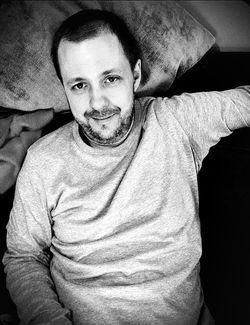 At six o’clock on a cool June morning, after five and a half years in federal prison and six months in a halfway house, Daniel McGowan went home. From the halfway house in Vinegar Hill, he took the F train to downtown Brooklyn, crawled into bed beside his wife, Jenny, and slept for a few hours. Then he headed out to meet his probation officer and a mountain of paperwork. It was his first day as a freed domestic terrorist.
“The definition of terrorism is exactly what they did.”
“I was really horrified at the time of my sentencing at being called a terrorist,” he says. “I’m still horrified.”
At 39, McGowan is a little skinnier than before he went to prison, a little grayer. But he doesn’t look too different from the guy who helped burn down two Oregon lumber mills on behalf of the Earth Liberation Front in 2001, or the guy a federal judge sentenced to seven years in prison for those crimes in 2007. On a recent evening, he’s wearing a loose green T-shirt and several days’ worth of stubble, a bike seat by his side and a smartphone in his hand. He glances at it every few minutes.
McGowan can’t associate with environmental or animal-rights groups.
“I used to make fun of people who texted all the time,” he says. “And now I’m one of them.”
With a summer of freedom behind him, McGowan is still figuring out the rules of his new reality. Besides being a convicted terrorist, he owes nearly $2 million in restitution, which he’s expected to pay in full. The peculiar terms of his probation forbid him joining “any groups or organizations whose primary purpose is environmental and animal rights activism”—a prohibition that includes nonprofits such as PETA and the Sierra Club. He can’t associate with anyone with a felony on their record, or anyone convicted of illegal environmental or animal rights activity, even a misdemeanor—a tall order for a man who had spent much of his life in activist circles. And, as he learned in the halfway house, writing about his experiences in the prison system has the potential to land him back in jail.
McGowan says he left the ELF soon after the second Oregon arson. He was working at a nonprofit for victims of domestic abuse when he and 12 others were arrested during the Federal Bureau of Investigation’s Operation Backfire, which ferreted out ELF members responsible for a series of arsons and other crimes between 1996 and 2001. Vandals targeted lumberyards, slaughterhouses, and U.S. Bureau of Land Management and Forest Service offices, wreaking a record $48 million worth of damage.
Several of those arrested agreed to cooperate with prosecutors. One ELF member secretly recorded conversations with McGowan, helping to convict him on several counts of arson and conspiracy—actions that, in the eyes of U.S. District Court Judge Ann L. Aiken, amounted to terrorism: attempts to create “fear and intimidation to achieve a goal and affect the conduct of government,” as the judge put it at McGowan’s sentencing.
Ten months into his prison term, McGowan was transferred from the general population at the Federal Correctional Institution in Sandstone, Minnesota, to a newer wing in Marion, Illinois, known as a Communication Management Unit. Much of the CMU population is Muslim, but politically affiliated prisoners such as McGowan also find themselves there. The main hallmark of a CMU is restricted contact with the outside world: McGowan was allowed two short, no-contact visits per month—he wasn’t permitted to have any physical contact whatsoever with his wife for the duration of his sentence—and his phone time was limited to a single 15-minute phone call per week. (The BOP has subsequently revised the CMU limits to two 15-minute calls and two four-hour visits.) His mail was delayed and often rejected by a censor as inappropriate. In 2009, while he was incarcerated at Marion, his mother died of cancer. (McGowan was later transferred to the nation’s only other CMU, in Terre Haute, Indiana, where he spent 22 months.)
Court documents would later show that the initial decision to move McGowan into the CMU was made by Leslie Smith, head of the counterterrorism unit of the Federal Bureau of Prisons. Smith acknowledged that McGowan’s disciplinary slate was clean but argued that he posed a threat to public safety because his jailhouse letters and articles constituted “attempt[s] to unite the radical environmental and animal liberation movements.” Additionally, he had requested that his lawyers send him copies of leaked BOP documents—a blatant attempt, the BOP contended, to escape its monitoring of his communications.
After five and a half years in prison, McGowan was sent to a halfway house in Brooklyn to serve out the last six months of his sentence. While he was there, he wrote an article for the Huffington Post detailing his time at the CMU. On April 4, three days after the story was published, federal marshals arrested him, took him to the Metropolitan Detention Center, and issued him an orange jumpsuit. From there, he assumed, he’d be sent back to the CMU for the remainder of his sentence. But his lawyers quickly secured his return to the halfway house and quashed the BOP’s effort to impose a gag order.
“As far as we know, this is a made-up rule applied only to Daniel, in a further attempt to chill his freedom of speech,” wrote Rachel Meeropol, McGowan’s attorney at the New York–based nonprofit Center for Constitutional Rights.
The BOP quietly dropped the matter.
Will Potter is a journalist who has written extensively about environmental activism. He says restrictive parole conditions for activists are becoming more common.
“It reflects the political nature of these prosecutions,” Potter says. “And how this terrorism language can follow people long after they leave the courtroom and long after they leave prison. This is something that can follow these activists the rest of their lives.”
McGowan should not expect the surveillance to stop when his supervised release ends, Potter emphasizes. “At speaking events we’ve done with other former prisoners, law enforcement has been there. Sometimes they come in publicly, flashing badges. In FOIA [Freedom of Information Act] requests later on, I’ve also gotten information about [undercover] police officers at public events. I just can’t imagine what that would be like. It’s a constant cloud over you all the time.”
For Steve Swanson, McGowan’s terrorist designation and the terms of his release seem like justice. Swanson is president and CEO of the Swanson Group, which used to be called Superior Lumber, one of the two companies whose buildings McGowan helped to burn down.
“The definition of terrorism is exactly what they did,” Swanson says. “They were trying to change our behavior by inflicting terror on us. It’s not different than Islamic terrorists or what the IRA was doing back in the ‘70s. To say they were nonviolent is just not accurate. We have a total volunteer fire department that responded. Any number of those people could’ve been killed.”
Adds Swanson, “Frankly, we used more wood products to rebuild all those things they burned down.”
At his sentencing, McGowan apologized for the fires, saying he felt “deep regret” for frightening the lumber workers. “Although I now know it’s hard for people to believe, my intention at the time was to be provocative and make a statement,” he told the court. “Not to put individual people in fear.”
Swanson says McGowan has never apologized to him directly.
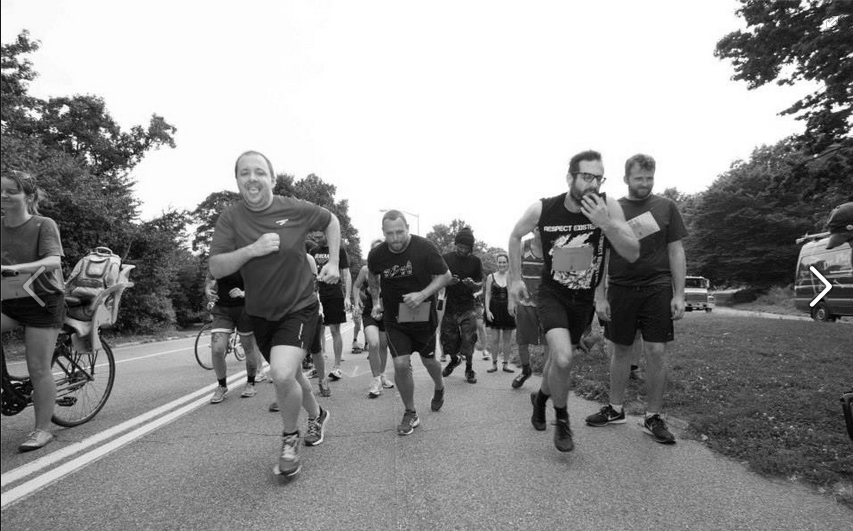
In the meantime, both men have moved on. The Swanson Group tore down the remnants of its old factory and built a larger one. McGowan recently participated in Running Down the Walls, a fundraiser for political prisoner support groups. He figured it was permissible because it had nothing to do with environmental issues.
Still, he says, that April night in jail was jarring: “Sometimes things feel fragile.”
A federal judge recently ruled that because McGowan is no longer an inmate, he has no standing to participate in a lawsuit against the Bureau of Prisons that challenges the constitutionality of CMUs. Instead, on Tuesday, September 17, he filed a formal complaint against the Federal Bureau of Prisons, alleging that the re-arrest deprived him of his liberty and caused emotional harm.
Running Down the Walls
Dear friends,
I just want to thank everyone who sponsored me for this year’s Running Down the Walls 5K run for Political Prisoners. Many people donated their time, energy and money to support me and the NYC Anarchist Black Cross. This year’s run was wildly successful and a really fun day.
Almost 30 people ran, walked and biked this year making it one of the bigger ones. The rain was threatening all week but held out and although it was muggy, there were copious amounts of beverages and food provided by ABC. The vegan deviled eggs, jackfruit/pulled pork sandwiches, cupcakes, cookies and such helped me finish the race, for sure!
I would thank you all by name if I knew it was ok, but over 50 people generously donated to sponsor me this year and I appreciate all your love and support, knowing full well this was the first big event I was involved in since I got out. I trained for a month and it was not easy—running at 39 is a totally different animal than at 22! The early morning time alone was remarkably helpful in helping me sort out the puzzling set of emotions and thoughts that come with re-entering society after 6 years inside.
Thanks to my non-corporate sponsor Bluestockings Bookstore, Café, & Activist Center who provided me with a shirt to run in, a generous donation and lots of moral support. Thanks also to my extraordinarily patient race-day supporter, Turtle, who helped make everything way easier than it would have been. I am sure NYC ABC will be coming out with a report-back and there are photos to be seen here thanks to Tom Martinez who donated his photography services.
Running Down The Walls 2013 Report
BY LA-ABCF
abcf.net/la
 Southern California’s transition to Autumn seems to come later and later each year, this year was no different. On the morning of September 8th the sun was strong and the temperatures were in the high eighties at eight AM. Despite the heat, people from all over Los Angeles and even Riverside came to MacArthur Park to show their support for LA-ABCF and RAC.
Revolutionary Autonomous Communities (RAC) has been organizing the neighborhood around MacArthur Park for years and has built strong ties in downtown Los Angeles and today the community would show up. People of all ages would filter in throughout the morning, we had elders and children ready to run and walk. Solidarity Statements were read to set the tone for the day, with over a hundred people now gathered, the words of solidarity from all over the country resonated with us all, our purpose for being there was clear.
With the temperature now into the nineties, the run was blessed and around forty participants dashed down the sidewalk and around the park for three long laps. There was a medic on site and a few people handed out water to the runners along the path. There was a lot of sweat and a few sunburns but that bothered no one as we raised around $1200, half of which goes straight to the ABCF warchest and the other half to RAC.
The run was just the beginning for us, now it was lunch. Some RAC members spent the morning cooking, there were tamales, noodles, and salads galore. After the feast the food program became the priority, all the boxes were filled with donated vegetables, fruit, beans, and rice. A couple hundred locals came out to participate in the food program as the sun sunk behind the skyscrapers.
The party ran all day, kids were playing soccer and throwing the football back and forth. There was an exercise bike connected to a blender to make smoothies and group of musicians playing indigenous music from South America. AK Press and PM Press donated books and prizes to be given to the runners and after a presentation ceremony the day finally concluded with hugs and smiles on everyone’s faces.
Decline of Empire?
BY JAAN LAAMAN
Reading about empires, whether the history of Rome, China, Byzantine or the more recent ones like Spain, Portugal and England, certain developments and events, can be seen as significant turning points which ultimately led to the demise and fall of the empire. Of course looking in hindsight, it is relatively easy to see what changes and events were significant to the fall of that empire.
In our early 21st century world, the “sole superpower,” “unmatched military power,” “policeman of the world,” “leader of the Western world,” is the United States. The principle modern empire of the world today is the U.S.A. state. Within the U.S.A. state there are laws and elections and two dominant capitalist parties that produce the political elite who staff and run the government machinery of the state. The fact that there is a president instead of an emperor and periodic controlled elections, in no way changes the reality that the U.S.A. state is the primary and dominant empire of the world today. The machinery of the U.S.A. state and the elite politicians, both Republicans and Democrats, who are appointed and/or elected to run the machine, is the method by which U.S. imperialism, the U.S. empire, runs, maintains and advances itself.
Every country, empire, colony and nation state exists within the reality of the conditions, time and place at that period of history. Ancient empires and emperors, kings and their counsels who seized colonies, as well as military rulers and/or elected presidents and prime ministers who sent their armies into other lands to conquer and occupy, are all faces of former empires. The conditions, times and places vary and therefore, so does the manifestation of each empire. So of course the empire presently run by the U.S.A. state is not like ancient Rome or any other previous imperial state.
The United States has been the dominant world and military power since WW II and especially since the late 40s and 1950s. For many decades it was the leader of the western capitalist world which stood in opposition to a smaller but sizable socialist group of countries led by the Soviet Union. Along with some junior partners, especially the former colonial powers of England and France, the U.S.A. state established military bases or outposts in the vast majority of countries in the world. It launched a series of invasions, wars and occupations, from Korea, to Vietnam, Cambodia, Panama, Grenada, Iraq, Afghanistan, Libya and more.
U.S. corporations and recently globally based corporations as well, have reaped the benefits of U.S. imperialism’s control, domination and manipulation of most countries in the world. These corporations exploit the resources and labor of the people and countries occupied or dominated by U.S. imperialism. Of course the vast majority of the profit extracted from the far reaches of the U.S. empire, goes directly into the coffers of the corporate elite. Very little material benefit has ever been gained by the U.S. public, who of course supplied the soldiers for the U.S. forces who did the killing and dying in foreign lands across the globe. And lets not forget that U.S. tax dollars supplied by U.S. tax payers, paid for the armies, armaments, invasions and occupations, that allowed U.S. and global corporations to exploit, one might say pillage and rape, the resources and people of these countries around the world.
With the demise of the Soviet Union and the break up of the former socialist bloc in 1990 and 1991, U.S. imperialism assumed the position of the undisputed top military and political power in the world. This power has given rise to policies like George Bush jr’s policy of “Preemption.” You will recall, Bush proclaimed that the United States had the right to attack, invade and occupy any country anywhere, if U.S. leaders felt that country was any kind of threat. Bush was not talking about the right to self defense. He proclaimed the right of the U.S.A. state to preemptively attack any country in the world. This of course is illegal by all standards of international law that has been agreed to by the entire world since the end of WW II.
While President Obama has not restated this position, the U.S.A. state under Obama has used more drone attacks in more countries that the Bush government ever did. The U.S.A. state attacked Libya, helped overthrow its government and kill its leader. Just last month, September 2013, Obama wanted to directly attack Syria with U.S. forces. While this war plan was not supported by the vast majority of the public and sectors of the U.S.A. government, his threat to do so in the future remains.
U.S. imperialism and the U.S.A. state, under all its leaders since the 1990s and even before, has maintained a policy of militarily attacking any country it deems an opponent. Sometimes this is done under the pretext of UN authority or a NATO resolution. Sometimes junior imperialist partners like England and France are pulled on board to form a “coalition of attack.” Often simple naked U.S. military force, drones, cruise missiles, airplane strikes or commando forces are used to attack people and forces anywhere in the world, once they are labeled as “terrorists or enemies” by the U.S.A. state. The U.S. always seems to pick on small or vulnerable states, especially countries who do not have nuclear weapons. Often these victim states have lots of oil or other valuable resources.
The U.S.A. has been an imperialist state and power since at least the end of WW II. All the presidents and leaders of Congress, Democrats and Republicans, over decades and generations, have willingly accepted, strongly supported and enthusiastically expanded the power and reach of imperialism, of the empire run by the U.S.A. state.
Historically specific Democrat leaders have taken positions against certain wars. Senators McCarthy and McGovern came to oppose the Vietnam war. Barack Obama spoke against the Iraq war when he first ran for president in 2008. This has left a certain mistaken impression that the Democrat Party is anti-war. This is not true. The Democrat Party has led the U.S.A. state into many wars: Truman in Korea, Kennedy and Johnson in Vietnam, Clinton in Serbia.
The Republican Party has its own history of war mongering, of starting and maintaining wars. War is a regular feature of imperialism and both capitalist parties readily initiate and pursue wars of conquest across the globe.
The Republican and Democrat political elite of the U.S.A. state often disagree on and very publically dispute various policies. They often make a lot of noise and the mainstream corporate media, makes it look like there are significant differences between the parties. Whatever differences there might be, all top Democrats and Republicans have long accepted and agreed to their essential task—to lead, maintain and advance the interests of U.S. imperialism. This of course includes maintaining a functioning government in Washington and all that entails.
Recent events in Washington DC (this article is being written in October 2013), particularly the Republican Party backed shut down of parts of the U.S. government, may be more significant than just laid off government workers and closed offices. Tea Party faction members of the Republican Party are the most vocal opponents of Obama and the Democrats. They pressed to shut down the government and are seeking a second shut down/crisis for the U.S. government, by refusing to support the raising of the government’s debt limit. For decades, this has been a routine legislative act supported by Democrats and Republicans, so the U.S. government does not default on its bills and retains its economic credibility with debtors and the world as a whole.
The Obama government and the U.S.A. state will surely weather this Tea Party-Republican offensive. Which of the two parties might gain from these shut downs in the next election, will be seen. At this point, the majority of the public does not like or support the government shut down. World opinion, especially remarks of foreign leaders are mostly cautious, but there is wonderment and concern, that the U.S. government does not seem to be functioning well.
As was stated previously, the Democrat and Republican political elite often make a lot of noise criticizing each other and their respective policies. In the past 10-15 years there have even been brief government shut downs. The question being raised here is not why or how Tea Party Republicans are trying to block and sabotage the Obama government. The question is, are we witnessing a break down in the unity of the political elite? Thirty or Fifty years from now, might this break down of unity, be clearly seen as a turning point when the U.S. empire found itself less and less able to maintain and advance its power and control over other countries and people?
Since it is the Obama government that is being so pressed by the right-wing Republicans, it is necessary to look at some of the underlying issues. Specifically we have to see how racism and the false ideology of white supremacy impacts what is going on. There are some conservative racist sectors of the public and of the political elite, who were shocked by the election of a Black man to the U.S. presidency. Even with Obama’s second election win, some of these forces see blocking and defeating Obama in any way possible as their crusade. To these elements, nothing is more important than blocking Obama, reducing his authority and ultimately somehow trying to end his power as president. By all indications there is a rather small minority of the public and the political elite who are so racist and set against President Obama. This conservative racist minority does have substantial financial support and includes elements of the economic as well as political elite.
Racist beliefs and dislike of Barack Obama are factors in the break down of ruling elite unity. But there is more than that. Elected politicians in the U.S. almost universally seek to insure their reelection and gain higher power. Historically this has mostly meant upholding and advancing the economic, military and political power of U.S. imperialism. More recently we are witnessing many in the ruling political elite, with much smaller, narrower outlooks and interests. Getting reelected in your local district, even if it means shutting down the government, is seen as primary by some politicians. Blocking the government’s ability to raise and borrow money, because of narrow ideological views, is seen as loyalty to your political faction. The narrow political faction, the local election, the obstruction of an opponent, these are what guide and motivate some elements of the ruling political elite. Loyalty to the institutions and system of imperial power, as well as strengthening the machine of government and advancing the interests of the system of U.S. imperialism around the world, are no longer the unifying goals of at least some elements in the ruling political elite.
It is almost certain that Tea Party type politicians call themselves, and probably believe themselves to be upstanding loyal Republicans and Americans. But that is just the question raised here, have the contradictions within the ruling political elite changed? Has their primary unity, that of being the hands that direct U.S. imperialism, broken down? Are we seeing the emergence of new contradictions among the political elite that will prevent them from efficiently running the U.S.A. state empire?
Any analysis or even overview of an imperialist system has to consider economics. As was earlier discussed, U.S. corporations, and in more recent years also some global corporations, were and continue to be the entities that hugely profit from the power, influence and control that U.S. imperialism exercises in most countries around the world. U.S. imperialism, sometimes with armies and missiles, but often with coercion, treaties, support of local corrupt leaders and dictators, opens countries up to U.S. corporate exploitation of the resources and labor of these countries. Of course U.S. corporations also profit well from their exploitation and sales within the United States, but their rates of profit are almost always much higher in other countries.
The relationship of U.S. corporations to the U.S.A. state has significantly changed in the past 10-15 years. Corporations certainly still rely on and expect the U.S. government and military to open countries for them and to protect their interests and infrastructure around the world. Major corporations today are much more globally connected even if they originated and might still be headquartered in the United States.
In the mid 20th century it used to be said, “what’s good for GM, is good for the country.” While GM and other big companies certainly exploited their labor force, these companies were American entities connected to communities and producing goods and services that were part of what made the U.S. function. The companies were profitable and employed workers who in turn spent their wages, all within a functioning capitalist economy. Of course there were contradictions between capital and labor that resulted in periodic strikes. Government always sided with the corporations and sometimes issued injunctions against the workers. This was all part of 20th century life and struggle in the United States.
Today most corporations still based in the U.S.A. state are globally connected and some have completely moved their operations abroad. Companies relocated their production to cheap and very cheap labor markets, to countries with very weak environmental and safety regulations, to tax havens. The connection and commitment that many major corporations have to U.S. imperialism is significantly different today. As was said, big corporations still seek and desire U.S. government military and political support, but many are no longer directly connected to U.S. imperialism.
How might this be viewed 50 years from now? The unity of the U.S.A. political elite floundering, while major corporations take on an international identity and existence. How effectively will U.S. imperialism be able to function with these political and economic contradictions at its core?
As an anti-imperialist, of course I have no sympathy for a falling imperialist monster. The more important questions we the opponents and victims of U.S. imperialism should consider is how these signs of a weakening empire can be exploited. The weakening and decay of a repressive system does not guarantee the success of a new democratic, free, cooperatively based future. A more overt police or military system is certainly possible in the near term.
One important factor in how a new system comes into being and how just and free it will be is the level of active, popular, revolutionary organizing and building of resistance communities that is occurring while the old repressive war state still exists. If the popular struggle is active and growing, it will be much harder for some military or other reactionary dictator and force to take over. We can see examples of this historically.
While the government and corporate media is often dismissive of activist community organizations and leftist radical political groups, they worry about the influence they have and can gain with the people. Besides federal cops – fbi, etc., most local police departments have units that monitor, infiltrate and disrupt activist, progressive, revolutionary and even religious organizations. The cops and government understand the power that an organized politically conscious and motivated for real change public can have. The dynamic between the people and the government is directly equivalent. The more power, authority and control the government takes for itself, the less freedom, rights and justice the people have. The opposite is just as true—when the people gain, take or win more freedom, rights and liberty and justice, it means the government has to relinquish or give back more of its police and other coercive authority. When a repressive imperial government is overturned, the possibility is there for an entirely new free and popular authority to be established. It is all up to the people.
We have a need, on both sides of prison walls, to create more communities and organizations or resistance, or to join and help build existing ones. U.S. imperialism is facing more internal contradictions, even among its ruling and economic elites. It is also meeting resistance from more people here in the United States and it is facing opponents and problems around the world. Empires never last. The question is, how soon can they be buried and what new life- and planet-sustaining popular revolutionary system can be brought forth?
The US government is infamous for criticizing and condemning other countries for denying their citizens free speech and imprisoning them for challenging their authority. Countries such as China, Iran, North Korea and Cuba have been their primary targets, but this criticism epitomizes the hypocrisy of the US government and its self-righteous citizenry. The difference between the US and countries like China: the US government has developed a more sophisticated method for executing their repressive campaign. Though many different methods exist, the most pervasive application exists within the prison system. Far away from objective and constitutional scrutiny—the perfect set of circumstances—for the most part it has gone undetected and the courts have only provided this assault on free speech with sanctuary, which has guaranteed its proliferation.
Though this is not a new phenomenon. The government’s prison system has been infringing on the First Amendment rights of New Afrikan (black) prisoners since the beginning of time, but it became more strategically organized during the Black Power movement. A tactical schematic within the US government sponsored war against the Civil Rights and Black Power movement under the official title of FBI Counter-Intelligence Program (CointelPro). So, what we see today is a continuation of what had already existed, but with some modifications.
For the past 20 years or more the Dept. of Corrections and Federal Bureau of Prisons have launched a campaign designed to censor black history from the prisons, anything relating to George Jackson in particular. In a recent federal ruling in a lawsuit against Pelican Bay State Prison, a judge stated: “There is a concern of the possibility that defendants (i.e., prison staff) may have taken a race-based shortcut and assumed anything having to do with Afrikan Amerikan culture could be banned under the guise of controlling the Black Guerrilla Family (BGF).” [Marcus Harrison v. Institutional Gang Investigation Unit. CO7-3824SI]. Even this judge recognized the racist campaign to censor our history as well as our political views and any black historical figure they disagree with. The California Department of Corrections will disallow any books or writings by them, by falsely claiming the writings are gang related material that pose a security risk. George Jackson has been their primary target.
Unbeknownst to the vast majority of people in this country, there exists a class of new Afrikan prisoners that have been singled out for political persecution and torture solely based on their ideological affinity with George Jackson. Though this class of persecuted prisoners are represented across the country, California is the epi-center. No group of New Afrikan Prisoners on this planet has suffered as much as the New Afrikan political prisoners housed in the Security Housing Unit (SHU) at Pelican Bay State Prison. For maintaining the legacy of George Jackson, many of these brothers have received indeterminate sentences in the hole, have been denied parole and removed from General Population. In 2007 a number of inter-departmental agencies (i.e. Office of Correctional Safety [OCS], Institutional Gang Investigation Unit [IGI], Investigative Services Unit [ISU] and more) raided a number of cells and confiscated everything and anything that was related to George Jackson, his books, Blood in My Eye and Soledad Brother, his picture or portraits, and anything with his name in it. This material was/is used against these brothas. It is considered gang material and used to validate gang affiliation which will result in an indeterminate sentence in SHU/isolation!
Unfortunately, the persecution of these brothas has fallen on deaf ears. These brothas have spent 15 to 40 years in solitary confinement for refusing to surrender to official political repression designed to silence their voices and force these brothas to denounce George Jackson, but despite the consequences these brothas refused to capitulate. Many of these brothas are presently in court challenging their illegal confinement. Two recent decisions from federal judges disagree with Pelican Bay State Prison and the California Department of Corrections description of George Jackson as being a gang member and state that they have no legitimate penalogical interest in a complete ban on George Jackson.
In spite of these two rulings a number of judges have ruled to the contrary, but we believe if we unite this legal fight under one effort, we can win this battle. The George Jackson Political Prisoners of War Coalition will take the lead in this campaign. We will serve both as an advocacy group and an information center on behalf of those brothas and sistas who are being persecuted and tortured for embracing the Legacy of George L. Jackson. But our success will depend on your support!
-GJPPOWC-
Responsibility and Function
I will serve as an information network, gathering info from all across the country pertaining to:
- Identifying those individuals who have actually received a SHU term as a direct result of possessing George Jackson books and literature.
- Individuals who have had George Jackson books and literature confiscated.
- Those who have either been denied parole, validated as a gang member and/or denied release from SHU as a direct result of possessing George Jackson books and literature.
- All case citations from lawsuits and legal litigation that challenge the confiscation of books and other literature related to George Jackson.
- Strategies and tactics on how to challenge this issue.
- We will serve as an advocacy group on behalf of the class identified as the George Jackson Political Prisoners of War. We will seek to obtain legal counsel on their behalf, recruit law students to conduct vital legal research, assist in filing law suits.
- We will expose the torture and political persecution directly linked to those New Afrikan prisoners who are and have been victimized for possessing the books and literature of George L. Jackson.
- We will write articles to all major media/press outlets, especially black press/media.
- We will file human and civil rights reports and distribute this report to the United Nations, the NAACP, Urban League, Nation of Islam, ACLU, as well as prisoner’s right organizations.
- We will contact the warden and other prison officials on behalf of this class of prisoners.
Basic Protocols
We will not support any prisoners involved in the below activities:
- Drug activities
- Gang activities (as defined by us)
- Drug use
- Black on Black violence
- Criminal activities (as defined by us)
- Crimes against our communities
- Informants/snitches
- Child molesters/abusers
We are not a pen pal service so we don’t have the means or opportunity to maintain personal correspondence. We will keep it strictly professional.
It is forbidden for prisoners to write other prisoners. So we will not serve as a medium to facilitate any behavior that may be considered a security risk. As you know, the prison will make up any reason to ban our services from their prisons, so we intend to keep all our activities legitimate, legal and transparent.
We are a political prisoner/POW advocacy group.
The brothas in California will be our priority.
The George L. Jackson Political Prisoners of War Coalition
M. Ajanaku – Outside Coordinator
Abdul Olugbala Shakur – Inside Coordinator
Abdul Olugbala Shakur
S/N J. Harvey
D1 119/C-48884
PBSP-SHU
PO Box 7500
Crescent City, CA 95532
The Kreed of Foundation
BY TEK MILLER (E. LANG)
In a time of rapid transformation, whoever stands still will soon be left alone. To continue to operate from old strategies that are not effective is a waste of time and energy. Certain methods will have to be adapted to in order to be compatible with the newer systems for which our Damu organization is trying to establish. We will build a foundation for success and begin to develop personal and unified goals that will bring meaning, understanding and enlightenment to our organization. Building this successful foundation is a strategic role that must be done with dedication and proper leadership so that we can build constructively unto our organization and no longer allow ourselves to be divided or destroyed.
Education is the first step towards our transformation. We must first educate ourselves so that we can teach the damus who are deaf, dumb and blind the truth of our existence. We must no longer allow ourselves to be brainwashed or fed false knowledge. Secondly, we must be dedicated and disciplined to represent our damu organization. We must be proud of who we are and not be afraid to stand up and fight for the freedom, justice and equality that we deserve. We must be there for our komrades in their time of need. Unity is the main principle of solidarity. Each step of personal growth provides support for every member within our organization and the gains of each member anchor the advancement of our nation.
The most important factor in the transformation of our nation is action, we must begin to put our thoughts and strategies into action. Without action there will be no mobility, we must continue to conquer what is rightfully ours!
The three main principles for which we should be advocating:
Freedom: is to be free from oppression, poverty, degradation, humiliation or any form of bondage that conquers and controls our nation mentally and physically. We must strive for liberation by any means necessary and not allow ourselves to fall victim to our own demise no matter the situation. We must be in control of our own existence. We must be the vanguards of our nation and live within the bounds of our judgment.
Justice: is the benefits, positive or negative actions, that affects our nation as a whole. We must demand justice from our oppressors when their actions towards our nation go against what we stand for. Justice is a weapon, it is a weapon that we must use to regain the dignity and respect that we deserve within this society that we live in. Justice is the principle of fair dealing. The law that distinguishes between right and wrong. If you love your nation then you will make sacrifices to keep your nation strong no matter what those sacrifices may be. Justice is the joy of freedom.
Equality: is what we demand to be able to be treated as equals within our community, as well as in society in general. When you’re knowledgeable of your existence you begin to be held accountable for your actions. Equality is to be equal in all things, no matter the level or circumstances we must not allow our oppressors to separate and divide us into the categories of their choosing. We are a powerful nation!
*When we become liberated we get served with the justice that we demand and become equals within our societies.
One of the most important positions we must hold within our nation of black leaders over our domain is advocacy, otherwise known as upliftment. We must be the backbone and the foundation of our komrades, to be there in their time of need, therefore we must never stray from our obligations within our nation, we must stand united and never be divided. To be united is a bond that must persist even when we are not physically around or near our komrades. The key to building our nation into a righteous movement is to stand united for a meaningful cause. Our cause is to override oppression, to bring freedom, justice and equality not only to the black liberation organization or defense movement, but to fight to protect and uplift all new afrikan brothers and sisters so that we can garner the support and love needed to strengthen our communities. We are the face of our community but the conditions that plague our community do not define who we are as strong black men and women.
The majority, if not all black leaders over our domain, come from similar backgrounds that consist of drug abuse, violence, oppression, poverty, corruption, rape and murder to name a few. These types of environments cause us to develop an unconscious mindframe about our self-worth and make us believe that our existence revolves around these things, thus making us a product of our environment. We need to reverse the cycle and be advocates of our communities and our younger generation so that we will no longer be psychologically dependent on the destructive nature of our environment, as well as our oppressors. To be an advocate is to develop a clear presentation or productive examples to be followed, that will bring about a change within our nation. There are two types of advocates: one who leads by example and one who leads by way of rhetoric. We must combine the two together so that when we advocate our komrades we do so on a more direct level so that the things that aren’t understood can be broken down in lessons for understanding.
We must favor our weaknesses over our strengths because our weaknesses build our strengths, when we are vulnerable to destruction and manipulation. Therefore to keep the foundation and development of our nation strong and solid we must find productive, meaningful and successful ways to advocate our komrades’ weaknesses. We must never hold our levels of leadership over our komrades to make them feel less than or inferior to us. We are all equals. This is what being united represents: equality. By the same token we as leaders must stand in front of our komrades to protect their well-being. We as leaders are responsible for our nation. We must be the face of our nation, the air need for our nation’s lungs to breathe, the blood needed for our nation’s hearts to pump and the energy needed for our nation’s body to move swiftly through the trap that’s designed by our oppressors to destroy our movement.
We as black leaders over our domain must acknowledge our faults and take responsibility for the actions we caused that helped destroy our nation as well as our communities. This in return helps us rebuild our nation into a righteous movement. It’s important for Damu to study true afrikan American/new afrikan literature as well as build mentally, spiritually around the new afrikan movement and most importantly the black liberation movements and organizations in its entirety. For this is what the (dough) Damu movement is implemented around. True afrikan amerikan/new afrikan literature helps us define who we are as beautiful black men and women. It gives us our true identity/understanding of who we are, where we came from and which direction we are headed. The new afrikan movements give us a solid foundation to build on as well as the truth of our afrikan roots and heritage. It defines what our true identity is as revolutionary freedom fighters and it enhances our spiritual, physical and mental structure for us to contribute to our existence meaningfully.
When we are brainwashed while seeking the truth of our existence we cannot be held accountable, but when we fail to seek the truth we are only to blame ourselves for our own demise. The foundation of Damu is built around the unity and brotherhood amongst all Damus regardless of set and banner. We are trying to organize the mentality and actions of our fellow Damus who have embraced this negative “gang bangin” ways and create revolutionary warriors, united and standing for a true and meaningful cause.
We must pick up where we left off and take the same principle discipline and struggles that was used to overcome our conditions within these prison walls and base them into our existence on the streets to overcome those conditions. This is why it is so important for us to re-define who we are and build a solid structure around our organization to solidify our unity and devotion, as black leaders over our domain. We must guide one another when we are lost, once should lead from strength thus causing the followers weaknesses to strengthen. Our environment don’t define who we are, our actions do. make sure you live for the cause and not just because!
In solidarity through all struggles.
Eddie Lang
CCI #532-018
Chillicothe Correctional Institution
PO Box 5500
Chilicothe OH 45601
What It’s Like Being a Political Prisoner
BY HERMAN BELL
Excerpted in the 2014 Certain Days: Freedom for Political Prisoners Calendar: certaindays.org
Physically, I feel like I did when I started this prison journey in 1973, but mentally and spiritually, I have traveled far. The authorities today watch me as close as they did back then; it has been the way of things since my imprisonment; back then, nobody quite knew what to make of me or what to expect.
I maintained a kind and respectful disposition toward everyone. I kept to myself. I am quiet and was just being myself. The snitches (the known ones, anyway), the bandits, the tough guys, the individuals with dirt on their name, were all there. They kept their distance, and I kept mine. In jail, you mind your own business and choose your own company; that way, you live and let live. However, I have extended myself on occasion to help someone I know get out of a jam; and every time I did, my gut told me it was the right thing to do. For the most part, though, I have never had a problem with people in jail. I get along with people. In fact, some of these guys think of themselves as looking after me; they tell me everything, some of which I smile or nod approval at; others I shrug indifference at or advise them to leave alone. And these guys are always up to something. They keep what they know they ain’t supposed to be doing from me. Throughout this prison journey, regardless of what jail I’m at, these guys have treated me decently and with respect. Still, lest we forget, every tub has to stand on its own bottom.
Back in 1973, every day when we went to court, the authorities drove us down city streets with their sirens screaming, heavy weaponry, and a show of force like we were prize trophies. Throughout those tedious months of trial, far more of them sat in the courtroom than spectators or our supporters.
That we were guilty of the charge (police homicide) was a foregone conclusion—that we didn’t think right and we didn’t act right. And the fleeting glances public employees gave us when in our presence implied that we were too “hot” to look at and were destined for a place they feared to go, that somehow we were dreamed up from the nether regions by some twist of fate and have no place in this god-fearing, law-abiding, Christian world. So how could they see and understand our historic fight for freedom and social justice!
The court proceedings went as the authorities had planned. I likened it to the lyrics from a Bob Dylan song: they smiled in our face and killed us with kindness. The first trial resulted in a “hung jury”; the second one resulted in a 25-to-life sentence; and so, again, my journey behind these prison walls.
I started out with the feds, as I had a 25-year sentence with them, and since I had also a life sentence to do in New York, after doing five years, the feds later paroled me to New York. But when on my way to feds, an odd thing happened. Three Black U.S. marshals were escorting me to USP-Marion, and as we deplaned at the airport in St. Louis, Missouri, a detail of White U.S. marshals arrived and volunteered to take me to USP-Marion, since they “so happened to be going that way.” My escort refused to let them take me; it precipitated an altercation; service weapons were drawn, and the arriving marshals backed off. The head marshal sitting on the back seat with me as we drove from the airport remarked: “You know what that was all about!” I looked him in the eye and smiled.
On my arrival at Marion, the prison administration locked me in their infamous behavioral modification “control unit” and kept me there for two-and-a-half years. And I suffered like everyone else in there, some of whom were jailhouse lawyers and political detainees. I didn’t see the sun for six months. Kept out of the open air for so long, when they finally let me outside, the spring breeze brushing against my skin felt painful from the sensory deprivation I had sustained. I’ve had trying experiences in their control units—recurring bouts of claustrophobia, little to read, frequent exposure to tear gas, loneliness, isolation, and never was I told when I could leave. I’ve had a trying experience there! Yet, they say: the race goes not to the swiftest, but to those who endure. The feds paroled me to NYS in 1979.
Since my arrival in New York, my whereabouts have been constantly monitored from the state’s Central Monitoring Office, which determines where and for how long I am locked at a prison; it dispatches its own team to move me wherever I have to go.
I see prison as the parlor of graveyard; being here as long as I have is as close to being in hell as one can imagine, and the power the guards wield exacerbates the conditions. If by the way you walk, talk, respond to commands, or if the look in your eye displeases them—all of which is subjective and too often racist—you made their day. This applies to people working here who come alive when they punch their time clock; the authority they wield is intoxicating, a dream come true. Yet, to be fair, not all of them are power-drunk. Some of them neither abuse nor mistreat prisoners (we are all helpless in here, you know!). These workers I regard as having been loved by their parents and well brought up. It’s inevitable, though, that the longer one works here, the more callous and mean-spirited he becomes. Power corrupts, as they say, and absolute power corrupts absolutely.
A tremendous number of people have been imprisoned since the ‘70s. They are young, mostly from Black and Latino communities, and are largely the offspring of crack-addicted parents and of “babies having babies.” They are likely self-raised because of their parents’ addiction; and babies are incapable of raising their own babies. Nothing exists in a vacuum; all things are connected. The social movement of the ‘60s and ‘70s was powerful, and the Black community featured prominently in it before massive amounts of crack cocaine suddenly appeared in the hood, which devastated Black communities and set the stage for the criminalization of Black youth and Black mass incarceration. Black people are the least favored in the nation, and Black oppression is significant to continual racial and social divisions in the U.S.
Recall that after the U.S. Civil War, southern states sought to re-enslave free Blacks through punitive “vagrancy laws,” and “convict leasing.” Blacks deemed unemployed were declared vagrants and were jailed with an onerous fine and bail imposed. Unable to pay this fine or make bail, a Black was sentenced to work it off for the county or for whomever paid his bill. This went for decades under brutal and horrid conditions. A legal ordinance re-enslaved Blacks back then; today, “stop-and-frisk,” drug possession, mandatory sentencing laws and the like serve the same purpose.
Since Black imprisonment is associated with “hot-button” issues like war on drugs, violent crimes, zero tolerance, and mandatory sentencing, their punishment seemed not so racist or draconian at all. Tell a lie long enough, and people will believe it.
As might be expected, mass incarceration has also affected social consciousness inside prisons. Prior to this huge inflow, older prisoners had long established a code of conduct that enabled them to co-exist among themselves and confront the conditions of their imprisonment. It was common to hear well-reasoned discussions of history, law, and science on more than one tier on the block and out in the yard. College books in classrooms and school libraries were commonly found on tables and windowsills in the prison wings, which strongly suggests the focus and intent of those confined. Thus, mass incarceration did to the prison population what crack cocaine did to the Black communities.
What’s it like being a political prisoner? From the inside looking out, I have seen what a leadership void has done to the Black community after the murders of Malcolm X, Dr. King, and the demise of the BPP. Leaders are not born to lead; leaders emerge from the masses. We know leaders by what they do; leaders are doers, not sayers. Practice is the criterion of truth. So what are the qualities of a leader? I regard love, courage, respect, care and concern, a sense of responsibility as qualities that manifest in a leader. The historic subjugation and oppression of U.S. Blacks cannot be paved over by apologetic words and the election of a few Black faces in high office. The oppressive social climate that prevailed in the community before my imprisonment in 1973 has not abated. Blacks are killed with impunity: the police “stop-and-frisk” and arrest at will; we fill the prisons and have the highest unemployment rate in the nation; public schools are failing.
What’s it like being a political prisoner? It’s knowing I represent more than myself; that I am an advocate of freedom, justice, equality, and self-determination. Therefore, whatever I do must be reflective of those principles. If you are faithful to your principles, people will take notice, even those who oppose you; people will even gravitate towards you out of respect; they may even assist you now and again. Prisoners view me in a light that’s different than the light they view other prisoners. I am respected not so much for the person I am as for the life I choose to live; but if a political prisoner is well-liked, prisoners will often defer to his judgment, even protect him; and that’s a critical responsibility of leadership. Therefore, I am mindful of what I say and do. What I do is far more persuasive than what I say. So I advocate to them the virtue of self-reliance, academic and vocational education, the virtue of strong family ties, building an economic base for ourselves (collective economics) and community self-defense.
I have taught Black history, mentored young men, and developed civil programs. In 1995, some friends and I founded the Victory Gardens Project (VGP); we organized progressive individuals and groups to learn how to grow organic produce and distributed it “free” in poor communities throughout the northeast—in Maine, Boston, New Jersey, Bed-Stuy, Brooklyn, Harlem and the Bronx. (For ten years we did this.) At each stop, we fed at least 180 families. In the year 2000, another group and I published a calendar called “Certain Days”; you can find it on the internet. This calendar supports U.S. political prisoners and is replete with historical dates and relevant information about the Black Liberation struggle. It’s sold to people on the streets, and it’s hot! A portion of the sales is withheld for reproduction; the rest of it distributed to groups that do real community-support work. It serves the People. I urge you to buy it.
I have been to the parole board five times and have been denied five times. I am 65 years old now. The parole board says the denials are based on the serious nature of my offense. The offense refers to the militant stand they convicted me of for defending my community. The parole board, comprised of ex-police and prosecutors, regard my offense as a senseless, premeditated, unprovoked, criminal act against lawful authority. That lawful authority has a history of discrimination against Black people, a history that sanctioned the importation and sale of Black flesh; enforced vagrancy laws so that Blacks could be arrested, fined, re-enslaved and leased out as free convict labor to property owners and commercial businesses. It legitimated Jim Crow laws, racial segregation and denial of Black civil and human rights, turned a blind eye to White mob violence, Klan murders and acts of intimidation. Though the years have changed, the violence and targeting of Blacks for control and domination goes on.
To regard the unremitting cruelty and degradation of Black people as an expression of White hatred and contempt of Blacks misses the point entirely; it’s an undisguised expression of White desire to control and profit from Black oppression. Unfortunately, this attitude of White power and authority over Blacks remains largely undisturbed in U.S. society.
In spite of that, the Black struggle of the ‘60s and ‘70s signaled a turn-around. The cogent words of a fellow prisoner, Brother Daharibu Dorrough, expresses it succinctly: “There is simply no way that people are going to continue to allow themselves to be subjected to the constant assault on their humanity. The disrespectful, degrading, dehumanizing get-down that is directed at us at some point has to be responded to . . .”
What’s it like being a political prisoner? It’s recognition that freedom ain’t free
Hello readers, new and old, activists and fellow revolutionaries, welcome to the Spring 2013 issue of 4sm.
We have a lot of useful and important information for you in #22. First, let me tell you about some changes – additions, that 4sm will initiate in the next issue, #23.
Many of you 4sm people – readers are already familiar with The Jericho Movement, the national movement to support and free political prisoners in the United States. See Jihad Abdul Mumit’s article on Jericho and political prisoners in this issue. In the past, Jericho has published a paper and newsletter. Beginning in our summer issue, 4sm will include a complete Jericho newsletter in each issue. This is a natural fit for 4sm, and we think Jericho’s newsletter pages will add to the overall information and value of 4sm.
Many readers are probably also familiar with the work and writings of Ward Churchill. He is, of course, a noted author of many books, innumerable essays and articles, a scholar, educator and activist who has focused on Native American history and struggle. Ward Churchill will be a regular columnist-essayist for 4sm, and his first work with us will be in the next issue. We are also working on having a leader-elder of the Puerto Rican People’s Independence Movement contribute a column or essay on a regular basis.
We think these additions will make 4sm even more dynamic and useful for our readers, especially all you activists and Freedom Fighters, those in prison and outside.
In this issue, definitely check out the section on Lynne Stewart. She is dying in prison and we can and must give her our support and love, and get her freed, on a medical compassionate release.
Also check out the Denver ABC article on the renewed effort to develop a nationwide amnesty movement and campaign to free political prisoners in the u.s. I urge all p.p.’s to contact the Denver address with your thoughts and advice. Likewise collectives, organizations and activists outside who have the desire and interest to support an Amnesty for p.p.’s campaign, make contact with Denver and lets build the struggle to win freedom for political prisoners.
4sm is initiating a new discussion and struggle against patriarchy and sexism in this issue. We are reprinting David Gilbert’s call for this discussion (from #21) and invite you to read and respond.
Check out Rashid Johnson’s unusual and harrowing piece about getting drugged and one bad thing leading to another. Then also read my article on drugs, prison life and the long established political prisoner position on drugs.
This issue has lots of other news and information for you. 4sm will put out two more issues this year – #23 in August and #24 in November. With our upcoming additions, especially the Jericho newsletter section, 4sm will probably be bigger and will take more resources to put out. While 4sm is a professionally produced and printed magazine (both online and in hardcopy), this is a totally non-profit enterprise. There are no paid staff or writers at 4sm. There are many costs in putting this magazine out and getting it in your hands. 4sm certainly could use some material support from you for this revolutionary work, especially at this time. See you all in #23 – out this summer.
No To Imperialist War in Korea, Africa and Afghanistan! Free Lynne Stewart Now!
Jaan Laaman, editor Jaan Karl Laaman #10372-016 USP Tucson
P.O. Box 24550 Tucson, AZ USA 85734
Mohawk warrior and champion of the people dies
BY JOHN HILL, Mohawk Nation News
A great loss to the people, to the nation, to the resistance, anti-imperialist movement right across Great Turtle Island.
On March 13th, Dacajeweiah, Splitting-the-Sky, 61, left us forever when he passed away in his home in Adams Lake, British Columbia. Dac’s colonial name was John Boncore Hill, from Six Nations. “From Attica to Gustafsen Lake,” and thereafter, he was a warrior, a comrade, a brother, a father, a grandfather, a friend.
We deeply mourn his loss.
The family will release a biographical statement and details of memorial arrangements in due course. With deepest love to his wife, She-Keeps-the-Door, and children. We stand with Dac’s many many co-fighters and friends. He loved the People. The AIM song is dedicated to the continuance of the resistance after a warrior has fallen
From Roslyn Cassells:
Splitting the Sky, also know as John Boncore, his colonial name, aged 61, was one of the most fierce, uncompromising, warriors I have ever met. He was fighting the pipeline in northern BC at the time of his death, but has been involved in sovereignty issues and many human rights and ecojustice campaigns all over the world.
As a survivor of the prison uprising in Attica and a member of AIM (American Indian Movement) he came to Surrey, BC during the trial of the Sundancers of Tspeten, the Gustafson Lake standoff, the longest trial in BC history. That is where I met him.
He tried to arrest George Bush for war crimes, and was an ally of social justice battles everywhere. His fierce spirit, big heart, and huge smile and sense of humour is what I will remember of Splitting the Sky.
I doubt he will rest in peace, as there is yet no justice. I suspect his fighting spirit will return to encourage those of us who remain to keep up the battle for all peoples, and all our relations.
I will always remember Splitting the Sky, and his cry for justice!
Lynne Stewart Needs Our Help
SIGN THE PETITION NOW: http://www.change.org/petitions/petition-to-free-lynne-stewart-save-her-life-release-her-now-2
A MESSAGE FROM EDITOR JAAN LAAMAN
My family and friends,
I have VERY serious and important information to share with you, and literally, a life saving request — task to ask of each of you.
My friend, our friend and sister, Lynne Stewart, is dying in a federal prison in Texas. I believe all of you are generally aware that Lynne was convicted under the infamous ‘Patriot Act,’ for too vigorously defending her (Court appointed) client, Sheik Omar Rahman. She initially was given a 28 month sentence. The government appealed and her sentence was increased to 10 years. Just before Lynne went to prison, she was diagnosed with breast cancer. While still on bail, she successfully fought the cancer. But now, in the 4th year of her sentence, her cancer has come back and has spread to her lungs and back. She presently has ‘stage 4’ breast cancer.
Lynne is a wonderful person, a 73 year old woman, mother, grandmother, a fierce former Human Rights and criminal lawyer.
Under federal law, the 1984 Sentencing Act, courts can reduce sentences for “extraordinary and compelling” reasons such as terminal illness.
Lynne Stewart must be released from prison so she can get back to good quality, non-prison, healthcare in NY City, where she fought back her initial breast cancer. And back to the support, care and love of her family so she at least has a chance to fight her illness.
Federal law allows for this, but the Bureau of Prisons, and its’ boss the Justice Department, and the President, Barak Obama, must hear the voice of the people, asking and demanding that Lynne Stewart be released. Our voices in the thousands and tens of thousands must and can reach all the way up to the White House.
The task is really simple: PLEASE NOW go to: www.lynnestewart.org and sign the petition asking that she be given medical and compassionate release. THEN PLEASE, pass this information and message on, along with your own thought and note, to EVERYONE on your email/contact lists. Ask each and everyone of your people to also sign the Petition for Lynne Stewart’s Compassionate Release. And ALSO ask all of your friends/contacts to send this message on to everyone on their lists, along with their own request that these people also send the message on to everyone on their respective lists.
This, my friends, is a doable thing. It just takes each of us a little time to sign the petition and send on the message. We can save a life. We can do a good thing. Please, be part of this noble, positive and crucial life saving effort.
Lynne is a long time friend of mine. I love her like a sister, comrade and friend. She needs our help — thanks for doing the right thing.
A cri de coeur from Archbishop Desmond Tutu on the persecution of Lynne Stewart
Lynne Stewart is renowned throughout the United States as a criminal defense lawyer who, for over 30 years, defended the poor, the disadvantaged and those targeted by the police and the State.
Such has been her reputation as a fearless lawyer ready to challenge those in power that judges assigned her routinely to act for defendants whom no attorney was willing to represent.
Now, Lynne Stewart needs our urgent help or she may die in prison.
In 1995, Lynne Stewart was appointed by a federal court to represent the blind Egyptian cleric Sheikh Omar Abdel Rahman, who was accused of conspiring to blow up New York landmarks. She became co-counsel with former Attorney General Ramsey Clark and renowned civil liberties attorney Abdeen Jabaar.
Despite Lynne Stewart having marshaled evidence demonstrating the innocence of her client, and pointing indisputably to the hand of the government in the plots attributed to her client, Sheikh Omar Abdel Rahman was convicted and sentenced to life imprisonment plus 65 years!
Special Administrative Measures (SAMS) were imposed, violating first, fifth and sixth amendment rights of defendants and attorneys alike.
These measures placed severe restrictions on any communication of Sheikh Omar Abdel Rahman communication with the outside world.
On April 9, 2002, Attorney General Ashcroft made an unprecedented appearance on the Late Night Show of David Letterman, a nationally viewed entertainment talk-show, to announce that the Justice Department was prosecutIng Lynne Stewart for providing “material aid to a terrorist organization”.
This “material aid” was her own person and her function as defense attorney. The “material aid” consisted of a Press Release conveying the views of the Sheikh and given to a Reuter’s correspondent – an action protected by the first amendment and the free speech rights of Sheikh Omar Abdel Rahman and Lynne Stewart alike.
The Justice Department of George Bush and of Barack Obama prosecuted Lynne Stewart and demanded 30 years in prison. This attack upon due process and basic democratic rights was aimed at every attorney in the United States. The intent was and remains to destroy democratic rights and protections that date to the Magna Carta.
Lynne Stewart was railroaded to prison in a show trial evocative of the era of Joseph Stalin. Broad public protest caused presiding Judge John Koetl to declare Lynne Stewart “an asset to the nation” while sentencing her to 28 months in federal prison.
Pressed by the Justice Department, the Appellate Court, breaking precedent, directed Judge Koetl to increase her sentence drastically, to revoke her bail and remand her to prison despite the fact that Lynne Stewart had the right to appeal her conviction to the Supreme Court.
Judge Koetl, yielding to this immense pressure, increased his original 28 month sentence to ten years. This has become, effectively, a death sentence for Lynne Stewart. Urgent surgery was delayed 18 months by the prison authorities. Her breast cancer, in remission before imprisonment, metastasized and spread to her lymph nodes, bones and lungs.
For every person of conscience, there is no time to lose. We must mobilize world opinion to stop the judicial and political murder of Lynne Stewart, an ominous measure of the mass repression in preparation for working people and the oppressed.
The campaign to save the life of Lynne Stewart is a first line of defense against a ruling class rapidly destroying the rights obtained through generations of struggle as a ruthless system prepares to subjugate us all.
WE CALL UPON ALL TO SIGN THE PETITION NOW TO SAVE LYNNE STEWART
http://www.change.org/petitions/petition-to-free-lynne-stewart-save-her-life-release-her-now-2
PETITION TO FREE LYNNE STEWART: SAVE HER LIFE – RELEASE HER NOW!
Lynne Stewart has devoted her life to the oppressed – a constant advocate for the countless many deprived in the United States of their freedom and their rights.
Unjustly charged and convicted for the “crime” of providing her client with a fearless defense, the prosecution of Lynne Stewart is an assault upon the basic freedoms of us all.
After years of post-conviction freedom, her bail was revoked arbitrarily and her imprisonment ordered, precluding surgery she had scheduled in a major New York hospital.
The sinister meaning of the relentless persecution of Lynne Stewart is unmistakably clear. Given her age and precarious health, the ten-year sentence she is serving is a virtual death sentence.
Since her imprisonment in the Federal Prison in Carswell, Texas her urgent need for surgery was delayed 18 months – so long, that the operating physician pronounced the condition as “the worst he had seen.”
Now, breast cancer, which had been in remission prior to her imprisonment, has reached Stage Four. It has appeared in her lymph nodes, on her shoulder, in her bones and her lungs.
Her daughter, a physician, has sounded the alarm: “Under the best of circumstances, Lynne would be in a battle of the most serious consequences with dangerous odds. With cancer and cancer treatment, the complications can be as debilitating and as dangerous as the cancer itself.”
In her current setting, where trips to physicians involve attempting to walk with 10 pounds of shackles on her wrists and ankles, with connecting chains, Lynne Stewart has lacked ready access to physicians and specialists under conditions compatible with medical success.
It can take weeks to see a medical provider in prison conditions. It can take weeks to report physical changes and learn the results of treatment; and when held in the hospital, Lynne has been shackled, wrist and ankle, to the bed.
This medieval “shackling” has little to do with any appropriate prison control. She is obviously not an escape risk.
We demand abolition of this practice for all prisoners, let alone those facing surgery and the urgent necessity of care and recovery.
It amounts to cruel and unusual punishment, in violation of human rights.
There is immediate remedy available for Lynne Stewart. Under the 1984 Sentencing Act, after a prisoner request, the Bureau of Prisons can file a motion with the Court to reduce sentences “for extraordinary and compelling reasons.” Life threatening illness is foremost among these and Lynne Stewart meets every rational and humane criterion for compassionate release.
To misconstrue the gravamen of this compassionate release by conditioning such upon being at death’s door – released, if at all, solely to die – is a cruel mockery converting a prison sentence, wholly undeserved, into a death sentence.
The New York Times, in an editorial (2/12), has excoriated the Bureau of Prisons for their restrictive crippling of this program. In a 20-year period, the Bureau released a scant 492 persons – an average of 24 a year out of a population that exceeds 220 000.
We cry out against the bureaucratic murder of Lynne Stewart.
We demand Lynne Stewart’s immediate release to receive urgent medical care in a supportive environment indispensable to the prospect of her survival and call upon the Bureau of Prisons to act immediately.
If Lynne’s original sentence of 28 months had not been unreasonably, punitively increased to 10 years, she would be home now — where her medical care would be by her choice and where those who love her best would care for her. Her isolation from this loving care would end.
Prevent this cruelty to Lynne Stewart whose lifelong commitment to justice is now a struggle for her life.
Free Lynne Stewart Now!
Ralph Poynter and Family
Seth Hayes denied parole for the 9th time
BY NATE BUCKLEY
Seth was “hit” again at the Parole Board for the 9th time. The reason given was the same reason given for previous 8 parole board appearances “due to serious nature of the crime.”
Seth was given a risk assessment last year and it came back very low, Seth has had a great work record, discipline record, a family. Seth is also a Vietnam veteran, with a purple heart.
This reasoning has nothing to do with rehabilitation, with the community in mind, his family, nor mentioning the 15 year life sentence he has served past the mandatory 25. Seth, now in his 60’s has been incarcerated since 1973; he is now in his 40th year of incarceration
Seth is not the only one either, the Department of Corrections and the Parole Board have much interest in keeping inmates inside. There is big money in prisons. More to come in the future.
Write to Seth and lend some support!
Robert Seth Hayes #74-A-2280
Sullivan Correctional Facility,
P.O. Box 116, Fallsburg, NY 12733-0116
Sundiata Acoli freedom campaign legal update
On March 4, 2010 Sundiata Acoli, at 73 years old, was denied parole for the third time by the New Jersey State Parole board. Sundiata had served 37 years in prison as he was convicted in the May 2, 1973 shooting of a New Jersey State Trooper on the NJ Turnpike.
Sundiata had last been denied parole in 1994. The parole board continues to cite among other things, that “He was not rehabilitated.” Sundiata has maintained an infraction-free prison record since 1996.
Over a thousand letters and petitions from a diverse group of influential peoples, including psychologists, lawyers, clergy, professors, journalists, and community members were sent to the parole board expressing love from the community and support for his release.
Nevertheless, Sundiata was denied parole just minutes after an in-person review by two members of the board. No time was taken to deliberate the decision, and notice of the denial was given to him on a sheet with barely legible hand-written notes on it. Not only was he denied but he was told his case would be referred to a 3-member panel to establish a FET (“hit”) outside the guidelines. In mid July,
Sundiata received written notice that a three member panel, two of which included the two members who denied him, had decided to give him a 10 year hit which means he must serve an additional 6 years in prison before he will again be eligible for a parole hearing. He will be 79 years old.
The “hit” is particularly harsh since on August 1, 2010 a new law was passed in New Jersey capping to 36 months, the number of years the parole board can establish a FET. The New Jersey Parole Board rushed to send this letter to Sundiata to avoid the August 1st deadline. As of this posting, Sundiata has not yet received any explanation from the board for this 10 year “hit”.
The Sundiata Acoli Freedom Campaign (SAFC) continues to be vigilant in seeking justice for Sundiata and his right to freedom. Sundiata’s legal advisors have consulted with a NJ attorney to appeal the decision. The attorney has been retained and has prepared and filed an administrative appeal to the NJ Parole Board outlining in very clear terms, the errors made by the panel in denying Sundiata’s parole. The appeal was filed on August 27, 2010.
In July, 2012 Sundiata appeared before the NJ Parole Board twice via video teleconference at FCI Cumberland, MD where he’s currently held. The panel denied parole and referred his case to a 3-member panel to establish a “hit” outside the guidelines.
On October 17, 2012 the 3-member panel set a 100 month, i.e., 8 1/3 year, “hit” for Sundiata but did not deliver the written decision until January 17, 2013 to the now 76 year old Sundiata. This latest decision must also be appealed.
We believe the case for appealing the NJ Parole Board’s decision is strong! SAFC will continue to keep pushing for Sundiata’s release and raising awareness about his case. Members of SAFC are available to speak and share information with any group who requests it. Simply email thesafc@gmail.com.
Sundiata needs your love and support and SAFC needs to raise funds to cover Sundiata’s legal expenses. Regular commissary donations to keep Sundiata smiling and knowing he is loved are also encouraged. We understand the financial limitations of people during these times and we appreciate anything you can give.
Please take a moment and give what you can to support his release:
To make a contribution to Sundiata’s legal expenses, please send a check or money order payable to SAFC to:
SAF
PO BOX 766
HARLEM STATION
New York, New York 10027
Please be sure to note in the memo field that your check is for Legal Fees.
To send Sundiata a card, a photo, artwork or just a simple letter saying you are thinking about him, write him at:
Sundiata Acoli #39794-066 (Squire)
PO Box 1000
FCI Cumberland
Cumberland MD 21501-1000
Any one of these things is a great way to show your love and support.
Thank you in advance!
Albert Woodfox
Amnesty International has launched a campaign to keep Louisiana Attorney General James D. Caldwell from appealing the court’s decision which once again overturned Woodfox’s conviction finding his trial flawed by racial discrimination. Woodfox, one the “Angola 3” was initially targeted in prison for Black Panther Party organizing to the benefit of both black and white prisoners. Louisiana has previously appealed rather than honor court decisions in Woodfox’s favor. While Amnesty asks Woodfox be retried or freed, since he was unjustly convicted, having served forty years in solitary confinement, a retrial would only prolong an absolute injustice. Albert Woodfox should be freed immediately.
Roger Clement
Great news! Roger’s release date is currently scheduled for April 17, 2013. His friends are very excited to have him back on the outside. Unfortunately, his release from incarceration won’t mark the complete end to his monitoring by the prison system. It is likely Roger will be released with a number of conditions, which he will have to adhere to very closely. Details of these conditions aren’t fully clear yet, but they may involve being unable to associate with many of his friends and colleagues until June, 2014, his Warrant Expiry Date.
By JAAN LAAMAN
Rashid Johnson’s foregoing article on his traumatic and dangerous experience with accidentally getting high, then trying to hurt himself, all while being in the control of prison authorities, is a cautionary tale indeed. I don’t know Brother Rashid personally, but his long time work with 4sm and his leadership in the New African Black Panther Party, gives him seriousness and credibility as a revolutionary. I am certainly glad he survived his ordeal and I think there are lessons to be gained from his hardships.
These revolutionary prisoners and the trials we were involved in drew a certain amount of public support and a lot of media attention on a regular basis. There were also some official international inquiries made about us and the conditions we were held under. For example, the government of the Soviet Union officially asked the u.s.a. government to explain why some political prisoners in MCC (and other prisons), were being harassed, mistreated and kept in solitary confinement. The u.s.a. government ran its (still) official line that they did not hold any political prisoners. That all u.s. prisoners were charged or convicted of crimes. The fact that some of us were charged with “crimes” like sedition, trying to overthrow the u.s. government, conspiracies to stop u.s. wars, stop racist police activities, etc., were all just “crimes”.
The u.s. government, through the Bureau of Prisons (BOP), also attempted to discredit our character and principles. They tried to claim that some of us were in segregation for use of drugs or alcohol. While this was not true, it brought the issue of drugs and drinking to a group level for all political prisoners. Up to that point, people were guided by the policies and regulations of their organizations, as far as drug and alcohol use was concerned. Even in captivity you were still a member of your revolutionary organization and thus still subject to organization policy and discipline. Personally, I have never heard of any revolutionary organizations that accepted the use of hard drugs. The recreational use of alcohol and/or weed was accepted by some organizations.
The BOP and u.s. government was trying to discredit revolutionary organizations, and besmirch their principles, morality and activities, by labeling political prisoners as drug users and criminals. We understood the seriousness of this. In response, all political prisoners in MCC, and from there the word went out to prisons across the country, formally committed ourselves to the policy that from then on all political prisoners, as long as we were in captivity, would not use or possess any drugs or alcohol — period. For me personally and as far as I know, this is still how political prisoners conduct themselves – we don’t use or possess drugs or alcohol.
This has little to do with prison rules or regulations. It does have a lot to do with being a freedom Fighter, being committed to the principles and work of creating a new free, just, peaceful, cooperative, sustainable and revolutionary future for our people and planet. Wherever revolutionaries and activists are, it is not just what we say, but what we do, how we act, live, relate to each other and the people, that we are known and evaluated by.
Here is one more thought for my fellow prisoners. Rashid spoke about having his “spread” meal spiked by drugs. I know we all remember good and real food, and we try to create little tasty treats and meals, like Rashid spoke about. I don’t know any details of Rashid’s overall relationship to the person who drugged him, but while randomly sharing a cookie or a soda with whoever, is ok, who we actually prepare meals with and for — our eating partners, should not be random. Our eating partners/circle should be close people who we have trust and some history with. Rashid’s situation is a clear example of why doing this makes sense.
As far as medical care, many prisons are lacking basic minimum care, and a system that works. This is certainly true in a lot of federal prisons. In addition, like Rashid ran into and described, you frequently have very negative, if not outright hostiles attitudes on the part of the medical workers. Here is another thought for my fellow prisoners, the best way to insure your health and survival in prisons, is to keep yourself as fit as possible and take sensible measures to avoid deadly diseases. The more you can avoid the prison infirmary the better. Stay fit, exercise, eat sensibly, take some daily vitamins. Stay away from blood and body fluid sharing activities. And seriously think about avoiding drugs and alcohol, at least while you are in prison.
Freedom (and survival) Is A Constant Struggle! – Jaan Laaman (anti-imperialist political prisoner)
They waited, wanted and watched for me to die…
BY KEVIN “RASHID” JOHNSON
Things I don’t do
Even before I began my political journey in 2001, I maintained certain principles – a variety of things I just don’t do. And usually, if ever I deviated from those principles, even in error, I’d end up in a tangle of trouble.
February 2013 was an ordeal. I broke some of my rules and things got ugly. What happened is yet another experience that those who blindly trust the system – and those who don’t – need to know about.
Among my longstanding “don’t dos” are 1) I don’t do suicide and 2) I don’t do intoxicants. Suicide’s a no-brainer, since I couldn’t fathom caving in to pressure – especially not from the opposition. Which is the only way I could see taking myself out. But more important is the political principle that my life is not mine to take. It belongs to the people. And that’s not to posture nor sound “politically correct.” It’s a genuine commitment.
The intoxicant thing is a bit more complicated. For one, I don’t like not being in control of myself. Secondly, when under the influence, I go soft in the head, being what some call “chemically imbalanced” or, in other words, I literally go berserk when intoxicated. And since I don’t use, it doesn’t take much to tip me completely over.
Meet Mr. Highjinks
My troubles of February 2013 were the result of breaking these two particular “don’t dos.” Over a three day period I got intoxicated, then, under the influence, attempted suicide – twice. And the pigs and “professionals” quite blatantly watched and waited for me to die, which compelled me, once I sobered up, into yet another life and death struggle to not let that happen.
The intoxication wasn’t intentional (on my part), but the practical joke I might say of an apolitical and particularly mischievous peer. A fella who routinely makes and takes cocktails of various mind-altering prescription drugs he collects. Although he has consented to being identified by name, being remorseful and willing to confess his role in the ordeal his shenanigans caused, I’ll just call him Mr. Highjinks (for obvious reasons).
For some time he’d tried to convince me to pop some pills with him. Wanting to share his and many others’ method of escaping the maddening tedium of solitary confinement. I declined of course. But he kept at it, trying all sorts of enticements. To no avail. But what I didn’t realize was how determined he really was to get me pickled. Nor that he’d use devious methods to do it.
Mr. Highjinks spikes the spread
To give a bit of diversity to the otherwise bland prison diets, prisoners – when we can afford it – sometimes make homemade pizza-like or casserole concoctions by combining foods purchased from the prison commissary and foods taken from our prison meals. Sometimes several prisoners will contribute various food items and one person will make the “meal” that is then shared around. The concoction is called different names depending what prison system you’re in. Here in Oregon it’s called a “spread.”
Well, on Jan. 31, I “put in” with Mr. Highjinks to make a spread, contributing items left over from our special Christmas commissary purchase along with some ingredients from the meal trays. Turns out Mr. Highjinks decided to spike the spread with one of his pill concoctions that has him bouncing off the walls for days at a time. To him it was all in fun.
I didn’t consume my entire portion of the spread until Saturday, Feb. 2, and that’s when and how things went south. The result was a total loss of impulse control and an odd compulsion toward self-annihilation. In short, I lost my mind.
Outta my head
First I got into a fracas with the goon squad – about seven guards dressed out in full body armor with gas, tasers and a large plexiglass shield. Then I overdosed on dozens of my own prescription anti-inflammatory medications. Followed by another clash with the goon squad, as I was being prepared to be taken to the hospital for the OD.
At the hospital – St. Alphonsus Medical Center in Ontario, Oregon – no treatment was given, except a staged blood test while I was kept hidden away in an isolated back room. Within a couple of hours of arriving, I was discharged back to the prison, where that same night – shortly after midnight, Sunday, the 3rd – I was placed on a close observation suicide (SCO) watch inside a suicide monitoring cell, where I found a razor blade. Obviously no coincidence.
The next day, Monday, the 4th, still out of my head, I broke the razor blade into three pieces and swallowed them. This was witnessed by a sergeant and captured on camera. The entire experience played before me like I was standing outside myself watching someone else.
I was again taken to the same hospital, where again no care was given. Although they went through the motions of taking x-rays – which they wouldn’t let me see – the hospital staff, who were pretty blatant about not wanting me there (apparently a skin thing), claimed the films showed definitively that no razor blades were inside me. By then I was sobering up, and, losing my suicidal compulsion, I contested that they were wrong or outright lying and should do further investigation. With a bit of attitude, the doctor – named Bean – declined and told the guards to be off with me.
To eat or not to eat
Knowing the fatal danger of a punctured intestine, I protested to prison medical and security staff upon my return that I still had three razor blade pieces inside me. They blew me off, citing the hospital report to the contrary. So I declined to eat or drink, expecting that stimulating digestion would cause the razor blades to move along and slice through my contracting entrails. Meantime I repeatedly requested medical staff to order further x-rays. They refused, indifferent to my protests.
Several admitted my concerns were valid if I actually did have razor blades inside me, but of course I didn’t, they contended, because the hospital said so. I went six days without food or liquids, and dropped 20 pounds in just as long. I requested intravenous hydration from nursing staff and the doctor – named Garth Gulick – which was also denied. I was told that I was choosing myself not to eat and drink, so they would not intervene.
The new Hippocratic Oath: ‘Do nothing’
On the fourth day without food and water, I fell unconscious in the cell and was taken by gurney to the prison’s medical center. Gulick was called and simply told them to put me back in the cell. That my severe dehydration was my own fault.
To validate refusing me medical hydration, a nurse named Folkman lyingly documented in my medical file that she witnessed me drinking water on my fifth day without food or liquids. When on the sixth day without food or liquids, Gulick assured me he’d watch me dehydrate to death, and he cited Folkman as a witness that I really wasn’t going without liquids, although my tongue was white and “furry,” my lips parched and my skin scaly. I decided to risk drinking water.
Initially, I kept vomiting the water back up, while suffering extreme stabbing pains in my abdomen. Gradually, the water stayed down. Then later that night I defecated a puddle of blood laced with bile. A nurse Fritz was alerted to the situation and ordered x-rays, taking seriously my protests that I still had razor blades inside and obviously cutting me. The next day Gulick overruled her order for x-rays.
Meantime, everyday mental health staff attempted to meet with me to try and take me off SCO status. I refused to talk to them in order to remain on SCO status for as long as possible. This way I remained under documented close monitoring in case the razor blades otherwise caused serious complications. On SCO status I remained in a completely bare, cold cell, naked except for sleeveless nylon smock and nothing else but two nylon sheets. I was left to sleep and lie on a bare concrete slab.
Throughout the ordeal I endured constant severe abdominal and kidney pains, and was discharging blood in my urine daily.
Gulick made a game of it all. Being such a fanatic for denying prisoners needed care, every time I saw him he’d play a debating game with me attempting to rationalize how he knew I was faking about the razor blades and why he would give me no medical care for that, my pain, nor any of my other issues.
He accused me of everything from malingering for reporting the abdominal and kidney pain – although urine tests repeatedly confirmed blood in my urine – and “tricking” guards into thinking I’d swallowed the razor blades, to trying to “extort” x-rays just so I could look at myself on film (!?). He ultimately admitted a concern to save the state money by not giving prisoners needed care.
The uncover up
During the ordeal, several prisoner witnesses sent letters out to my supporters and comrades, only one of which actually made it out – a letter from Cory Freiberg. Cory’s letter succeeded in prompting outside protest and inquiries on my behalf. Apparently officials didn’t expect word to get out – in fact they acted at every turn to prevent it.
Although I’d had consent for release of information on my medical condition and treatments on file for several of the inquirers since February 2012, the prison’s medical staff lied to them for almost a week, claiming they had no such consents on file so they couldn’t discuss my medical situation with anyone who called. In fact the forms on record required them to alert the inquirers when I had to be sent out to the hospital or had any other serious medical problems, but they didn’t.
Each prisoner witness who sent out letters was promptly moved out of the unit with me under some pretext. Meantime my mail was withheld and denied, then ultimately a large amount of it was “confiscated” by an Assistant Superintendent Judy Gilmore, without explanation or justification.
Also, based on a completely fabricated disciplinary report from Feb. 2, 2013, that was later dismissed, I was placed on a completely unrelated status, where, once off SCO status, I could not possess any mail nor any other property – except legal papers in pending court cases – but for four hours per day.
A cutting edge discovery
After repeated documented complaints of severe abdominal and kidney pain, another nurse ordered x-rays for me. Gulick promptly overruled her, too. Only with mounting outside pressure about my situation and a lawyer, Benjamin Haile, having arranged a call with me, did Gulick finally allow the x-rays, just to “prove,” he said, that I had no razor blades in me.
On Feb. 21, the x-rays were filmed and the “independent” radiologist’s report came back confirming that pieces of metal were indeed in my intestinal tract, having passed through my system and settled in my transverse colon.
I didn’t see Gulick again nor find out about the x-ray report until Feb. 28, at which time he changed his tune. He knew word had gotten out about my actual situation and I was scheduled to speak with Mr. Haile for the second time the next day. So Gulick’s angle then became to try and interpret and “prove” the metal showing on the x-rays was something other than razor blades. He admitted consulting with other doctors to this end. Another set of x-rays was taken on that day also.
The next day, one of the more candid nurses assured me, with the Feb. 21 x-rays showing the razor blades having passed into my large intestine, they were unlikely to cause serious damage if I ate. I then accepted my first meal in 25 days. The next day I passed my first stool in 26 days, where one of the razor pieces was found and documented by the same nurse. Overall I’d lost 29 pounds since Feb. 4.
Ducking liability
I next saw Gulick on March 5, when the Feb. 28 x-ray results couldn’t be found, and he then claimed belief that the metal showing on the Feb. 21 x-rays were staples, or something I’d swallowed since my Feb. 4 hospital visit. Yet another theory he abandoned when I pointed out that I was on a closely monitored SCO status since returning from the hospital.
He finally admitted an initial concern to protect the hospital from liability, and now himself. Once again it came down to placing monetary interests before human life and professional integrity.
On March 8 the nurse who confirmed the razor blade fragment in my stool on March 2 searched for, found and showed me the report for the Feb. 28 x-rays, and it showed at least two pieces of metal in my lower large intestine, one of which she said matched exactly the measurements and dimensions of the razor blade piece I passed and she collected on March 2. She said Gulick had not yet seen the report, and I haven’t seen Gulick again since.
This particular nurse went on to express relief that the razor blades had passed through my system without any apparent serious injury in light of Gulick’s and others’ persistence in doing nothing to help me. She compared the “miracle” to one she said she’d experienced when her young daughter swallowed an open safety pin and it passed through her without injury.
Support Rashid by buying his book, “Defying the Tomb,” with foreword and afterwords by Russell “Maroon” Shoatz, Sudiata Acoli and Tom Big Warrior. Ed Mead, former political prisoner and publisher of The Rock, a newsletter for prisoners, advises readers to “buy multiple copies of this book, read it carefully, and then get it into the hands of as many prisoners as possible. I am aware of no prisoner-written book more important than this one, at least not since George Jackson’s ‘Blood In My Eye.’”
Conclusion
From all this I recognized that from the hospital to the prison staff, a series of events played out that showed at the very least gross neglect and at the worst a consistent and shared intent to see me die – no surprise to me by the way. However foolish my actions that created the predicament, their responses can’t be justified.
Now granted, I’m not exactly loved by prison officials, so they’ve some strong motives to see me out of the way once and for all. But the outright indifference and intransigence of these medical “professionals,” and the doctor’s admitting to prioritize penny-pinching over needed care even in life-threatening cases, demands that everyone who cares about human life – and anyone with loved ones behind these walls – raise a sustained hue and cry and mobilize resistance and awareness concerning medical “professionals” relating to us with such overtly fascistic mentalities.
Otherwise many loved ones will return to homes and others’ lives with all manner of medical disorders – even communicable ones – and expenses they didn’t leave with. As for others, we should remember that the evil people do is in knowing of abuse and turning a blind eye.
Dare to Struggle, Dare to Win!
All Power to the People!
Send our brother some love and light: Kevin “Rashid” Johnson, 19370490, Snake River Correctional Institution, 777 Stanton Blvd, Ontario OR 97914. This statement was transcribed by David Rovics.
mediacoop.ca
Ann Hansen is a former member of Direct Action, an underground anarchist group active in the 1980s, who presently lives as a writer, farmer and public speaker in the Kingston area. On August 3, 2012, Ann was arrested and had her parole suspended for ‘unauthorized associations and political activity’ in the context of growing anti-prison organizing in Kingston, Canada’s prison capital. Ann, with the advice of her lawyer, chose to not publicize her arrest until after her parole hearing. On October 30, the Parole Board canceled her parole suspension and released her on stricter conditions. This is her first public statement regarding her arrest and imprisonment.
—-
On August 3, I was at my home near Kingston, Ontario, sitting in a lawn chair after supper when out of the corner of my eye I saw a line of black SUVs speeding towards our driveway. With a sinking feeling, I realized one of my reoccurring fears as a parolee was becoming a reality. Four SUVs turned into our driveway, slammed on their brakes and out hopped about six to eight cops from the Ontario Provincial Police dressed in full Darth Vader gear with a couple of them brandishing automatic weapons for full dramatic effect. As I struggled to stay calm, I noticed the acronym ROPE (Re-Offenders and Parole Enforcement Squad) in bright yellow blazoned across their bullet proof vests.
They parked askew all over the driveway, and while a couple of them with their fully automatic rifles took positions at the top of our property, the rest walked rapidly up to where I was and handcuffed me without saying a word. I asked the one female cop what this was all about and she said my parole was being suspended.
I spent a few days at the local remand center, Quinte Detention Centre, before a new parole officer (my regular parole officer was suddenly replaced) and a Security Intelligence Officer (SIO) from Correctional Service Canada (CSC) came to see me for a post suspension interview. They spent an hour and a half interrogating me and trying to intimidate me into giving them the names of anyone involved in EPIC (End the Prison Industrial Complex) or any other anti-prison activists, as well as information about any possible “bombings and arsons” which the SIO warned me I would be responsible for “if it all went sideways.” Needless to say, they were not satisfied when I told them I didn’t have names for them. The interview would have made a hilarious Monty Python script with the SIO comparing me at times to Ghandi and then in the next breath to James Holmes, the “joker” who killed twelve people during the Batman film in Colorado. The outcome of the interview wasn’t quite so hilarious.
On August 13, I was transferred to the maximum security unit at Grand Valley Prison for Women in Kitchener. Ten days earlier I had been lounging in my slippers in a lawn chair after supper, and here I was suddenly transformed into a high security federal prisoner who had to be put in leg irons and handcuffs just to be led from the admitting area into one of the pods of the maximum security unit. It was so funny, I felt like crying.
A few weeks later I received parole papers stating that the CSC parole office was “strongly recommending” that my parole be revoked with a long list of reasons why. As I suspected, the library was the scene of the ‘crime;’ I was not charged with any actual crime. The ROPE squad had arrived the day after I had screened a film about Prisoners’ Justice Day (PJD) at the Kingston Public Library. The film was followed by a ‘direct action workshop’ conducted by a lawyer who explained what to expect at a blockade/picket, which was to be held at the entrance to Collins Bay Penitentiary on PJD. These ‘direct action workshops’ have become commonplace globally as training workshops for large scale demonstrations or civil disobedience actions in order to familiarize people with the legality of different kinds of activities. They also teach people how to participate in large consensus decision-making processes, how to interact with the media, what to do if one is arrested and other skills necessary for protests.
The planned Prisoners’ Justice Day blockade/picket of Collins Bay was the most obvious reason why my parole was suspended, but there were many other ‘reasons’ listed based on paranoid suspicions that are not worth the time and effort of explaining. It is worth noting, however, the political context in Ontario, which provides the most logical reasons for my parole suspension. I believe that the reasons for my parole suspension are similar to the G20 Main Conspiracy Group prosecution; that is, ‘preventative security measures’ aimed at arresting people before any ‘illegal act’ is even committed. These kinds of measures are used not only to disrupt political actions but also to have a chilling effect on political resistance in general. They put us on the defensive and force us to fight for our basic rights, which are supposedly entrenched in the Canadian Charter of Rights and Freedoms.
It could be viewed as a sad day indeed when we are reduced to fight for our basic human rights, but I think it is actually a sign of the strength of our resistance. In the minds of the authorities, they are so threatened by the potential of our movements that they are reduced to trying to pre-empt our organizing efforts by arresting us for going to meetings, speaking out, and demonstrating, which are supposed to be legal activities even in a capitalist society.
I think the back story to the latest rounds of preemptive arrests in Ontario begins in the year leading up to the Toronto G20 Summit in 2010 when undercover cops were embedded in the Guelph and Kitchener/Waterloo anarchist communities. Billions of dollars were spent on police security and intelligence gathering in the year leading up to and including the actual days of demonstrations against the G20 Summit. We see similar police preparations occurring now to counter organizing against the Alberta tar sands and the line nine pipeline reversal in Ontario.
In Kingston, local police forces were no doubt taken by surprise by the sudden emergence of a relatively large and diverse movement to stop the closure of the prison farms in 2009. Prison abolitionists saw this as an opening move to free up land and money at Collins Bay Penitentiary to construct a regional superprison, as outlined in the government’s “Roadmap to Strengthening Public Safety.” In August 2010, hundreds of people in Kingston participated in a two-day blockade of the entrance to Collins Bay and Frontenac Institutions to prevent the removal of the prison farm cattle herd. The local cops were not prepared for the size of the movement and had to call in provincial police reinforcements on the second day. There were twenty-four arrests. Local prison abolitionists had also begun organizing against the plans for a massive prison expansion, which by 2012 has translated into the construction of six new prison units in the Kingston area alone.
In the months leading up to August 10, 2012, local prison abolitionists and some people involved in the prison farms campaign worked to organize for Prisoners’ Justice Day. Across the city, posters invited people to participate in an early morning blockade/picket of Collins Bay to halt construction on the new prisons as an act of solidarity with the prisoners fasting and refusing to work inside the walls. In the minds of the cops and CSC, visions of hordes of anarchists and outraged locals danced in their heads. Based on the ludicrous expectations for PJD expressed by the CSC during my Quinte interrogation, I don’t think it would have surprised them if ‘what to their wondering eyes should appear, but a miniature sleigh and eight tiny reindeer.’
For three months I waited for my revocation hearing with the Parole Board. It’s hard to be optimistic inside the maximum security unit where Ashley Smith died, and Nyki Kish waits for her appeal after being convicted of a murder she did not commit. It’s always easier to do time when you have nothing to lose, but in my case I live with two others on a small self-sufficient farm and work with a great community of comrades locally, so I have a lot to lose. In the end the Parole Board released me with stricter conditions on October 30, 2012.
There is no doubt in my mind that I would have spent many more years in prison without the tireless support of a network of friends, family, anarchist allies and a good lawyer. It becomes clear in prison, that all the efforts of the CSC are directed towards isolating the prisoner from their networks of support both inside and outside the walls. I owe my ‘freedom’ to all those who supported me throughout this episode of my life, and I just hope I can reciprocate through my solidarity and by continuing the joyous lifestyle of resistance!!
Down in a hole: Imprisoned activist Alex Hundert on incarceration and solitary confinement
Editor’s note:
Alex Hundert, writing from and about realities in a Provincial prison in Ontario, Canada, not only informs us about the harsh realities of segregation there, but his descriptions are strikingly similar to realities in seg/SHU units in u.s. prisons.
Alex reports that he was thrown into seg as “administrative segregation”, that is he wasn’t even accused of violating some prison regulation. This is also done in prisons across the u.s. The unified hunger strikes in California seg units last year, were in part based exactly on this type of administrative segregation hold. Some men in that system have been in segregation for over 20 years, not for breaking rules, but for ‘administrative reasons’ – for being revolutionaries or gang affiliated.
Alex also speaks of large numbers of mentally ill prisoners in Canadian seg units. This is also true throughout prisons in the u.s. These men and women rarely get any help and wind up doing most of their sentences in segregation.
The ugly realities Alex informs us about are happening regularly in Canadian prisons and usa prisons. Prison is just one front of the overall Freedom Struggle, but it is a front where state repression, brutality and abuse are a daily reality. Staying informed about what is happening behind the walls in prisons in your area is important and can help prisoners and political prisoners.
BY ALEX HUNDERT, briarpatchmagazine.com
This is the kind of place where Ashley Smith died in 2007. It is also the kind of place where Julie Bilotta gave birth on a cement floor last year.
It’s the place where prisons send people to punish the already imprisoned.
I’m writing with pencil and paper from a solitary confinement cell in the segregation unit – the “Hole” – at the Central North Correctional Centre (CNCC), a maximum security provincial prison in Penetanguishene, Ontario. Here we spend 23.5 hours a day or more locked in an eight-by-twelve-foot cell. We are allowed nothing but one religious book and a pencil and paper, in addition to our prison-issue clothes (but no shoes) and toiletries (disposable toothbrush and toothpaste, a bar of soap, a towel). We get access to the yard – a large caged balcony – for 20 minutes a day, and a shower every second day. On alternating days we’re allowed a 20-minute phone call.
People like me on “administrative segregation,” isolated for security rather than punitive reasons, are granted a few extra “privileges.”
By contrast, people in the Hole for misconduct are put on LOAP (Loss of All Privileges). Following adjudication, a fancy word for the extra-legal disciplinary procedures that masquerade as hearings, one may be put on LOAP for up to 30 days. This means no access to writing materials, phone, mail, or any reading material but the Bible. The luxuries of a mattress, sheets, and blanket are withheld 14 hours a day.
The deprivation of being on LOAP can become a vortex: a spiral into personal oblivion. At its upper reaches, spending 30 days in solitary confinement with no stimulus is tantamount to torture. In response to these conditions many people act out: from frustration, rage, and desperation. They revolt. This can lead to new misconduct charges, extending their time on LOAP, or even to new criminal charges, extending their sentences. Some become trapped in this torturous cycle indefinitely.
“They push you till you snap,” a man imprisoned in these circumstances told me. Days later, the prison equivalent of a riot squad rushed his cell. Dressed in full stormtrooper gear, they dragged him off to a separate section of the unit – medical segregation – and threw him into “the rubber room.”
People who have a history of self harm, or who threaten to hurt themselves, are often put in a “suicide gown,” which is designed to be untearable. They a get a flimsy mattress and blanket made from the same tough material, and nothing else.
Ashley Smith was wearing a suicide gown when she died.
Once someone is in the segregation unit, or Hole, there is almost nothing the guards can do if he or she is in distress. They can either be lenient (breaking the rules of the institution) or punish people further. Luckily, the segregation unit guards here at the CNCC seem to tend towards leniency.
Guards are not mental health professionals, yet an alarmingly high percentage of prisoners in segregation units suffer from inadequate support for mental health conditions, ranging from PTSD and ADHD to severe dissociative disorders and schizophrenia. Many days the halls echo with cries of anguish.
It could happen anywhere
The Toronto Star’s February 7 headline for its story on the inquest into 19-year-old Ashley Smith’s prison death reads: “Kitchener correctional officer fell in line despite orders that were ‘clearly ridiculous.’” Smith was imprisoned at the Grand Valley Institute (GVI), a federal women’s penitentiary in southern Ontario, where she cut a piece of fabric from her prison gown and choked herself to death. The guards, following orders, simply watched her die.
According to the Star, GVI correctional officer Melissa Mueller “shook with frustration” at the inquest and testified that “there are inmates who need a level of help that she doesn’t know how to provide.” It is painfully clear this is also true for the guards at the CNCC. There is only one psychiatrist for a prison population of 1,200. What happened to Ashley Smith in 2007 could easily happen in this place.
Ashley Smith wasn’t the only name of an imprisoned woman to appear in the Star on February 7. Also featured was the story of pregnant prisoner Julie Bilotta, who “said jail staff didn’t believe she was in labour and ignored her pleas […] She gave birth to a boy, Gionni Lee Garlow, on the cement floor of her cell.” But Bilotta’s pleas were not totally ignored. In fact, it was her refusal to stop crying for help that landed her in the segregation cell where she gave birth.
This too could happen at the CNCC. There are nearly 200 women imprisoned here on another unit. And unlike Ashley Smith, Bilotta was imprisoned in a provincial facility, like the CNCC, in Ottawa. The Star notes that Ontario’s Mother-Child Coalition for Justice “has repeatedly asked to meet Ontario Corrections Minister Madeleine Meilleur to discuss the plight of women in jail.” And “those calls have gone unanswered.”
Prisoners here at the CNCC are all too familiar with being ignored by the Ontario Ministry of Community Safety and Correctional Services. Many imprisoned people, as well as lawyers and prisoners’ advocates with whom I’ve spoken, feel there is no real accountability for what occurs in Ontario prisons.
Neither the Ontario Ombudsman nor the Client Conflict Resolution Unit of the provincial Ministry is receptive to queries and complaints by prisoners and their advocates. Cindy Berry, the prison warden who was fired after Ashley Smith’s death, is now a senior project officer at the Correctional Service of Canada’s Ontario regional headquarters.
Funding and fostering mental health
In a recent letter to me, my friend Danielle asked what I thought about calls for increased funding for psychiatric programs in prisons, given that “criminalization and pathologization work hand in hand,” and state-run mental health services seem to “range from paternalistic to full-on abusive.”
While there are indeed historic and ongoing linkages between pathologization and criminalization, as well as irredeemable problems with state-run services, the reality is there are thousands of prisoners in state-run institutions whose suffering is unnecessarily compounded by woefully inadequate mental health supports. There is thus a dire need for harm reduction strategies and initiatives, including psychiatric services.
Ideally, I believe mental health supports should be funded and fostered at the most grassroots levels to build community-based structures that meet people’s needs. This would keep people out of prison and freer from state oppression. That said, I support increased funding for prison-based mental health support, including psychiatric programs, and believe it is desperately needed.
Unlike many people who identify as prison abolitionists, I do not necessarily oppose all increases to prison spending. The key is that any budget increases must be directly tied to per-prisoner spending (on programming and services), not, as now, on an expanding regime of incarceration that slashes per-person spending while swelling the prison population.
Better support for mental health is needed in both federal and provincial prisons, especially with the recent tabling of the Not Criminally Responsible Reform Act by the federal Conservatives. This legislation concerns people found Not Criminally Responsible on Account of Mental Disorder, and would mean increased rates of potentially indefinite detention and incarceration for people with mental health issues. Under the Act, their release will depend on a risk assessment, whose outcome one can imagine will largely depend on the level of mental health support available while in custody.
With dedicated mental health professionals on all segregation units, with adequate staffing and better staff training, with robust mental health support programming, and with enhanced oversight and accountability, it would be easier to believe another death like Ashley Smith’s isn’t just a matter of time. Of course, if we really want to guarantee this failed prison system doesn’t take any more lives, we could stop locking people in cages.
Postscript: This article was written between February 6 and 12, before I was returned to general population after a four-week security review in the segregation unit. Once out of the Hole, I had a chance to read a blog post by Nyki Kish, an activist imprisoned at Grand Valley Institute, where Ashley Smith died. Kish is a brilliant writer and advocate against the prison system and I strongly encourage people to read her blog post “The Unempowerable Prisoner.
Alex Hundert was released on March 26, 2013 after serving nine months in the Central North Correctional Centre on charges related to the G20 protests in Toronto. He looks forward to rejoining community and continuing to organize against oppression in this settler-colonial society. Alex maintains a blog called Narrative Resistance.
The US Government War Against the Black Riders
BY THE BLACK RIDERS, the new generation Black Panther Party for Self-Defense
Turning the Tide, antiracist.org
For Black youth throughout the US, especially in Watts and South Central LA, Wolverine Shakur, AKA General T.A.C.O. of the militant Black Riders Liberation Party is a leader, a strong father and husband, a bold warrior, a ghetto hero and a down brother. Black people identify with the battle he has fought against the evil forces of white racism and reaction. They identify with this principled revolutionary struggle against the capitalist system that inevitably spells misery, suffering, and genocide for the mass of Black people held captive in Amerikkka.The Black Riders played a pivotal early part in unleashing the new wave of Black militancy that’s been taking place. In 1996, General T.A.C.O. (Taking All Capitalists Out, AKA Wolverine Shakur) came together with other former Bloods and Crips in unity and created the groundwork for the resurrection of the Black Panthers, under the official name Black Riders Liberation Party. We are the new generation, and we consider ourselves to be faster, stronger, smarter and upgraded. They formulated a basic Black Commune program while in YTS prison (calling for many points as in the original 10-point program of the BPP for Self Defense, like full employment, housing, education and an end to police terrorism, and some new points, such as demanding proper medical care for AIDS victims and an immediate end to white capitalist smuggling crack cocaine into the Black community). They were eventually released to the streets and took action. Their first step was an attempt to deal with one of the most immediate and injurious symptoms of oppression – police brutality!
Armed with law booklets, video cameras, camouflage fatigues and Black karate skills, bats, knives and any other legal weapons, they created the Watch-a-Pig program and began to patrol Watts and South Central L.A.’s poor Black community — monitoring the police, observing arrests and educating brothers and sisters of their armed self- defense rights. Their determined resistance to police terrorism produced a decrease in police harassment in areas they patrolled. Panther Power to the Black Riders!
The increasing influence of the Black Riders in the poor Black neo-colony and our fierce defense of the human rights of our people caused hysterical reactions in the police forces and government. Gov. Schwarzenegger and Brown, LAPD chiefs Bratton the Butcher and Charlie Beck, and buster ass homeland security overseers like Tom Ridge made no secret of their hostility toward the Black Riders. They see our efforts to change brothers’ and sisters’ criminal mentality into a positive revolutionary mentality as a threat to their capitalist system. Black unity has always been seen by pigs and racist politicians as a threat to their control.
In April 2002, our National Spokesman Comrade Bulldog delivered a strong speech in front of San Francisco City Hall and denounced Pres. Bush’s USA PATRIOT Act as racist. In his speech, he urged Blacks to defend themselves and oppose the imperialist so-called War on Terrorism. 45,000 anti-war demonstrators were present. Six months after the speech, Comrade Bulldog was assassinated by a mysterious undercover hit squad. Nobody was ever charged with his execution-style murder, despite appeals by his family to the so-called authorities. He was only 20 years old.
In this paper, it’s impossible to even scratch the surface of the legally sanctioned paramilitary police attacks on the Black Riders Liberation Party. A simple catalog of all the martyrs of the movement, or those wounded or presently incarcerated on trumped-up charges as political prisoners or prisoners of war would take volumes. We will focus here on attacks against one leader of the BRLP, General T.A.C.O.
As General of the Black Riders, T.A.C.O. has delivered many fiery analytical speeches in Black ’hoods (communities) throughout the US and internationally on the Internet on the period in which intense urban rebellions occurred in major cities throughout the nation mainly because of some form of police brutality and oppression. Even though 30 years ago, the government’s own Kerner Commission affirmed that white racism had to be held responsible for the rebellions, General T.A.C.O. was singled out as inciting Black people to revolt. His life has been disrupted by recurring official attempts to silence him forever. Despite many death threats on his life by racist pigs, this “Weapon of Allah (God)” has refused to give up on the new Black Power struggle. He will continue to “bang on the pigs” for life.
In Feb. 1998, LA County sheriff’s deputies from the Lennox station and FBI agents raided General T.A.C.O.’s home. He was arrested for allegedly having a legally registered SKS assault rifle. Even though the charge was dismissed, he spent a year in prison on a parole violation. His wife, comrade Aryana Shakur, also was arrested for allegedly assaulting a police officer. During the raid, Comrade Aryana was slightly wounded, but recovered quickly. She was released two weeks after the raid.
In January 2000, after a major raid at our headquarters in Watts, General T.A.C.O. and 20 Black Rider warriors marched inside the 108th Precinct at 10:00 PM at night. He was arrested for allegedly assaulting two police officers. The case against him was dismissed after just four days, but he spent six months in prison on a parole violation resulting from the incident. This confrontation left General T.A.C.O. severely wounded, but he emerged out of political imprisonment stronger and put forth a renewed call for the release of all political prisoners of war. If there is no conflict, there will be no progress!
In August 2002, General T.A.C.O.’s home was raided by the Lennox sheriff’s deputies on a search and destroy mission, but he was not home. After a six-hour armed stand-off with the pigs, three comrades were detained for an hour in pig cars. The Party’s chief legal counsel James Simmons was called to the tense scene and forced the pigs to abide by the law during the standoff. Therefore, no bloodshed occurred. Comrade Aryana Shakur was arrested for allegedly possessing an M-1 carbine assault rifle. After a year of legal battles, the case was dismissed.
In August 2003, General T.A.C.O. was arrested for allegedly assaulting a Lennox sheriff’s deputy, after the officer tried to brutalize a 16-year-old comrade. The trumped-up charges were later dismissed. In late August, General T.A.C.O., Minister of Public Relations Aryana Shakur, Chief of Security Nur Bey and Captain Nadia Shakur were all arrested. This clash happened after two white male deputies from the Lennox sheriff’s station jumped out of their car and began to frisk Aryana Shakur.
We are proud that none of these arrests were made due to infiltration or informants snitching inside the organization.
Despite these attacks, the Black Riders began to increase in size, membership and influence, and to spearhead more survival programs to meet the needs and desires of the people. These included the Kourt Watch program with free legal aid, the BOSS Black on Black violence prevention and intervention program, a petition for community control of the police, a Black Power Cultural Mountain boot camp, gang truce football games, the Squeeze the Slumlord project, and free food giveaways to homeless children and adults. The Watch-a-Pig program is still being implemented regularly because it is perfectly legal and necessary. The Black Commune is the vehicle for the ultimate drive-by against the fascist state. We must continue to confront the real enemy, educate the people about the nature of the system, and take the struggle to a higher level.
August, 2007, the FBI, LAPD and sheriff’s deputies launched a military-style raid on Black Riders HQ in the Inland Empire with armored vehicles, with intentions to assassinate General T.A.C.O., but he wasn’t there. He was arrested 3 hours later on traffic violations and held three days before being released.
Nov. 2007, General T.A.C.O., Mecca Shakur and comrade Stress were arrested in separate coordinated raids in northern and southern CA, for allegedly conspiring to possess machine guns, part of a supposed plot – never formally charged – to shoot up four police stations. After a massive campaign to “Free the BR3”, the Black Riders defeated, by a judge’s order, a prosecution attempt to impose a gang injunction and enhancements on the Riders. General T.A.C.O. sacrificed himself to gain his comrades’ release, and he was sent to Corcoran State Prison for 1.5 years. He was released May 12, 2009. In June, the state strapped a GPS tracking device on his ankle.
July 2010, parole officers and police raided Gen. T.A.C.O.’s home. He was arrested for associating with other Black Riders, and told he was being arrested for ordering them to go to support Oscar Grant’s family when killer cop Mehserle was on trial (the day before the verdict was expected). Released after two weeks, he was told he hadn’t violated parole.
Sept. 15, 2011, Gen. T.A.C.O. was arrested again for associating with other Black Riders while driving down Crenshaw. LAPD Chief Charlie Beck issued a memo to the head of the Parole Board in Sacramento to try to stop his release. In the memo, Beck stated that Gen. T.A.C.O.’s “leadership of the party has caused numerous assaults on police officers and is an organized attempt to kill, harass or injure police officers.” Meanwhile Occupy LA, Occupy the Hood and others mobilized to the court to demand T.A.C.O.’s release. Beck’s memo failed because he sent it in too late, and T.A.C.O. was again released, with strict stipulations against political speech and association, shackled with the GPS modern day slave shackle. We consider this racist memo a shocking reminder and exposure, akin to the J. Edgar Hoover memo describing the Black Panther Party as the greatest threat to internal security. We have become racist Amerikkka’s worst nightmare!
The court system in this country is increasingly becoming an important tool of repression on behalf of the exploiters. It’s being used to try to crush the struggle for liberation of peace-loving poor oppressed people, not only to crush the conscious revolutionary, but to attempt to break the rebellious spirit of Black people, Chicano/Mexicanos and Puerto Ricans in general. This foul system of government is designed to oppress, exploit and intimidate all people who are not from the white Anglo-Saxon ruling class. From the violent responses of the police forces, systematic and undoubtedly calculated, it can easily be understood that the Black Riders, as opponents of this rotten system, are victims of an official conspiracy to destroy our leadership and organization. The oppressor must be harassed until his doom! He must have no peace by day or night! Free all political prisoners of war! When the prison doors are opened, the true dragon will fly out!
Black Riders Liberation Party
P.O. Box 8297
Los Angeles CA 90008, 323 289 4457
Excerpts from: CA Prison Hunger Strikers Propose ‘10 Core Demands’ for Occupy Wall Street
Turning the Tide, antiracist.org
by Heshima Denham, Zaharibu Dorrough and Kambui Robinson http://sfbayview.com/2011/california-prison-hunger-strikers-propose-10-core-demands-for-the-national-occupy-wall-street-movement/
“The Constitution illustrates the complexity of this American system: it serves the interests of a wealthy elite, but also does enough for small property owners, for middle-income mechanics and farmers to build a broad base of support. The slightly prosperous people who make up this base of support are buffers against the Blacks, the Natives, the very poor Whites. They enable the elite to keep control with a minimum of coercion, a maximum of law – all made palatable by this fanfare of patriotism and unity.” – Howard Zinn
Greetings, Brothers and Sisters:
A firm, warm and solid embrace of revolutionary love is extended to you all. These words by Brother Howard Zinn are particularly relevant to the survival of the evolving Occupy Wall Street Movement.
Most of you are familiar with the NARN Collective Think Tank (NCTT) from the programs and ideas that have come out of this body from both Pelican Bay SHU and here in Corcoran SHU, most recently our work in the Prisoner Hunger Strike Solidarity Coalition. Like the Arab Spring, and our own struggle to abolish indefinite confinement in sensory deprivation SHU torture units, the Occupy Wall Street Movement expresses a fundamental rule of materialist dialectics, the transformation of quantity into quality, expressed eloquently by the Honorable Comrade George Lester Jackson some 40 years ago: “(C)onsciousness is directly proportional to oppression.”
The ruling 1% will never concede anything without struggle, which requires unity of purpose, broad-based organization, fluid strategy and effective tactics. Progressive movements in this nation have succeeded or failed based on how effectively they understood this reality. Following the Civil War, Reconstruction gains were repealed and Jim Crow was introduced. The Civil Rights Movement taught us the necessity of broad-based organization and accurate agreement of the opposition’s center of gravity: their point of weakness. We learned not to underestimate the power of the ruling 1% and its state tools, when the Counter-Intelligence Program (COINTELPRO) dismantled the Black Liberation Movement, and ushered in the world of greed, corruption, inequality and mass incarceration you have inherited.
As we watched the Day of Action unfold, witnessing the predictable brutal response of the tools of the 1%, with great effort we detached from our rage and analyzed the comments and responses of various pundits, common people, agents of the state and protestors. As you read this analysis, consider where the men who wrote it live: Here, in Corcoran State Prison, labeled the “worst of the worst,” they’ve survived decades in solitary confinement in the SHU (security housing unit), one of the worst hell holes on earth. Out of despair and unimaginable cruelty and brutality, they forge hope for the beloved community. These men were leaders in the hunger strikes [last] summer and fall that involved over 12,000 California prisoners.
Three things immediately became obvious from that analysis: 1) The mass media and pundits were counting on the national Occupy movements to peter out and fizzle. Those who own the mass media want that message to be disseminated to undermine support for the movement.
2) Though most in this nation not involved directly in the occupations agree with our opposition to corporate greed and institutional inequality, there were no clearly articulated demands around which the movement could organize the broader masses.
3) This lack of clear demands and coherent strategic and tactical organization by the national Occupy Movement was undermining its intent, diluting its potential, and degrading its motive force.
The first step in defeating an enemy as powerful and organized as the ruling 1% is understanding the basis of their power. When you analyze opponents, you must see beyond the superficial to the point of vulnerability on which their power is based. Striking this point will inflict disproportionate damage.
It must be understood that radical social change is no different than warfare, and warfare is a form of power. Power systems share the same basic structures. The most visible thing about them is their appearance, what is seen and felt. The outward display of repressive power is a deceptive fabrication, a manifestation of insecurity, since power dares not expose its weaknesses. The key lies in determining what their point of vulnerability is, and to do so you must understand the structure of the power system and the culture in which it operates. We began this discussion with a concise analysis of just this point by Howard Zinn.
The real point of vulnerability in American democracy is the social and political support of its citizens. The key factor thus far in failing to harness mass support is the lack of broad-based demands around which people who may support our message but not our movement can be educated, organized and mobilized to join the movement and transform not only the nature and structure of U.S. society, but the WORLD.
To that end the NCTT Corcoran SHU has made a comprehensive analysis of statements from participants of all the national Occupy movements and some of those abroad and compiled these ideas into 10 core demands of the Occupy Wall Street Movement. We call on you to disseminate these 10 core demands to all the Occupy movements across the nation and the world. We call on all the Occupy movements to convene a national forum – online or at a national convention – to discuss the adoption of these 10 core demands as the definitive goals and organizing points around which the movement is based and the next level of our struggle is to be waged. These 10 core demands can be augmented or amended to take into account the broadest cross-section of the 99% possible and the collective will of the movement:
The 10 Core Demands of the Occupy Wall Street Movement National Coalition
1. We want full employment with a living wage for all people who will work. The US Declaration of Independence states in part “that all men … are endowed … with certain inalienable Rights; that among these are Life, Liberty and the pursuit of Happiness. That to secure these rights, governments are instituted among Men,
deriving their just powers from the consent of the governed.” Life is a right and thus the means to live – work, making a living wage – must be equally guaranteed. If corporate business will not provide full employment even as they sit on trillions of dollars fleeced from the surplus value of labor, then the means of production should be taken from them and placed in the community.
2. We want an end to institutional racism and race- and class-based disparities in access to, and quality of, labor, education, health care, criminal defense, political empowerment, technology and healthy food. Structural features of US capitalism prevent broad cooperation between the 99% from various racial, ethnic and cultural backgrounds. We will no longer allow this divide and rule arrangement to govern our relationships.
3. We want decent and affordable housing for all people. Housing is a fundamental necessity. But government has consistently sided with Wall Street, who are responsible for the single greatest loss of housing in the nation’s history[. F]ederal, state and local officials criminalize homelessness and poverty. The government should mandate a readjustment of home equity debt on all US homes so what people owe reflects what the properties are now worth. Empty Federal Housing Authority properties should be made into co-ops so communities can create decent housing for all.
4. We want affordable, equal access to higher education for all. We need education that teaches the true history of colonialism, chattel slavery, repression of organized labor, police repression and imprisonment as tools of capitalist exploitation, and the perpetuation of imperialism in US power systems and corporate financial markets. Speculative profiteering drives up tuition, leaving most in debt and pricing higher education out of reach for communities of color and the poor. Usurious student debt should be forgiven in full.
5. We want an immediate end to police brutality and the murder of oppressed people in the U.S., particularly in the New Afrikan (Black), “Latino,” immigrant and underclass communities and among those protesting in this nation. We recognize the police and other state paramilitary agencies are, and have always been, the enforcement army of the ruling 1%. We recognize such brutal and unwarranted treatment is the daily existence of New Afrikan (Black), Latino, immigrant and underclass communities and people in this nation. Self-defense is a human right. Community organized oversight and self-defense forces should be organized to monitor and record police and defend the people. We will suffer no more attacks like those at UC Davis, no more Scott Olsens or Oscar Grants to be injured or killed by the tools of the 1%.
6. We want an end to the prison industrial complex as a profit base – from our tax dollars – for the disposal of surplus labor and the poor. We want an end to indefinite solitary confinement torture units in the US. Mass incarceration of people of color and the poor will no longer be tolerated. The prison population in the U.S. has exploded 600% since 1981. The continued indefinite confinement of human beings in SHUs and other supermax torture units must be abolished. True rehabilitation, such as vocational programs, access to higher education and community-based parole boards must become the new order of the day.
7. We want an end to all corporate and financial influences in the political process in the U.S. The nature of U.S. society has been of the rich, for the rich and by the rich[. This] marginaliz[es] the people. The U.S. will finally become a nation of the people, for the people and by the people, where only individual citizens have influence in the democratic process. Ban all lobbyists, donors and special interest groups from local, state and federal electoral and legislative processes.
8. We want an end to imperialist wars of aggression and sending our youth off to kill and die to enforce the economic interests of big oil and other corporate concerns and as an impetus to keep from addressing domestic ills.
9. We want a bottoms-up approach to economic development and labor-capital relations in the US. The state has aligned itself so intimately for so long with the interest of the ruling 1% that it has become enamored exclusively to a top-down approach. This has resulted in a 281% increase in the growth of wealth in the top 1% of this nation, while the bottom 90% have seen their incomes flat over 20 years. We must now uplift the quality of life from the bottom rung up – empowering the disenfranchised, and directing bailouts and subsidies to the people, not banks and billionaires.
10. We want a more equitable distribution of wealth, justice and opportunity at every level of society. There is enough food that no one need be hungry. There are enough unoccupied structures that no one need be homeless. We have enough educators, institutions, knowledge and technology that no one need be without a degree or skilled trade. There’s enough work to be done that no one needs to be without a job. Only the stranglehold of the super-rich 1% on every institution and apparatus of this nation’s infrastructure ensures that their opulence and privilege are maintained at the expense of the 99%.
Please send this proposal to each Occupy Movement. In addition, we call on each individual Occupy Movement to begin organizing in and with the underclass communities in your city or town. We call for all my brothers and sisters in the ghettos, projects, barrios and trailer parks across this nation to begin organizing with Occupy around collective programs that can serve to begin realizing these 10 core demands by our unity and contributions alone. The NCTT, both here in Corcoran SHU and Pelican Bay SHU are committed to making meaningful contributions to the development of such community action programs, which we will outline in our next communication.
There are some 47 million people in Amerika living below the poverty line, another 150 million or so barely getting by – almost two thirds of this nation’s population, all of them part of the 99%. It is here that we will find our most lasting support, and thus it is here that you must begin forging meaningful ties. These are overwhelmingly New Afrikan (Black), Latino, immigrant and poor communities.
You champion us all with your ideas and the courage of your convictions, just as we continue to support you with our sacrifices and insight. It is now time to take the movement to its next evolution and ultimately to its inevitable conclusion: victorious revolutionary change.
Your greatest power lies in your unity and cooperation and ultimately your organizational ability. The power of the people far surpasses all the repressive violence attacking you/us, surpasses the wealth of the 1%, who will stop at nothing to silence us all.
This is a protracted struggle; there will be no 90-day revolution here. Victory will require sacrifice, tenacity and competent strategic insight. The question you must ask is: Are you prepared to do what is necessary to win this struggle? If you answer in the affirmative, commit to victory and accept no other alternative. The people, as we are, are with you. Until we win, our love and solidarity to all those who love freedom and fear only failures.
Solidarity City Declaration
solidarityacrossborders.org
For thousands of undocumented immigrants across the country, cities such as Montreal, Toronto and Vancouver are sweatshops. Immigrants and refugees work the most precarious and dangerous jobs. The Canadian economy cannot survive without this super-exploited workforce, made particularly vulnerable by their lack of permanent status and the threat of deportation.
In order for their labour to provide this windfall for Canadian capital, non-status migrants are forcibly kept in a state of heightened vulnerability, deprived of access to essential services and basic social and economic rights. This apartheid system is maintained both through laws and regulations and through fear of discovery and deportation.
Everybody should have access to healthcare, education, social housing, food banks, unemployment benefits and any other social welfare regardless of immigration status. Labour norms and human rights should apply equally to all.
At a time when money and corporations can cross borders more easily than ever, these very borders are taking on an ever more deadly character for billions of people around the world. Solidarity City is the name given to the vision that resists this reality, that aims to transform our communities from sites of racist exploitation to places of mutual aid and support.
In order to bring this vision closer to reality, we are asking community organizations and centres, collectives, trade unions, healthcare providers, educational institutions, food banks, shelters, housing co-ops, and everyone else to commit to providing services equally to all, regardless of immigration status. As one important symbolic step, we ask you to endorse this Solidarity City declaration.
By endorsing this declaration, you are agreeing to publicly support the Status for All campaign, meaning opposition to deportations and detentions as well as supporting regularization for all non-status migrants.
Moreover, if your organization provides services, you agree to:
-
never ask for information regarding immigration status;
-
treat all information regarding other people’s immigration status as strictly confidential, and never share it with government agencies;
-
not charge fees based on immigration status;
-
implement a policy of non-cooperation with the Canadian Border Services Agency, including barring them from your premises;
-
work to make sure that labour and other human rights standards are applied equally to all, without regard to immigration status, in our organizations, workplaces, and communities.
Faced with fear, isolation, precarity and division, we strike back with solidarity, mutual aid, and direct action.
Facts About People’s Korea
WORKER’S WORLD EDITORIAL, workers.org
There are facts, and then there is fiction. Let’s deal with the fiction first. In the fictional world reflected in Hollywood movies like the remake of “Red Dawn”, the socialist north of Korea launches a war against the United States, invading and killing many people. It would hardly be necessary to answer such a ridiculous fiction were it not for the fact that the corporate media are constantly coming up with alarming stories about the Democratic People’s Republic of Korea, picturing it as irrational, aggressive and ready to attack.
The absolutely irrefutable facts are that the DPRK has never attacked the United States. Ever. But the United States invaded the north of Korea with over a million soldiers from 1950 to 1953, trying to destroy that country with more bombs that were dropped on all of Europe in World War II.
Keep these facts firmly in mind when reading the latest scare stories about north Korean missiles and bombs. The U.S. just pushed another resolution through the U.N. Security Council sanctioning the DPRK because a.) it launched a space satellite in December and b.) it refuses to give up its nuclear program. Unfortunately, the resolution passed unanimously – which has only whet the appetites of the imperialists to focus more military might on east Asia.
No country in the world needs a strong defense more than the DPRK. It has been ringed by hostile U.S. bases, nuclear-armed ships and planes for two-thirds of a century. Yet the media here insult the country constantly, calling the leaders “paranoid’ for putting a priority on preventing another U.S. attack.
In truth, who could be more paranoid that the general in the Pentagon? They sit atop an arsenal that could destroy every country on earth, and yet they still demand close to a trillion dollars each year in more military spending. The DPRK is right to strengthen its ability to defend its people against the war maniacs of imperialism.
Black Autonomy Copwatch expresses our deep appreciation to all the people who participated in our March 15-16 International Days of Action Against Police Brutality.
At Friday’s rally at City Hall, the participants were surrounded by 13 large mock, black coffins, representing 13 of the 14 people who have been killed by Memphis police since January 2012. (There wasn’t time to make the 14th coffin, for Horace Whiting, shot to death by the police on March 10th.) Hats off to Jasmine Wallace, a member of Black Autonomy and a graduate student at the University of Memphis, whose idea it was to have the mock coffins at the rally and who organized the volunteers that made them. The coffins were so realistic-looking that people passing by on the street asked us about them, which gave us a chance to talk about the victims of Memphis police terror.
Shaquitta Epps, the niece and cousin of the late Delois Epps and her daughter, the late Makayla Ross, gave a moving account of how within minutes after her aunt and cousin left a family celebration on August 26, 2012, the family got a phone call informing them that Ms. Epps and 13-year-old Makayla had been killed in a car crash caused by a reckless-driving Memphis cop.
At the rally at City Hall, and later at 201 Poplar, anti-racist and anti-police brutality activists from Denver, Colo., Columbus, Ohio, Chicago, eastern and western Iowa, and Cincinnati, Ohio, spoke about their work and why they drove the many miles to Memphis to participate in our protest. We cannot thank them enough. As you will see in some of the videos below, our march from City Hall to 201 Poplar was led by some young relatives of Delois Epps and Makayla Ross. It was a humbling experience to see these young children march for justice for their deceased loved ones.
As we stood in front of 201 Poplar, speakers included the brother of 22-year-old Rekia Boyd choked back tears as he described how his sister was shot to death in the back of the head in March 2012, by an off-duty Chicago cop. Her “crime,” in essence, was that she was walking down the street with some friends near the cop’s house, and he thought they were making too much noise.
Thanks to Dr. Femi Ajanaku, director of African and African-American Studies at LeMoyne-Owen College, for arranging space on the campus for Saturday’s mini-conference. Brother Fodalli Mboge, a veteran black community activist in Memphis and a member of Black Autonomy, gave a historical summary of police brutality in Memphis, and activists from other cities spoke in detail about their work and the challenges they face, including Chicago activists Crista Noel of Women’s All Points Bulletin and Mike Elliott, of the Chicago Alliance Against Racism and Political Repression. Also, plans were discussed about the Anti-Klan protest on March 30th. The Memphis Black Autonomy Federation has formed the Ida B. Wells Coalition Against Racism and Police Brutality, which is calling on anti-racist activists from all over the country to join people in Memphis to protest the white terrorist Klan. More details about the protest are forthcoming. Finally, plans were also discussed for forming an anti-police brutality network.
International week of solidarity with the NATO 5
May 16–21, 2013
nato5support.wordpress.com
On May 16, 2012, Chicago cops raided an apartment in the Bridgeport neighborhood of Chicago in an all-too-common attempt to scare people away from the imminent protests against the NATO (North Atlantic Treaty Organization) summit. With guns drawn, the cops arrested 11 people in or around the apartment and quickly disappeared them into the bowels of the extensive network of detention facilities in Cook County, Illinois.
After a few days, a few things started becoming clear: 2 of the arrested “activists” were actually undercover Chicago cops who had targeted the real activists for arrest, 6 of them were illegally held and released at the last possible minute before court action could be taken to force their release, and 3 had been charged with trumped-up, politically motivated terrorism charges. These three—Brent Betterly, Brian Jacob Church, Jared Chase—are now known as the NATO 3. They were ultimately charged with 11 felony counts, including material support for terrorism, conspiracy to commit terrorism, and creating Molotov cocktails. They face up to 40 years in prison and are expected to go to trial in September. Their lawyers recently filed a motion to dismiss the terrorism charges for being unconstitutional.
Two other Chicago-area activists—Mark Neiweem and Sebastian Senakiewicz—were also preemptively arrested. Mark was arrested in a spectacular snatch-and-grab as he was leaving a restaurant. He was charged with soliciting materials for an explosive device and is facing up to 30 years in prison; his trial date has not yet been set. Sebastian was arrested in another spectacular house raid and charged with falsely making a terrorist threat for allegedly claiming that he had explosive materials and wanted to use them during the convention. Facing 15 years in prison followed by deportation to his native Poland after serving his sentence, he took a non-cooperating plea deal last November. He was sentenced to 4 years with a recommendation of 4 months in boot camp. He is expected to begin his immigration proceedings immediately after completing his sentence.
As the one-year anniversary of these preemptive, politically motivated arrests draws near, we are calling for a week of solidarity actions and fundraisers for the NATO 5. All five defendants have been incarcerated since their arrests last May. Being held hostage in jail is extremely expensive for prisoners, as they are forced to purchase all their hygiene products, writing supplies, additional food to supplement the starvation portions given to them each day, and other basic necessities from the jail’s commissary at exorbitant prices. The legal defense costs for the defendants is also mounting, as their lawyers are working hard to help them win their freedom and there is a ton of evidence to sift through and other preparations to make.
You can find out more about their cases by visiting our support website:
http://nato5support.wordpress.com/. You can also donate online at
https://www.wepay.com/donations/nato-5-defense.
This May, stand in solidarity with the NATO 5! Organize a house party, bake sale, silent auction, cabaret, raffle, rally, noise demo, art auction, street theater performance, concert…whatever you and your friends want! Send us an email at nato5solidarity(A)gmail.com to let us know what you have planned and then send us photos afterwards! You can also write the defendants to let them know what you have planned (http://nato5support.wordpress.com/contact/).
The NATO 5 cases are linked by a few common threads. People around the world have come together to protest NATO’s role in worldwide military expenditures and operations, the organization’s penchant for wantonly killing civilians for the benefit of its member nations—particularly the United States—and its disregard for human rights. Additionally, undercover Chicago police officers targeted and entrapped the activists because of their politics, which is part of a broader pattern of state repression against political activists, in which charging activists as terrorists is one of many strategies being used to silence dissent and dismantle activist communities. Other recent cases in which activists have been targeted include the Cleveland 4 (http://www.cleveland4solidarity.org/), the Green Scare cases (http://www.greenisthenewred.com/blog/), and the Pacific Northwest Grand Jury resisters (http://nopoliticalrepression.wordpress.com/).
Many of these prisoners need your financial support and solidarity as well. The Pacific Northwest Grand Jury resisters are calling for a week of solidarity actions from April 24–May 1 (http://saynothing.noblogs.org/call-for-coordinated-week-of-solidarity-actions/) and the Tinley Park 5 are calling for a day of solidarity on May 19 (http://www.anarchistnews.org/content/one-year-anniversary-arrest-tp5).
And don’t forget about June 11th, the International Day of Solidarity with long-term anarchist prisoners Eric McDavid and Marie Mason (http://june11.org/).
Make this spring and summer a time of solidarity for the NATO 5 and all targets of state repression!
In solidarity,
The NATO 5 Defense Committee
For more info on the NATO 5, find us on Facebook at “Free the NATO5!,” follow us on Twitter at @FreeNATO5, and sign up for our announcements listserv by sending a blank email to nato-5-announce-subscribe@lists.riseup.net.
tinleyparkfive.wordpress.com
On January 4, 2013 all members of the Tinley Park Five accepted a non-cooperating plea bargain in which they each plead guilty to three felony counts of Armed Violence in exchange for “lenient” sentences and the guarantee of ‘day-for-day’ good behavior. Jason Sutherlin was sentenced to 6 years. Cody Lee Sutherlin and Dylan Sutherlin were sentenced to 5 years. Alex Stuck and John Tucker were sentenced to 3 1/2 years due to their youth and complete lack of criminal history. Each will be placed upon two years of supervised release upon release from prison.
Before the plea was accepted, the State offered the Tinley Park Five one last chance to betray their comrades in exchange for their freedom. What a waste of time! As anarchist and anti-fascists, the Tinley Park Five are no more capable of selling out the struggle than the broken system is capable of reforming itself! They laughed at the offer and bravely accepted their fate.
Credit was given for the 7 months already served in Cook County. They will receive ’day-for-day’ good time credit which effectively cuts the sentences in half. The state of Illinois also offers several programs and classes which can chip away at sentences. Optimistically, Alex and John could be out before Christmas 2013. Dylan and Cody could be out my Autumn 2014. Jason could be out by Christmas 2014. This is all hypothetical and highly speculative of course.
Make no mistake, it is with great sorrow that we accept just how long we’ll be separated from our dear friends, but they will not be forgotten nor will their struggle cease in their absence. This support crew will continue to advocate for each of them in whatever they decide to do until every last one of them is free. Communiques from several members of the Tinley Park Five to their supporters are expected soon and will be posted on this website.
Thanks to everyone that has helped, but please don’t forget… the Tinley Park Five aren’t going to be in the news headlines as often but they are still going to need just as much support. We ask that you not forget about the Tinley Park Five! Please keep the benefit shows, letter-writing parties, and other acts of solidarity coming as they’re needed now as much as ever.
We’ll leave you with this quote, nearly a century old, which still rings just as true today:
“Your Honor, years ago I recognized my kinship with all living beings, and I made up my mind that I was not one bit better than the meanest on earth. I said then, and I say now, that while there is a lower class, I am in it, and while there is a criminal element I am of it, and while there is a soul in prison, I am not free.” – Eugene Debs 1918
BY RYAN ABBOTT, supportmariemason.org
An attorney whose client is serving 22 years for destroying private property claims the FBI denied her FOIA request, to cover up the government’s “Green Scare” program, meant to chill the speech rights of environmental activists.
New York City attorney Susan Tipograph sued the Department of Justice in Federal Court, seeking records on her client, imprisoned activist Marie Mason.
“The draconian sentencing of Marie Mason to nearly 22 years in federal prison has undoubtedly chilled the free speech practices of other animal rights and environmental activists,” Tipograph says in the complaint.
She claims Mason accepted a plea bargain in 2008 to avoid facing a life sentence for the role she played in “two acts of property destruction, which involved damage to a Michigan State University office conducting GMO (genetically modified organism) research and a piece of logging equipment.”
Tipograph claims Mason has been placed in a “control-management”-type prison unit because of her status as a political prisoner.
“Ms. Mason is one of the hundreds of activists targeted by the government in its attempt to quell First Amendment protected activity related to animal rights and the environment, which has become known as the ‘Green Scare,'” the complaint states.
Tipograph says she sent the FBI a FOIA request for records on Mason in 2011, but was denied under exemption 7a of FOIA, which allows the government to withhold records or information that if released would interfere with law enforcement.
“The Green Scare and the disproportionate sentencing of Ms. Mason for a crime that resulted in no injuries to human life are illustrative of the profound influence of private business on government operations,” the complaint states. “Corporate America has played a key role in lobbying the government to create laws and enhanced sentencing that punish political speech and direct action with the potential for disrupting a corporation’s bottom line. The Animal Enterprise Terrorism Act is just one example of the government’s overreaching, overbroad and unconstitutional legislation designed to privilege the desires of corporations over the rights of citizens to dissent.”
Tipograph claims: “Mason is one of many activists who have been labeled a domestic terrorist for engaging in activities with the potential to disrupt corporate profits and, as a result, received an unduly harsh sentence for crimes that are routinely punished with much less severe consequences.”
Since 2000, the government has prosecuted and imprisoned several environmental activists, including Mason, on felony charges spanning from arson to conspiracy to damage telephone towers.
Tipograph wants the court to declare the FBI in violation of FOIA, and order the agency to release the records immediately.
She is represented by Jeffrey Light.
Visit the Community Solidarity Network for ongoing updates: torontomobilize.org
Joel Bitar
supportjoel.com
On Thursday, February 14th, at 6 o’clock in the morning, federal marshals arrested an American activist, Joel Bitar, in his New York, NY home on a provisional arrest warrant issued by the US Attorney’s office, acting on a foreign extradition request from Canadian authorities. The complaint against Joel cites 26 counts, almost all relating to property damage that occurred during the G20 summit protests in Toronto, Ontario, Canada in June 2010. After a temporary delay in court proceedings—due to an outbreak of lice in the federal prison where Joel and many others have the misfortune of being held, the weekend, and a national holiday on Monday—Joel went before Magistrate Judge, Gabriel W. Gorenstein, on Tuesday, February 19th, to determine whether he would be granted bail as he awaits his extradition hearing in the United States. During the proceedings, a general timeline of the actions of the Canadian and US authorities was established.
Joel was arrested in Toronto, along with a little over 1,100 other people, during the G20 protests on June 26 and 27th 2010, in what is thought to be the largest mass arrest in Canada’s history. Joel was processed and released without any charges. In December 2010, lead G20 investigator, Det. Sgt. Gary Giroux, announced to various Canadian news agencies that Canada was seeking the extradition of three Americans for damages amounting to $500,000. Soon after, Joel retained the services of an attorney, Martin Stolar, who contacted Giroux. According to Stolar’s testimony on Tuesday, Giroux confirmed that Joel was a suspect and they were investigating him on charges relating to property destruction. The Assistant U.S. Attorney said that the original complaint against Joel—which details the charges—was prepared in October 2011. Canadian authorities then spent some time going through their image and video database from the G20, as well as obtaining Facebook posts that Joel allegedly made regarding the G20 summit in Canada, and submitted a request for extradition in October 2012 which jumpstarted a winding process involving the US Embassy in Washington DC, the State Department, and the Justice Department’s Office of International Affairs. It is worth noting that in this time period beginning in December 2010 up until his arrest in February 2013, Joel traveled overseas several times, and was not arrested, although he was stopped by the Department of Homeland Security and questioned. Joel’s response was that they should speak to his lawyer.
Establishing this timeline of events took up the longest part of the proceedings, and there was much back-and-forth between the Assistant U.S. Attorney—who opposed bail, pressed US legal obligations in respect to treaties with Canada, and claimed that the allegations against Joel, which mostly relate to property damage, are extraditable offenses that endangered Canadian citizens—and Joel’s current attorney, Philip Weinstein—who argued several special circumstances (such as delay, the political nature of the charges, and community ties) that allow for bail in extradition cases. After some consideration, Judge Gorenstein granted bail on the basis of the special circumstance of “delay” (it had been over two years since Det. Sgt. Giroux had spoken with Martin Stolar, and alleged Joel’s involvement) and acknowledged Joel’s low risk of flight. The stipulations of the bail are steep: Joel was granted bail to the tune of $500,000—a little tit-for-tat—as well as house arrest with electronic monitoring. He was released into the custody of his parents on Wednesday, February 20th. His next court date—which is his actual extradition hearing—is currently scheduled for March 20th.
For those who may be unfamiliar, the G20 is a collection of finance ministers and central bank governors from nineteen powerful countries plus the European Union—along with representatives of international financial institutions. At G20 “summits” these figures are joined by top politicians to discuss their ongoing exploitation of the planet, its people and resources. Downtown Toronto was placed under heavy police control during the summit and protesters were arbitrarily arrested and held in a large film-studio, that was converted into a prison, specifically for the purpose of crushing dissent. It is well known that many were brutalized, insulted, or sexually humiliated by Canadian police, outraging large sectors of Canadian society. Protest organizers were attacked by police in their homes, arrested and charged for attending meetings and discussing protest plans.
The extradition of a protester for property damage is almost unprecedented in the histories of both the United States and Canada. Considering that state repression has been ratcheted ever higher in both countries over the past several years, this latest development comes with little surprise. Governments claim that property damage somehow endangers the lives of citizens, all the while their police and military forces brutalize and kill people at home and abroad that they deem undesirable—non-citizens. As long as there are states—and international summits of states—there will be protest and revolt by the non-citizens of the world. We are in solidarity with Joel Bitar—who is a friend, a son, a nephew, a Palestine solidarity activist, a co-worker, a prospective nursing student, and a real person whose life cannot be categorized so easily into the familiar tropes. The US and Canadian governments want to call him a criminal, and eventually, an inmate. We fight this legal process and will support Joel throughout this predicament. Joel’s case may be unique, but state repression is not. We are in solidarity with all comrades who face state repression, especially those in jail from G20 protest charges in Canada and the Pacific Northwest Grand Jury Resisters here in the US.
Dane Rossman
supportdanerossman.blogspot.ca
Early on the morning of Thursday, February 21st, U.S. Marshals arrested Dane Rossman at his home in Tucson, AZ on a provisional arrest warrant issued by the U.S. Attorney’s office, acting on a Canadian extradition request. Dane is one of five Americans sought in Canada for alleged offenses stemming from the G20 summit.
On June 26th and 27th, 2010, tens of thousands of individuals gathered in Toronto to protest the G20 summit. The G20 is a group of finance ministers and central bank governors from nineteen powerful countries plus the European Union. During the 2010 summit, Canadian authorities specifically targeted people involved in migrant justice, indigenous solidarity and anarchist organizing for prosecution. Dane was arrested along with over 1,100 other protesters in the largest mass arrest in Canada’s history. He was processed and released without charges. Now, three years later, he is facing three charges related to alleged property damage.
Dane is a dedicated social justice advocate, humanitarian aid volunteer, and student. He has spent the past several years in Arizona providing humanitarian relief on the US/Mexico border, and organizing against racist profiling laws and mass incarceration.
The extradition of an individual from the U.S. to Canada for property damage is almost unheard of. Dane’s extradition is political in nature because it is meant to create fear and criminalize dissent. As long as global institutions exploit our communities for profit, people will cross nation-state boundaries to protest and make known the suffering in their home communities.
Dane is currently being held at the federal Corrections Corporation of America facility in Florence, AZ, a private prison where most of his fellow inmates are being held on immigration related “offenses”. As Dane’s supporters and friends, we extend solidarity to all those who face state repression, those in prison due to G20 protest charges, and those incarcerated for crossing nation-state boundaries. Dane has an extradition hearing set for April 16th, 2013.
By WILL POTTER
greenisthenewred.com
A U.S. district court has dismissed a lawsuit by animal rights activists that argued a federal law has put them at risk of being labeled “terrorists.”
Five longtime animal rights activists filed the lawsuit against the Animal Enterprise Terrorism Act, which is a law passed in 2006 at the request of groups like the National Cattlemen’s Beef Association, Pfizer, and GlaxoSmithKline.
The activists cited vague and overly broad language throughout the law wrapping up protest activity that causes a “loss of profits,” along with its attempted use against activists for protesting and chanting. All of this, combined with the “eco-terrorist” public relations campaigns of industry groups and the harassment of law enforcement, has had a chilling effect on animal rights activists. This was the foundation of the lawsuit brought by the Center for Constitutional Rights: the AETA has not been used against the plaintiffs, but it has made them afraid to speak up.
The U.S. District Court for the District of Massachusetts took a very narrow reading of the AETA, and dismissed the lawsuit. But that’s not necessarily a bad thing. Here’s why:
The Good
In hopes of getting the case thrown out, the government argued that the activists didn’t have legal standing to bring the suit in the first place. In order to make this argument, the government had to argue that the activists are not personally at risk under the law. The judge agreed:
“Plaintiffs have not alleged an intention to engage in any activity prohibited by the AETA. The conduct they seek to participate in – lawful and peaceful advocacy – is very different: documenting factory conditions with permission, organizing lawful public protests and letterwriting campaigns, speaking at public events, and disseminating literature and other educational materials. None of Plaintiffs’ proposed activities fall within the statutory purview of intentionally damaging or causing loss of real or personal property or intentionally placing a person in reasonable fear of death or serious injury.”
In other words, the Justice Department and District Court are both making clear that the AETA can’t be used against the types of activism listed above. The government is publicly limiting its official interpretation of the law, and rebuking what some industry groups and lobbyists have sought. That’s good news.
The Bad
Those statements about the law’s scope are positive developments, but they are not binding in any way. They are ammunition to be used in the defense of activists in court, and they may even be a deterrent to prosecutors and industry, but they’re not safeguards.
More troubling, though, is that Judge Tauro’s ruling completely sidesteps the core First Amendment arguments at issue in this case by noting that these activists aren’t breaking the law. It relies on the idea of “lawful” conduct as a crutch: if activists are behaving lawfully, the reasoning goes, they have no reason to fear prosecution, and thus no right to challenge the law in court.
As the government argued:
“None of this activity involves the deliberate damaging of personal property or other unlawful or violent actions such as trespass, theft, or harassment – the type of conduct targeted by the statute.”
The statement above is a victory in that it limits the scope of the law, but it does not go nearly far enough.
For example, note that “trespass” is included alongside “violent actions.” As I argued in my Congressional testimony — and as supporters of the law conceded — this could be used against activists who non-violently break the law through civil disobedience. And asFBI documents revealed, the bureau has considered prosecuting undercover investigators as “terrorists” because they “trespassed” and caused a loss of profits.
In addition, “theft” would include activists who rescue animals from horrific cruelty and neglect. Removing a suffering animal from a factory farm without permission may not belegal, but it is certainly should not be the purvue of terrorism legislation.
On top of all this is a much bigger concern. Across the country, states are considering“ag-gag” bills that criminalize undercover investigators, whistleblowers, and even journalists. Those bills became law in three states last year. Some of the bills this year are so broad that they criminalize anyone who takes photographs or video of factory farms, or who “possesses” or “distributes” that footage. The court’s promises about “lawful” activity not being at risk are meaningless as corporations are seeking to radically redefine the law.
The Future
Given the concerns I raised above, and given the “ag-gag” bills pending across the country, it may come as a surprise that I think this lawsuit has been a victory.
The ruling itself will be appealed, according to activists and the Center for Constitutional Rights. That legal fight continues. This dismissal is a setback, but it is not an unexpected one.
Meanwhile, some of the worst-case scenarios envisioned by some attorneys and activists have been dispelled by the government on the record. If activists do find themselves in court, this will be invaluable.
Most importantly, this lawsuit reflects a sea-change within the animal rights movement. For years, some animal activists have behaved as if ignoring these ongoing corporate and government attacks would make them go away. Macho posturing and short-sightedness created a climate in which merely acknowledging the growing repression was a sign of weakness; the response to fear was simply to pretend that fear does not exist.
This lawsuit is about stripping the AETA of that fear. These activists are shining a public spotlight on corporate tactics that for decades have thrived in the dark. As we have seen with the growing chorus of opposition to “ag-gag” bills, most people are outraged that anti-terrorism resources are being used to target animal advocates. The problem is that the general public is completely unaware it is happening. Sunlight is this industry’s worst enemy, both in terms of exposing factory farms and exposing corporate attempts to label activists as “terrorists.”
By coming forward and shining a light on this legislation in court, activists are confronting their fear, and their opposition, head-on.
Court Documents Prove I was Sent to Communication Management Units (CMU) for my Political Speech
NOTE: Daniel faced repression for writing this article, accused by the BOP of violating his release conditions simply for blogging. See updates here:
Daniel McGowan Jailed, Allegedly For Writing Huffington Post Blog
Daniel McGowan Released After Lawyers Confirm He Was Jailed For HuffPost Blog
By DANIEL MCGOWAN
I currently reside at a halfway house in Brooklyn, serving out the last few months of a seven-year sentence for my role in arsons credited to the Earth Liberation Front (ELF) at two lumber companies in Oregon in 2001. My case, and the federal government’s rush to prosecute environmental activism as a form of terrorism, were recently explored in the Oscar-nominated documentary,If a Tree Falls: A Story of the Earth Liberation Front.
What has received less attention, though, is what happened to me while in federal prison. I was a low security prisoner with a spotless disciplinary record, and my sentencing judge recommended that I be held at a prison close to home. But one year into my sentence, I was abruptly transferred to an experimental segregation unit, opened under the Bush Administration, that is euphemistically called a “Communication Management Unit” (CMU). Since August 2008, when I first arrived at the CMU, I have been trying to get answers as to why I was singled out to be sent there. Only now — three years after I filed a federal lawsuit to get to the truth — have I learned why the Federal Bureau of Prisons (BOP) sent me to the CMU: they simply did not like what I had to say in my published writing and personal letters. In short, based on its disagreement with my political views, the government sent me to a prison unit from which it would be harder for me to be heard, serving as a punishment for my beliefs.
The first of the two CMUs was opened quietly, without the public scrutiny required by law, in 2006 in Terre Haute, Indiana; the Marion, Illinois CMU followed in 2008. In fact, at a hearing in my case before I was sentenced, my attorneys argued that giving me the “terrorism enhancement” could result in my designation to a CMU. How right they were! The units are designed to isolate prisoners from the rest of the prisoner population, and more importantly, from the rest of the world. They impose strict limitations on your phone calls home and visits from family and friends — you have far less access to calls and visits than in general population. The communications restrictions at the CMUs are, in some respects, harsher than those at ADX, the notorious federal “Supermax” prison in Colorado. Also, unlike ADX, they are not based on a prisoners’ disciplinary violations. When my wife and loved ones visited me at the CMUs, we were banned from any physical contact whatsoever. All interactions were conducted over a telephone, with Plexiglas and bars between us. Until they were threatened with legal action, CMU prisoners were only allowed one single 15-minute phone call per week.
This is very different from most prisons. I started my sentence at FCI Sandstone — a low security facility in Minnesota. I never received a single incident report the whole time I was there and stayed in touch with my family by phone and through visits. The importance of maintaining these family connections cannot be overstated. My calls home were, for example, the only way I could build a relationship with my then two-and-a-half year old niece. When my family would visit, it was incredibly important to all of us to be able to hug and hold hands in a brief moment of semi-normalcy and intimacy. It was these visits that allowed us to maintain our close contact with each other through a time of physical disconnection, trauma and distress.
What’s also notable about the CMUs is who is sent there. It became quickly obvious to me that many CMU prisoners were there because of their religion or in retaliation for their speech. By my count, around two-thirds of the men are Muslim, many of whom have been caught up in the so-called “war on terror,” others who just spoke out for their rights or allegedly took leadership positions in the Muslim community at other facilities. Some, like me, were prisoners who have political views and perspectives that are not shared by the Department of Justice.
While serving my time I was eager to stay involved in the social justice movements I care about, so I continued to write political pieces, some of which were published on this website. No one in the BOP ever told me to stop, or warned me that I was violating any rules. But then, without a word of warning, I was called to the discharge area one afternoon in May 2008 and sent to the CMU at Marion. Ten days after I arrived, still confused about where I was and why, I was given a single sheet of paper called a “Notice of Transfer.” It included a few sentences about my conviction, much of which was incorrect, by way of explanation for my CMU designation. I was provided no other information about why the BOP believed I needed to be sent to this isolation unit. Frustrated, I filed administrative grievances to try to get the information corrected, and find out how this decision had been made. When that did not work, I filed a request for documents under the Freedom of Information Act. I got nowhere. The BOP would not fix the information, and wouldn’t explain why they thought I belonged in a CMU.
So I decided to contact lawyers at the Center for Constitutional Rights, having known their history of strong advocacy on these issues. We brought a federal lawsuit on behalf of myself and other CMU prisoners to challenge policies, practices and our designation to the CMUs. The lawsuit, Aref v. Holder, was filed in April 2010, and challenges the constitutionality of various policies and practices at the CMUs, including the lack of meaningful process associated with designation to the units, and the lack of any meaningful way to “step down” from the units. The lawsuit contends that this lack of transparency and process has allowed people to be sent to the CMUs based on, for example, their protected speech. Through discovery in the case, the federal government has finally been forced to hand over previously-unseen memoranda explaining why I was picked out to be sent a CMU. Authored by Leslie Smith, the Chief of the BOP’s so-called “Counter Terrorism Unit,” and cataloging in detail some of the things I have said in the past years, they make one thing clear: I was sent to the CMU on the basis of speech that the BOP just disagrees with.
The following speech is listed in these memos to justify my designation to these ultra-restrictive units:
My attempts to “unite” environmental and animal liberation movements, and to “educate” new members of the movement about errors of the past; my writings about “whether militancy is truly effective in all situations”; a letter I wrote discussing bringing unity to the environmental movement by focusing on global issues; the fact that I was “publishing [my] points of view on the internet in an attempt to act as a spokesperson for the movement”; and the BOP’s belief that, through my writing, I have “continued to demonstrate [my] support for anarchist and radical environmental terrorist groups.”
The federal government may not agree with or like what I have to say about the environmental movement, or other social justice issues. I do not particularly care as the role of an activist is not to tailor one’s views to those in power. But as Aref v. Holder contends, everything I have written is core political speech that is protected by the First Amendment. It may be true that courts have held that a prisoner’s freedom of speech is more restricted than that of other members of the public. But no court has ever said that means that a prisoner is not free to express political views and beliefs that pose no danger to prison security and do not involve criminal acts. In fact, decades of First Amendment jurisprudence has refused to tolerate restrictions that are content-based and motivated by the suppression of expression. And courts have recognized that when a prisoner is writing to an audience in the outside world, as I was, it’s not just the prisoner’s First Amendment rights that are at stake: the entire public’s freedom of speech is implicated.
I do not know what is happening with the men I got to know in the CMUs but I know they are still dealing with everything I had to deal with — isolation from the outside world, strained relationships, always being on eggshells about the constant surveillance and never knowing when they will get out of the CMU.
It is becoming increasingly clear that the BOP is using these units to silence people, and to crack down on unpopular political speech. They have become units where the BOP can dump prisoners they have issues with or whose political beliefs they find anathema. In the months that come, with CCR’s help, I hope to prove that in court and show what is happening at the CMUs. This needs to be dragged into the sunlight.
Daniel McGowan was born and raised in New York City. He is an environmentalist committed to social justice and bettering the world for all. His family and friends know him as energetic, enthusiastic, well read, diligent, trustworthy and caring. He enjoys life and knows how to make the best of the worst situations. In fact, he has. Daniel spent the last five and a half years in federal prison (much of it in a CMU) after being convicted of arson and conspiracy charges related to events that occurred at the turn of the century. He was the subject of the Oscar-nominated documentary film If a Tree Falls: A Story of the Earth Liberation Front. Currently, Daniel is serving the end of his seven year prison sentence in a halfway house in Brooklyn, New York. He works at a law firm in Manhattan and is enjoying life back in his hometown with friends, family, and his loving wife Jenny.
On January 23rd, Ireland lost one of their most brave and heroic fighters, IRA Volunteer Dolours Price. Anti Colonialist Working Group sends their condolences to the Price family and the Irish people for this great loss. In this sad time we send our sympathy to the family, friends and comrades of this great woman who has always remained true to the principles of Irish Republicans despite all the attacks on herself and her family.
We particularly send our condolences to Marian Price who is still interned by the British state for the fact that she holds the same principles, and is being punished for refusing to give up these principles.
Anti Colonialist Working Group condemns the continued internment of Marian Price , despite the fact that she was granted bail, and condemns the fact that the British state is refusing to let her grieve or even attend the funeral of her sister.
Her continued internment is part of the psychological torture against Price and her whole family, who is not just punishing Marian Price but her whole family by stealing from them two daughters! To deny Marian the right to be with her family in this dark time demonstrates the true nature of the British occupation which has nothing to do with law and order, or compassion but rather is based on torture, destroying families, shredding documents and ignoring courts when they don’t rule in their favour.
Anti Colonialist Working Group is appalled at the level of inhumanity the Occupation is willing to sink to to destroy peoples just struggle for freedom, and demands the immediate release of Marian Price so that she can be reunited with her family.
It is obvious that this latest tactic is aimed to break Marian Price, and teach a lesson to all those who refuse to bow down to the forces of imperialism and colonialism in the occupied Six Counties. The Anti Colonialist Working Groups admires the courage of Marian Price and salutes her determination in the face of continued torture and attacks by the British state and want her to know that the whole world is watching!
thejerichomovement.com
It is imperative that people and organizations involved with advocating human rights, community development, and educating and organizing around social/political issues, and addressing various aspects of the prison industrial complex (viz. mass incarcerations, special housing units, solitary confinement, etc.) understand the need to support all campaigns to free political prisoners.
The struggle for freedom, justice, dignity, human rights, and a better quality of life has always been met with resistance, violence, persecution, and death at the hands of the powers that be. The sojourn of peace-loving people in America, in particular Black, Brown, and Red people, has witnessed brutal responses from the state and federal government, and from those marking their progress and success in society off of the blood, sweat, and tears of the common people.
Slaves on the slave plantation in their flight/fight to be free were constantly victimized, oppressed and exploited under the violence of the slave-master’s whip, noose, hound dogs, patty-rollers, black codes, court rulings, 3/5ths of a person, Dred Scott, racial religious doctrines, segregation, racism, discrimination, water hoses, electric cattle prods, cross burnings, city-burnings, hooded creatures, shirt and tie creatures, gerrymandering, grandfather clauses, local government, congressmen and senators, presidents, federal and state laws, anti-unions, anti-workers, corporations, no-knock, the prison industrial complex, the FBI, COINTELPRO, communication management units, control units, special housing units, war on drugs, war on terrorism, Patriots Acts, Homeland Security, Rendition, entrapment, frame-ups and set-ups, mass media, propaganda, political incarcerations, and Republican hearings on mosques and Muslims across the country.
As the old saying goes – “Oppression breeds Resistance.” Through the sojourn in America, oppressed people have always struggled and sacrificed for freedom and justice. One perilous consequence stemming from these struggles has been the reality of political incarcerations!
The point is that if those remaining captives who stood up and sacrificed, organized, and fought against racism, exploitation, and repression of people of color and poor communities across the U.S. are not supported, the door remains wide open for present and future soldiers/activists/revolutionaries/educators to be politically persecuted and incarcerated with impunity and with the expectation of no support from anyone. The State and status quo have the green light to continue repressing, exploiting and committing injustices unabated.
Join us in struggling to free all Political Prisoners!
Jihad Abdulmumit – Co chair, National Jericho Movement / richmondjericho@gmail.com
Drones
Editor’s note: The following article on the widespread and growing use of drones provides some basic information. The domestic use of drones should be of real concern for all activists and revolutionary forces in the u.s. 4sm readers are welcome to share their analysis of the government’s use of this technology, against us, activists and people in the u.s. You can also share any further information you have or have come across on drone use, Just send us your material and we will continue to raise this topic in future issues.
By Brian Bennett and Joel Rubin, Los Angeles Times
While a national debate has erupted over the Obama administration’s lethal drone strikes overseas, federal authorities have stepped up efforts to license surveillance drones for law enforcement and other uses in U.S. airspace, spurring growing concern about violations of privacy.
The Federal Aviation Administration said Friday it had issued 1,428 permits to domestic drone operators since 2007, far more than were previously known. Some 327 permits are still listed as active.
Operators include police, universities, state transportation departments and at least seven federal agencies. The remotely controlled aircraft vary widely, from devices as small as model airplanes to large unarmed Predators.
The FAA, which has a September 2015 deadline from Congress to open the nation’s airspace to drone traffic, has estimated 10,000 drones could be aloft five years later. The FAA this week solicited proposals to create six sites across the country to test drones, a crucial step before widespread government and commercial use is approved.
Local and state law enforcement agencies are expected to be among the largest customers.
Earlier this month, TV footage showed a mid-sized drone circling over the bunker in southeast Alabama where a 65-year-old gunman held a 5-year-old boy hostage. After a tense standoff, an FBI team stormed the bunker, rescued the boy and shot his captor. Authorities refused to say who was operating the AeroVironment drone, which has a 9-foot wingspan.
In Colorado, the Mesa County Sheriff’s Office has used a fixed-wing drone to search for lost hikers in the mountains, and a helicopter drone to help crews battling fires. Flying manned planes or helicopters would cost at least $600 an hour, explained Ben Miller, who heads the program.
“We fly [drones] for less than $25 an hour,” Miller said. “It’s just a new way to put a camera up that’s affordable.”
Big-city police departments, including Los Angeles, have tested drones but are holding back on buying them until the FAA issues clear guidelines about operating in congested airspace, among other issues.
“You’ve got to take baby steps with this,” said Michael Downing, the LAPD deputy chief for counter-terrorism and special operations.
Los Angeles Police Department officials went to Simi Valley in December, he said, to watch a demonstration of a helicopter-like device that measured about 18 inches on each side and was powered by four propellers. It could fly about 90 minutes on its battery.
Downing said the LAPD was “pursuing the idea of purchasing” drones, but wouldn’t do so unless the FAA granted permission to fly them, and until the department could draw up policies on how to keep within privacy laws.
If the LAPD bought drones, Downing said, it initially would use them at major public events such as the Oscars or large protests. In time, drones could be flown to track fleeing suspects and assist in investigations. Tiny drones could even be used to fly inside buildings to shoot video if a suspect has barricaded himself within.
In theory, drones can offer unblinking eye-in-the-sky coverage. They can carry high-resolution video cameras, infrared sensors, license plate readers, listening devices and other high-tech gear. Companies have marketed drones disguised as sea gulls and other birds to mask their use.
That’s the problem, according to civil liberties groups. The technology is evolving faster than the law. Congress and courts haven’t determined whether drone surveillance would violate privacy laws more than manned planes or helicopters, or whether drone operators may be held liable for criminal trespassing, stalking or harassment.
“Americans have the right to know if and how the government is using drones to spy on them,” said Catherine Crump, a lawyer for the American Civil Liberties Union, which has called for updating laws to protect privacy.
A backlash has already started.
In Congress, Reps. Ted Poe (R-Texas) and Zoe Lofgren (D-San Jose) introduced privacy legislation Thursday that would require police to get a warrant or a court order before operating a drone to collect information on individuals.
“We need to protect against obtrusive search and surveillance by government and civilian use,” Poe said in a telephone interview. A similar bill failed last year.
Legislatures in 15 states are considering proposals to limit drone use. The City Council in Charlottesville, Va., passed a resolution on Feb. 4 barring local police from using drones — which they don’t yet have — to collect evidence in criminal cases.
Ten Years after the Iraq invasion, protest drones in April
BY UNITED NATIONAL ANTIWAR COALITION
It is now 10 years since the U.S. invasion of Iraq. Iraq is in shambles with perhaps over 1 million dead due to the war and the sectarian violence instigated by the U.S. The war continues in Afghanistan. The war on Libya destabilized the entire region. Mali has been invaded as the U.S. builds a new drone base in Niger and has moved troops into 35 African countries. The threat of direct military intervention in Syria and Iran is increasing.
At home, the government’s “national security” scare tactics and its promotion of Islamophobia, hate, and intolerance are designed to justify ever-increasing attacks on civil liberties and democratic rights. These include frame-up prosecutions and harassment of the Muslim community, subpoenas for antiwar activists, attacks on communities of color and undocumented workers, and new laws that allow for people to be arrested without charges and held indefinitely without a trial. Targeted assassinations, and government-approved presidential “kill lists” of American citizens and all others “suspected” of “terrorism” are the new norm in the growing arsenal of murder and oppression.
The wars have changed in the past 10 years. President George W. Bush sent U.S. troops to Afghanistan and Iraq. President Obama did the same with his failed “surge” in Afghanistan. Since then, the Obama administration has used special operations forces (the code words for death squads), drones, military forces from other NATO countries and regional regimes to pursue their endless wars of conquest, occupation and plunder. This tactical “change,” aimed at lowering the interventionist profile of the U.S. war makers, is a response to the growing anti-war sentiment in the U.S. The Obama administration fears that its austerity measures and attacks on civil liberties may well combine to bring forth an explosive mass movement in the streets that begins to challenge the policies of a government whose only solution to the deepening economic crisis is to bail out the corporate elite at the expense of the great majority. The Arab Spring and Occupy has put fear into the hearts of the 1%.
During the month of April, anti-war forces will take to the streets again, this time with a focus on challenging the drone war politics increasingly utilized across the globe to advance the interests of the corporate elite and the associated military-industrial complex. This form of robotic mass killings allows for the spread of wars everywhere as U.S. troops no longer have to cross borders to crush resistance to imperial rule. This twisted logic is based on the notion that fewer U.S. casualties will lessen the resistance at home to mass murder abroad.
The following article by PP/POW Sundiata Acoli was written to accompany Dan Berger, author, anarchist and college professor on his January, 2013 book tour thru Germany. Dan is author of “Outlaws in America: The Weather Underground Organization” and is the editor of “The Hidden ’70s.”
BY SUNDIATA ACOLI
America has millions of prisoners locked away in its dungeons, many for 20, 30 and 40 years or more – yet astonishingly, it claims there are no Political Prisoners or Political Prisoners of War (PP/POWs) in its prisons – and that it has no PPs.
That makes the u.s. the only country in the world that has MASS INCARCERATION, has more prisoners period than any other country – and has prisoners locked in secret CIA prisons around the world, but no PPs.
Since it has no PPs it obviously has no masses of poor, hungry, homeless or unemployed people, nor does it have hordes of oppressed nationalities and lower classes herded into reservations, barrios, ghettoes, ‘hoods, trailer parks, and housing projects who are daily subjected to various forms of discrimination, racial profiling, and police brutality, murder, and mass imprisonment.
If the u.s. has no PPs, then apparently there’s no MASS INJUSTICE in america because that’s where MASS INCARCERATION and PPs come from. MASS INCARCERATION is the barometer, the main indicator of MASS INJUSTICE in society.
PPs are those in every land and throughout every era, who are imprisoned for fighting INJUSTICE in their societies and the same holds true today for the relationship between MASS INJUSTICE, MASS INCARCERATION and PPs in u.s. society – and who must be freed! Not only PPs – but ALL those imprisoned by unjust policies.
The latest 30-year prison-building/mass-incarceration spree has left the land dotted with thousands of new prisons overfilled with millions of prisoners – all of which have convinced state legislators that they cannot incarcerate their way out of the defects in this political system and that the current budget-busting levels of incarceration are too costly to sustain any longer.
So at this moment it seems very possible for social movements to succeed in reducing prison populations. But any reductions under the present policy would only postpone the next INCARCERATION binge to some more cost-efficient time in the future although MASS INCARCERATION itself is the problem! Not crime, not drugs nor violent offenders per se, but MASS INCARCERATION itself is the problem. Crime rates, for serious crime, were as low in 2011 as they were in 1964. Rates for violent and nonviolent crimes have been declining for at least five years but the national prison population is functionally the same size. So it’s clear that incarceration rates are “policy” driven, not “crime” driven. And history shows that america’s incarceration is driven primarily by “unjust racial/class” policies.
The 1st instance of america’s unjust racial policy occurred at inception with its incipient genocide against Indigenous american, theft of their land and Chattel Slavery – unjust on its face – became racially so when it switched to enslaving Blacks ONLY. Confinement of Indigenous americans on reservations, their captured Chiefs and Braves in military prisons and the enslaved Afrikans on plantations for 300 years was the first MASS INCARCERATION committed by the colonial nation. Every slave confined on a plantation or runaway detained in jail was a POW. So was every Indigenous american forced onto reservations or detained in military prisons – as was any other person detained for resisting american genocide, enslavement, rape and robbery of their lands and nations.
The 2nd instance, which began at the end of the Civil War and continued until the 1970s, was the use of Black Codes and Jim Crow segregation laws to re-enslave the newly freed Blacks and people of color in general through mass imprisonment in the penal system. At the time Whites were the overwhelming majority of the nation’s prison population when the percentage of Blacks in the southern prisons jumped from near zero to 33% within 5 years. Others imprisoned during the ensuing 100 year struggle against Jim Crow segregation and other racial/class oppressions were the increasing number of poor immigrants and other such agricultural and industrial workers, union organizers, war resisters, ghetto heroin addicts and the rising number of Civil Rights workers and revolutionaries of all stripes: Black Panther Party, Puerto Rican Young Lords, Anti-imperialist Weather Underground Organization, Chicano Brown Berets, American Indian Movement, the Asian I WOR KUEN and numerous others which resulted in the defeat of Jim Crow (de jure) segregation during the mid-’60s. By 1975, Black and other people of color made up nearly half of the 250,000 prison population. The years between 1865 and 1975 produced a great number of PP/POWs, including Big Bill Haywood, Sacco and Vanzetti, Sitting Bull, Marcus Garvey, and Pedro Albizo Campus; George Jackson, Angela Davis, Marilyn Buck, Huey P. Newton, Assata Shakur and many others.
And the 3rd instance of unjust racial/class policies began around 1975, a decade after the defeat of Jim Crow (legal, not actual) segregation. In that intervening period and beyond, numerous revolutionary organizations who were fighting injustice–the Black Liberation Army, FALN of Puerto Rico, American Indian Movement, Weather Underground Organization, the United Freedom Front, MOVE and others– were attacked by the police who killed or imprisoned several of their members. Those imprisoned joined the ranks of other unrecognized PP/POWs already in prison. Ronald Reagan set widespread injustice in motion by flooding South Central L.A. with “crack” cocaine to secretly finance the Nicaraguan Contra War in the early 1980s, and incarceration rates skyrocketed. “Crack” spread quickly, it devastated ghettoes nationwide and escalated the racist hypocritical War on Drugs and racial profiling schemes that mainly targeted people of color, White hippies and the poor as crime suspects and targeted communities of color for saturation with Street Crime Units to terrorize, mass imprison, and paint its inhabitants with felony convictions later used to deny their right to vote, deny their right to work jobs/trades requiring certain licenses and certificates, deny the right to live in public housing, deny food stamps, deny student loans for college/trade course etc., all of which relegated felons to a permanent 2nd-class status. This further exploded the prison population from 250,000 in the mid-’70s to 2.3 million today and so aptly verified noted author Michelle Alexander’s statement that: “MASS INCARCERATION is the New Jim Crow.” This era produced PP/POWs Oscar Lopez Rivera, Kuwasi Balagoon, Mumia Abu Jamal, David Gilbert, Leonard Peltier, Move 9, Susan Rosenberg, Carlos Alberto Torres, Tom Manning, Jaan Laaman and numerous Muslim, Earth Liberation Front, Animal Liberation Front, Environmentalist and Occupy Wall Street PPs, plus Sekou Odinga and the liberation of Assata Shakur followed by her political asylum in Cuba. Blacks had become the absolute majority of the prison population at about 55% but the number is even higher since approximately 5 to 10% of the Black population is hidden in under the “Hispanic” ethnic category in the census, which often omit racial designations so that the “official” percentage of Black prisoners is listed at about 45% followed by a fast growing number of Browns: Latino/as, Hispanics, Indigenous americans and Asians, with Whites declining to less than 20%.
Since america’s MASS INCARCERATION is driven by unjust racial/class policies then the real solution to MASS INCARCERATION is MASS “DECARCERATION.” In other words, drastic cuts to ALL prisoner’s TIME, since TIME is the currency, the legal tender, the great equalizer and righter of wrongs in prison.
Many prison and human rights activists are in agreement with a position forwarded by Michelle Alexander, which calls for incarceration rates to be reset to 1980 levels, or even to the post-Jim Crow level of the 1970s, which are levels before Ronald Reagan flooded South Central and set off the “Crack” epidemic in america. Decarceration opens the door to struggle over the life and scope of the system more generally; it can be shrunk well beyond its earlier levels! To “DECARCERATE,” many activist advocate some form of time-served plus prisoner-age combination that automatically put a prisoner out the door when the combination adds up to a certain number. The main proposal for this strategy, advocated by POWs like Russell Maroon Shoatz, calls for 25/50 and out: that is, if a prisoner is over 50 and has served 25 years or more, then s/he is “automatically out the door” or discharged immediately. This strategy will free those imprisoned by, or long held for, biased and unjust policies – including many PPs as well.
Thank you for your attention – and i hope we can find ways to work together in support of PPs, prison struggles and progressive movements in both our countries. Our main PP organization is The Jericho Movement at nycjericho@gmail.com. Feel free to contact them on any issue regarding solidarity work for PPs in the u.s.
i also bring you solidarity greetings from those who have been on a rolling on hunger strike in the California state prisons. They’re joined in a fierce struggle to end solitary confinement, some of whom have been held in solitary 20 years or more; 20 years in conditions described by their outside representative thusly:
“The long-term (indeed life long) indefinite isolated solitary confinement in 7′ 7″ x 11′ 7″ concrete boxes for 22 1/2 hours per day in California’s Pelican Bay and Corcoran Secure Housing Units (SHUS) is torture. It is cruel. Without phone calls, without human touch, degrading and humiliating routines, bad food, insufficient clothing, no fresh air and they NEVER see natural sunlight, terrible mattresses… without hope of ever escaping, all this most often for reasons that have nothing to do with behavior, or even disciplinary matters. This is unprecedented in the history of the United States. Isolated for life for alleged associations, for what books you read, what art you draw or for what you believe in. This is commonplace in the California system – a system which takes up more than half of California’s budget.”
They’re also struggling against an insidious gang debriefing program that requires them to “give up” or “make up” info (i.e., “snitch”) on another prisoner as their only ticket out of solitary. As expected, or designed, the program creates or greatly aggravates hostility between prison gang members and ethnic groups. In return the Hunger Strike leaders have initiated a Truce Movement among the various gangs and ethnic groups that’s well worth your support and worth emulation by other states. To find out how you can support the California Prisons’ Hunger Striker contact their outside representatives at:
Anne Weills and Carole Travis
Siegel and Yee
499 14th St. Suite 300
Oakland, CA 94612
and/or contact any of the following prisoner Hunger Strike leaders:
Todd Ashker, C58191, D1-119
Arturo Castellanos, C17275, D1-121
Sitawa Nantambu Jamaa (Dewberry) C35761, D1-117
Antonio Guillen, P81948, D2-106
Paul Redd, B72683, D2-117
Pelican Bay mail to prisoners is addressed to:
P.O. Box 7500
Cresent City, CA 95532


 4strugglemag
